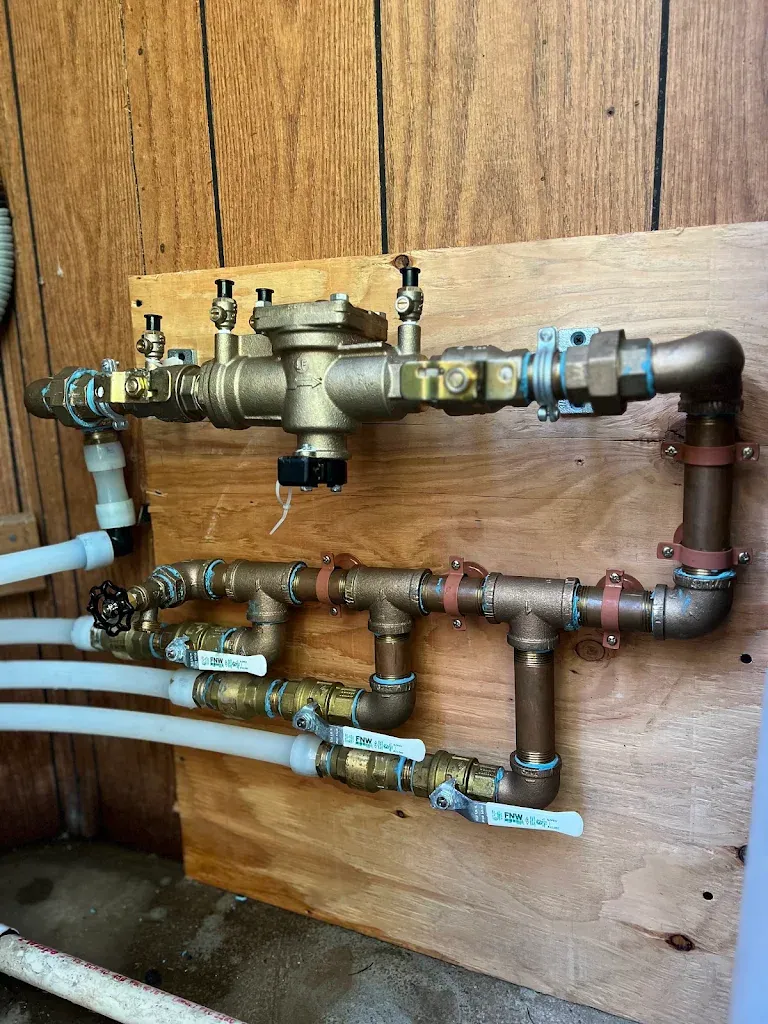
Washington Plumbing & Drain installs, replaces and repairs backflow assemblies for homeowners, HOAs, property managers and small businesses across Kitsap, Pierce and Mason counties. We handle the device, the piping around it, the enclosure and the shutoffs, and we leave you with an installation that a certified tester can pass on the first try.
Most of our backflow work starts with a letter. The water district finds an irrigation system without protection, a tester fails an old device, or a county inspector flags a well that was tied to city water. Whatever prompted the call, we explain which assembly the situation requires and why, then quote it flat before the first fitting goes on.
Which backflow assembly your property needs
There is no single backflow preventer. The water purveyor decides the type based on the hazard, and the three you will run into on a residential or light commercial property are the pressure vacuum breaker, the double check valve assembly, and the reduced pressure zone assembly. Each one protects against a different risk, and installing the wrong one means failing the first test.
A pressure vacuum breaker, or PVB, is the small brass device with a bonnet on top that you see standing above most lawn sprinkler systems. It has to be installed above the highest sprinkler head, usually a foot or more, and it protects against siphoning but not against back pressure. On a flat lot with a simple irrigation system it is the common choice.
A double check valve assembly has two spring-loaded checks in series and can be installed below grade in a vault. Many water districts around Kitsap accept it for low-hazard irrigation and fire sprinkler connections. A reduced pressure zone assembly, the RPZ, adds a relief valve between the checks that dumps water to the ground if either check fails. It is required for high-hazard connections: irrigation with fertilizer injection, boilers with chemical treatment, auxiliary wells, commercial kitchens, and anything a purveyor deems a health risk. Because it discharges, it has to be installed above ground where the relief port can drain freely.
Who requires them around Kitsap, Pierce and Mason
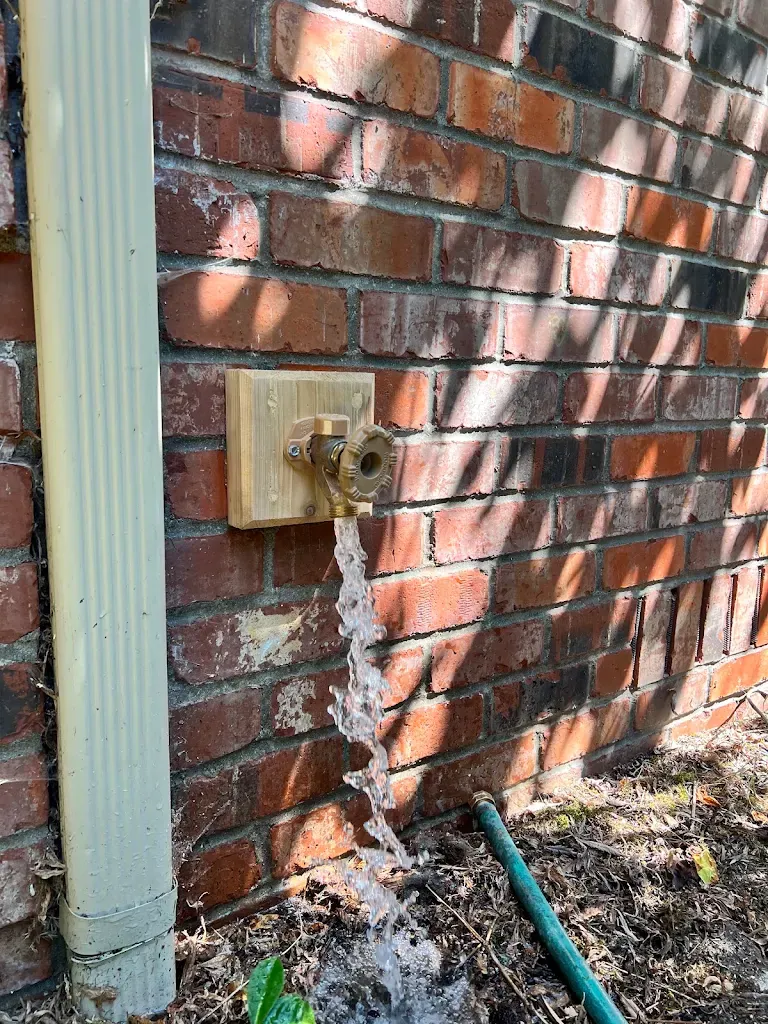
Washington's drinking water rules put cross-connection control on the water purveyor, and every district around here runs a program. Kitsap PUD, West Sound Utility District, the City of Port Orchard, City of Bremerton, Silverdale Water District, the City of Poulsbo, Tacoma Public Utilities and the smaller community systems in Mason County all send out annual test notices and all have a list of what connections need protection.
The connections that trigger a requirement most often on homes are an in-ground irrigation system, a fire sprinkler system in a newer house, a boiler or hydronic heating loop, a private well on the same property as a city water service, a pool or hot tub auto-fill, and a shop or barn with a hose connection to a chemical tank. On commercial properties the list grows: car washes, dental and medical offices, restaurants, and anything with a chemical feed.
Dual-supply properties get extra attention. If your home in Seabeck or on the Key Peninsula is on a community water system but still has an old well for the garden, the purveyor will want either the well physically disconnected or an RPZ on the city service. We do both, and we make sure the result is something an inspector will sign off on rather than a cross-connection waiting to be flagged again next year.
Installation details that decide whether it passes
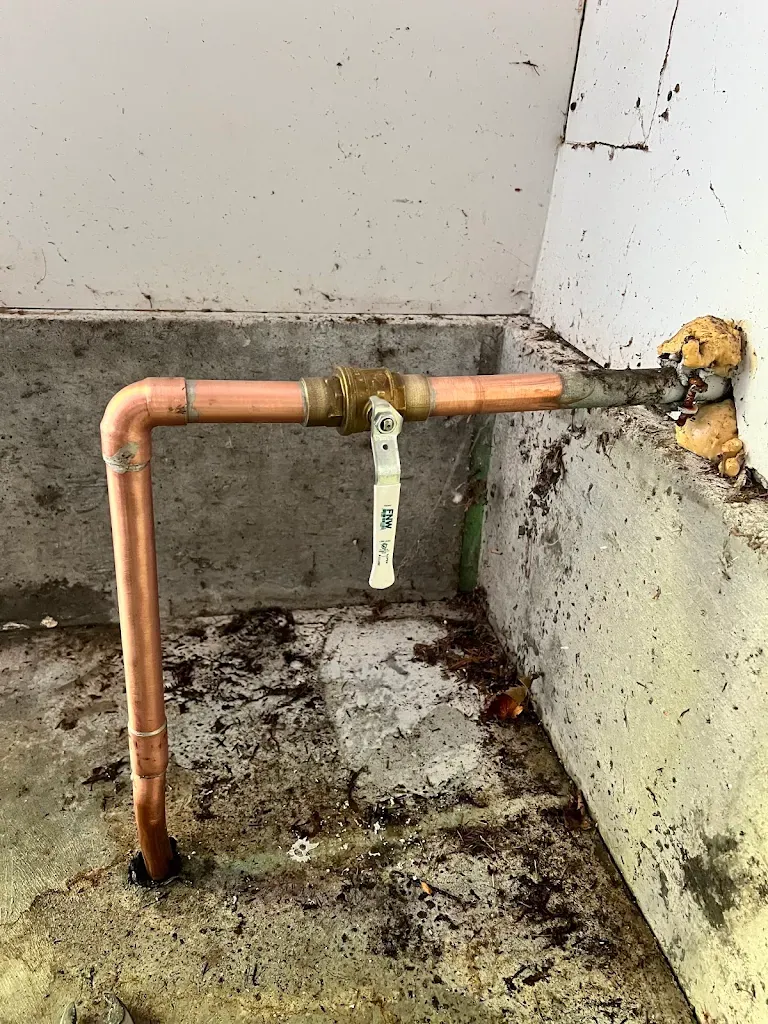
An assembly that is installed correctly tests correctly. That means a full-port shutoff on each side so the tester can isolate it, test cocks that face where a gauge can reach them, the correct orientation for the model, and the right clearance above grade or above the highest downstream outlet. An RPZ needs at least a foot of clearance under the relief port and a place for discharge water to go; an RPZ in a pit is both a code problem and a flood waiting to happen.
Outdoor assemblies freeze. A brass PVB left exposed in the December 2022 cold snap cracked by the hundreds around Gig Harbor and Silverdale. We install them with an insulated enclosure or a blowout fitting so the irrigation contractor can winterize them, and on exposed sites we add a drain so the assembly can be emptied in the fall.
Underground double checks go in a proper vault with drainage, not a flower pot buried in the lawn. Supply and discharge piping is sized to the service, supported so the weight of the brass is not hanging on the pipe, and unions or flanges are placed so a future replacement is a swap, not a re-plumb.
Repair, rebuild or replace
When a tester fails your assembly, the report says which check or relief valve did not hold. On a newer device from a major maker, a rebuild kit with new springs, seats and discs often restores it and costs a fraction of a replacement. We carry rebuild parts for the common models and can usually do the rebuild during the same visit as the diagnosis.
Older assemblies, especially ones that have been in a wet vault for fifteen or twenty years, reach a point where the body is pitted and the shutoffs will not close. At that stage a rebuild is throwing money at a device that will fail again in a season. We tell you that plainly, show you the condition of the body, and quote a replacement with the same or better protection.
We also replace assemblies that were never the right type. A PVB that the purveyor now wants upgraded to an RPZ because fertilizer injection was added, or a double check below grade where the district now requires above-ground, both come up regularly. The piping is usually reusable; the device and its clearances are what change.
Testing, paperwork and keeping the district happy
Washington requires backflow assemblies to be tested on installation and annually after that by a Backflow Assembly Tester certified through the state Department of Health. We install the assembly and coordinate the initial test, and we can point you to certified testers we trust for the annual cycle. We will also walk you through what the notice from your water district is actually asking for, because the letters are not always clear.
For property managers and HOAs with several assemblies, we keep a record of device make, model, serial number and location so the annual test is quick and nothing gets missed. If an inspector finds something at a rental in Bremerton or a strip of offices in Gig Harbor, one call gets it handled and documented.
Signs you need backflow preventer installation
Call if you notice
- Your water district sent a notice requiring a backflow assembly or an annual test
- A certified tester failed your existing device
- Water is spraying or dripping from the relief port of an RPZ
- You are adding an irrigation system, fire sprinklers, a boiler or a pool auto-fill
- Your property has both a private well and a city water connection
- An old assembly is corroded, the shutoffs will not close, or the test cocks are seized
- A home inspector or county inspector flagged a cross-connection
- The brass body cracked in a winter freeze
How a backflow preventer installation call goes
Figure out what the purveyor wants
Send us the notice or tester report. We confirm with the district whether a PVB, double check or RPZ is required for your connection so we install the right device the first time.
Site check and flat quote
We look at the service line, the space above grade, drainage for discharge, and freeze exposure, then send you a flat-rate price to approve before work starts.
Install with testable access
Full-port shutoffs on both sides, test cocks oriented for a gauge, correct clearance and orientation, and an enclosure or vault suited to the location.
Initial certification
The new assembly is tested by a state-certified tester and the report is submitted to your water district so your file is current.
Record and remind
You get the device details and photos. For multi-assembly properties we keep an inventory so annual testing is simple.
Questions we get about backflow preventer installation
Do I need a backflow preventer for my lawn sprinklers?
In every water district we work in around Kitsap, Pierce and Mason counties, yes. An in-ground irrigation system is a cross-connection by definition. The district will tell you whether a PVB, double check or RPZ is required based on whether fertilizer or chemicals are injected.
What is the difference between a double check and an RPZ?
Both have two check valves in series. The RPZ adds a relief valve between them that opens and dumps water if either check leaks, which is why it protects against higher hazards and why it has to be above ground with room to discharge. The double check can go in a below-grade vault.
Can a backflow preventer be installed underground?
A double check valve assembly can be, in a proper vault with drainage. Pressure vacuum breakers and RPZs cannot; they need to be above grade, and the PVB has to sit above the highest sprinkler head it serves.
Why is water coming out of my backflow device?
If it is an RPZ, the relief port is doing its job because a check valve is fouled or failed, or because of pressure fluctuation on the street. Debris after a water main repair is a common cause. It needs service, but it is not an emergency unless it will not stop.
Do you test backflow assemblies?
We install, rebuild and replace them, and we coordinate testing with state-certified Backflow Assembly Testers. We make sure every assembly we install has the shutoffs and test cocks a tester needs to pass it.
My house has a well and city water. What do I need?
The purveyor will require either a physical disconnection of the well from any piping that touches the city service, or an RPZ on the city service. We can do either and will document it for the district.
How do I keep an outdoor backflow device from freezing?
Drain it in the fall, insulate it, or both. We install assemblies with drain ports and blowout access so your irrigation contractor can winterize them, and we offer insulated enclosures for exposed sites.
Does a backflow installation need a permit?
Typically a plumbing permit is involved and the water district needs the installation report. We handle the permit when one is required and the paperwork that the district expects.