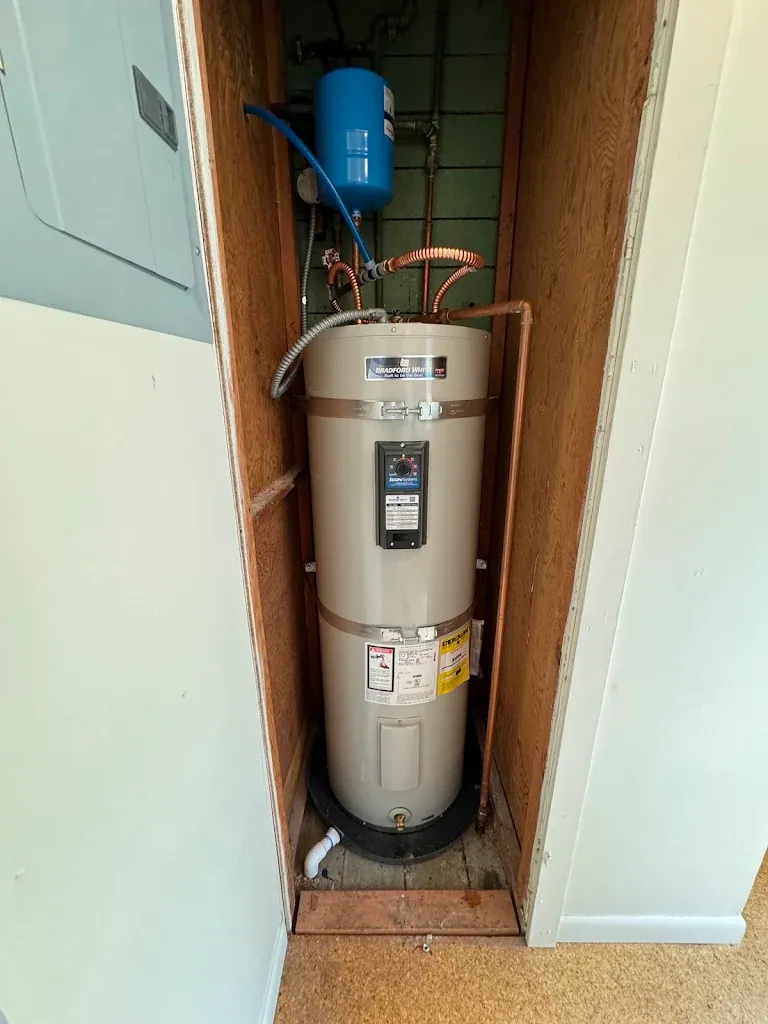
Washington Plumbing & Drain repairs gas, electric and tankless water heaters throughout Kitsap, Pierce and Mason counties, usually the same day or the next. Our plumbers carry the common parts for Bradford White, A. O. Smith, Rheem and Rinnai units on the truck, so most repairs are finished on the first visit.
You get a flat price for the repair before it starts, approved on your phone. If the heater is leaking from the tank itself, which is the one problem no part fixes, we tell you that plainly and give you a replacement estimate to think about rather than charging for a repair that will not hold.
No hot water, and what is usually behind it
On an electric heater, no hot water at all most often means a tripped high-limit switch, a failed upper thermostat or a burned-out upper element. Lukewarm water that runs out fast points to the lower element or thermostat. Both elements can be tested in minutes with a meter, and replacing one is a quick job as long as the tank is not full of sediment that has buried the lower element.
On a gas heater, the pilot is the first suspect. A pilot that will not light or will not stay lit is usually a thermocouple or, on newer sealed-combustion units, a flame sensor or the gas control valve itself. A burner that lights but the water never gets hot can be a dip tube that has crumbled, mixing cold water straight into the hot outlet. Sometimes it is simply that the gas was shut off at the meter during other work.
On a tankless unit, no hot water usually comes with an error code on the display, and the code tells us where to look: ignition, flow sensor, venting, scale in the heat exchanger. Rinnai and other units we service have diagnostic histories we can read, which often tells the whole story before we open the cover.
Leaks: which ones are repairable
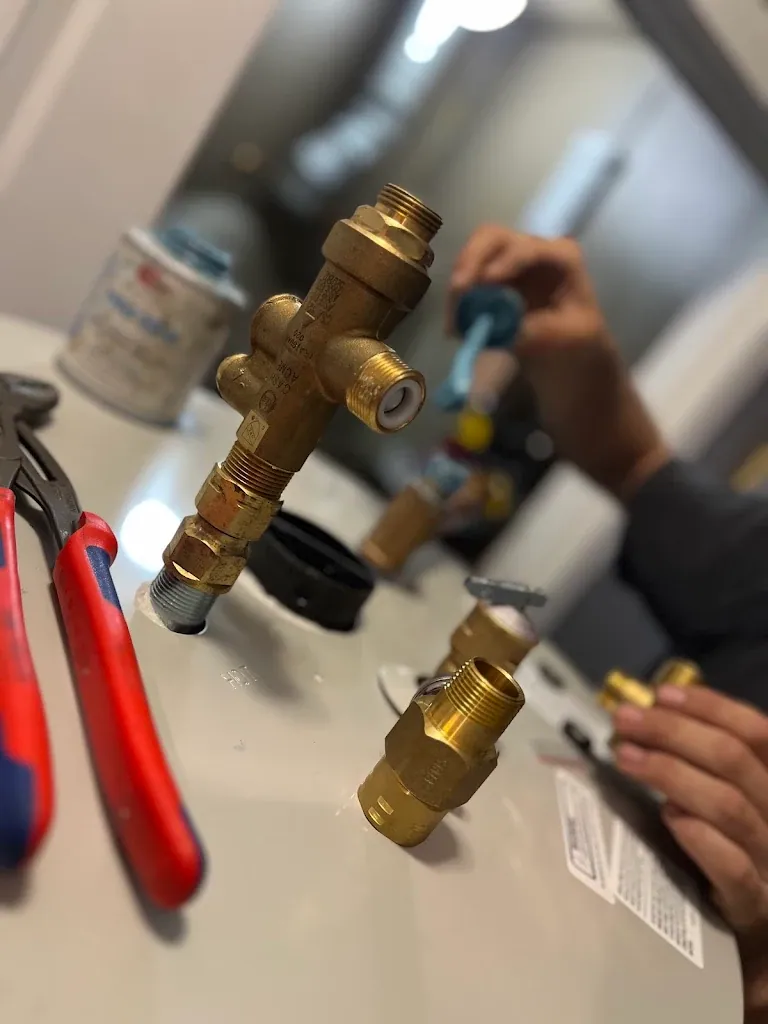
Water around the base of a heater has a handful of sources, and only one of them means the tank is done. A drip from the temperature and pressure relief valve, often from thermal expansion in a house with a pressure reducing valve or a check valve at the meter, is fixed with a new relief valve and an expansion tank. A leak at the hot or cold connection on top is a fitting or a flex line. A leak at the drain valve is a cheap plastic valve that has cracked, replaced with brass.
Water seeping from the seam of the jacket, or rusty water pooling with no fitting above it, means the inner steel tank has corroded through. There is no repair for that. We will show you where it is coming from so you can see it yourself, and we will quote a replacement. If the heater is still under its manufacturer warranty we help you with the paperwork.
On tankless units, a leak is usually a fitting, an isolation valve or a failed heat exchanger. The first two are easy; the third is a repair-or-replace conversation that depends on the unit's age.
- Relief valve drip: new valve and expansion tank
- Top fittings or flex lines: reseal or replace
- Drain valve: brass replacement
- Tank seam or rusty pooling: replacement, no repair possible
Noises, smells and water that is not right
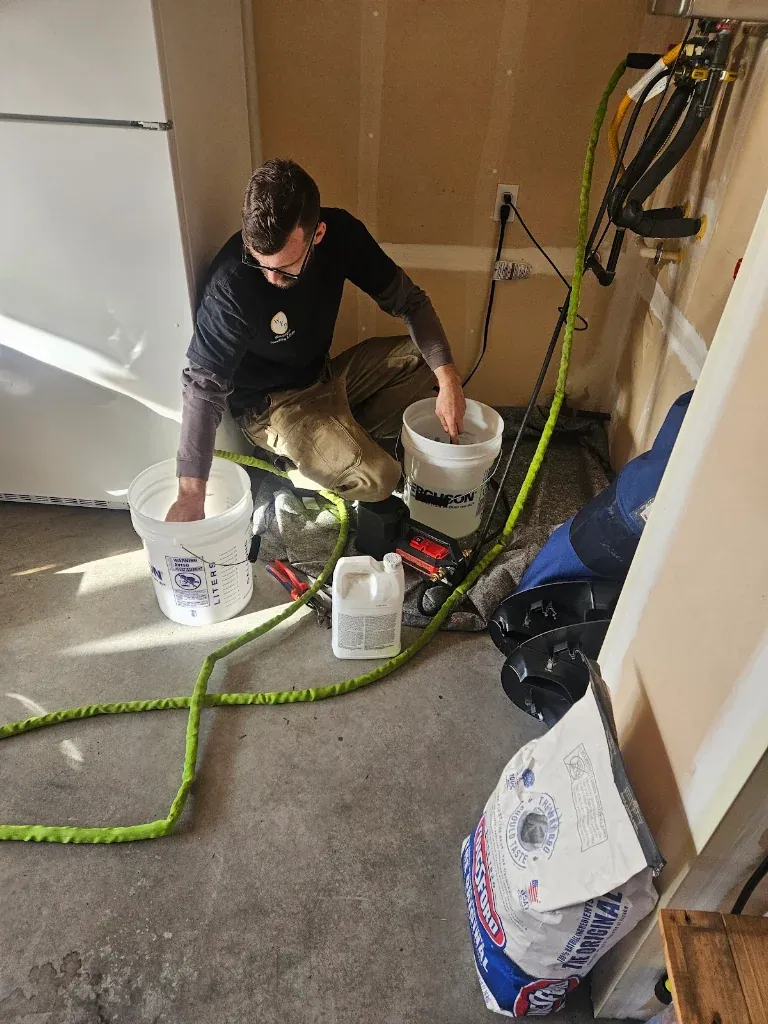
Popping, rumbling or knocking from a tank heater is water boiling under a layer of sediment on the bottom. Around here the sediment is mostly sand and silt from well water and the minerals in some of the municipal supplies. Flushing the tank helps if it is caught early; if the sediment is baked solid, the heater is working harder and will fail sooner, and flushing may just stir up what then clogs the drain valve.
Rotten-egg smell in the hot water only is a reaction between the anode rod and sulfur bacteria that live in some wells and in a tank that sits warm and unused. A new anode of a different alloy, a tank sanitization and sometimes a temperature adjustment solve it. Rusty hot water, when the cold is clear, usually means the anode is gone and the tank is rusting from inside.
Water that is dangerously hot, or that swings from scalding to cold, is a thermostat on a tank unit or a failing mixing valve. We check the outlet temperature with a thermometer and set it where it belongs.
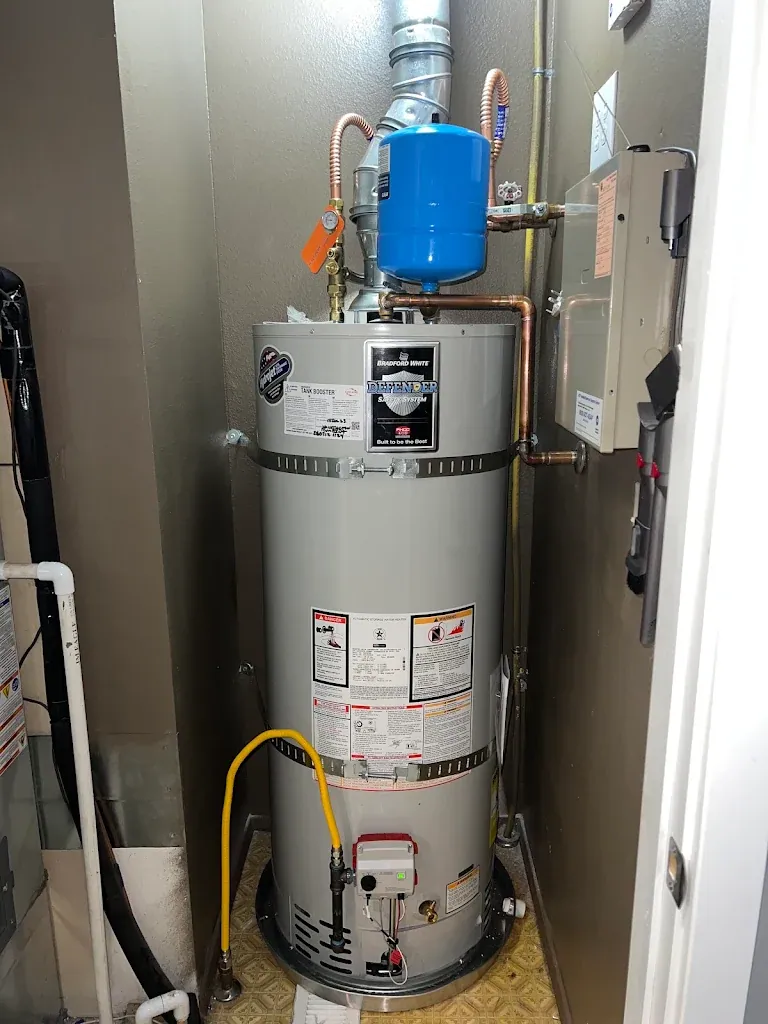
The repair-or-replace question, answered plainly
We get asked this on nearly every call, and the answer depends on age, the problem and the condition of the tank. A six-year-old electric heater with a bad element is a repair, every time. A fourteen-year-old gas heater with a failed gas control valve is a repair that may cost a meaningful fraction of a new unit on a tank that is near the end of its life, and we will say so. A leaking tank is a replacement regardless of age.
What we will not do is quote you a new heater because that is the bigger ticket. Reviews from our customers mention more than once that we told them their heater was fine when another company had said otherwise. That reputation is worth more to us than one sale.
Parts, brands and after-hours calls
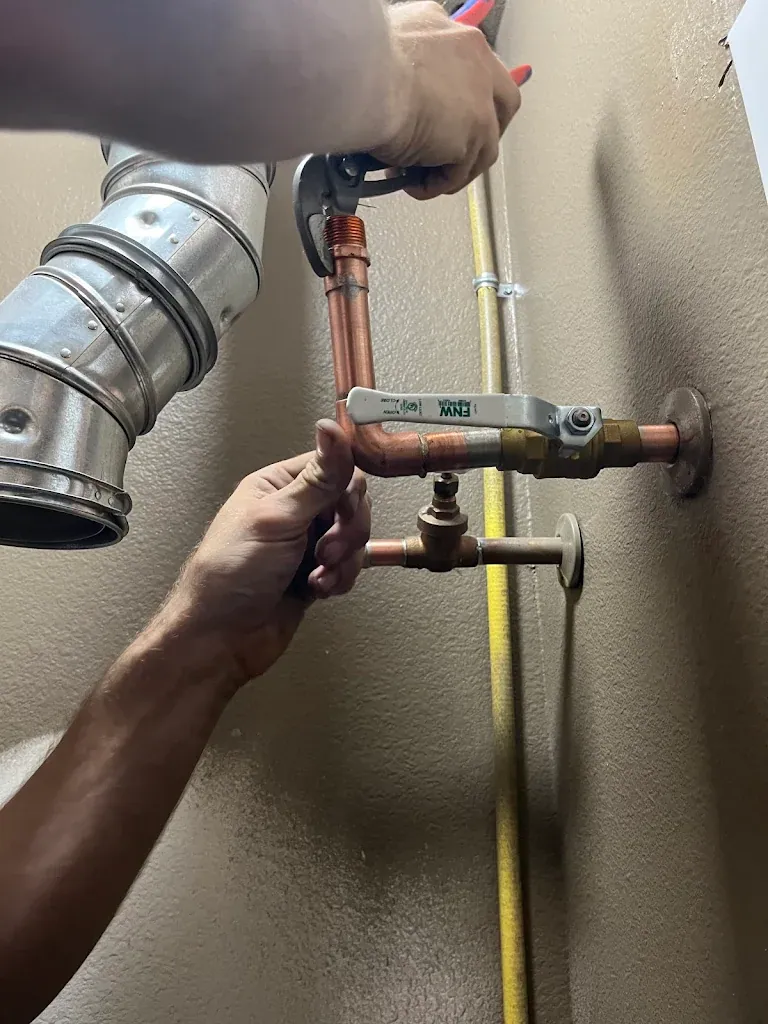
The trucks carry elements, thermostats, thermocouples, relief valves, drain valves, dip tubes, anode rods, expansion tanks and the common Rinnai service parts. For a specific gas control valve or a tankless component we can usually have it the next day. Bradford White and A. O. Smith parts are stocked locally, which is one reason we install those brands.
No hot water on a Saturday or a holiday evening is a call we answer. Corinne or Greg will give you a real answer on when someone can be there, and if it is a leak, we will walk you through shutting off the water and the gas or power so the situation stops getting worse while you wait.
Signs you need water heater repair
Call if you notice
- No hot water at any fixture, or water that is only lukewarm
- Hot water runs out in a few minutes when it used to last
- The pilot light goes out and will not stay lit
- Water pooling at the base of the heater
- The relief valve drips or spits after a shower
- Popping, rumbling or knocking when the heater runs
- A rotten-egg smell in the hot water only
- Rusty or brown hot water while the cold runs clear
- A tankless unit showing an error code or cycling on and off
- The breaker for the water heater keeps tripping
How a water heater repair call goes
A few questions on the phone
Gas, electric or tankless, how old, what exactly is happening and whether there is water on the floor. If it is leaking we tell you how to shut things off before we arrive.
Diagnose with instruments
Elements and thermostats are tested with a meter, gas units are checked at the pilot, burner and control valve, tankless units are read for error codes and history. The leak source is confirmed, not assumed.
Flat price before the repair
You get one price for the repair and, if the heater is near the end of its life, a separate replacement estimate so you can compare. Approve on your phone.
Repair with parts from the truck
Most repairs are finished on the first visit. Special-order parts are usually in hand the next day.
Test and set the temperature
The heater is run through a full cycle, the outlet temperature is checked with a thermometer, and the relief valve and connections are inspected before we leave.
Questions we get about water heater repair
Can you come out today for no hot water?
Usually. No hot water and leaking heaters are scheduled ahead of routine work, with evening and weekend options when needed. Call (360) 812-1124 and we will give you an honest window.
How do I know if my water heater needs repair or replacement?
If the tank itself is leaking, it is replacement. Almost everything else on a heater under about ten years old is a repair. On an older unit with an expensive failed part we lay out both numbers and let you choose.
What does it cost to repair a water heater?
Most element, thermostat, thermocouple and relief valve repairs are a modest service call including the part. Gas control valves and tankless components are more. You see the flat price before we start.
Why does my relief valve keep dripping?
Usually thermal expansion. When the heater warms a full tank, the water expands and has nowhere to go if the house has a pressure reducing valve or a check valve at the meter, so the relief valve releases a little. An expansion tank fixes it, and a new relief valve is usually needed too.
My pilot light keeps going out. Is that dangerous?
The gas valve shuts off the gas when the pilot fails, which is the safety working as designed. The usual cause is a worn thermocouple or a dirty pilot assembly, both quick repairs. If you smell gas, leave the house and call the gas company first.
Why does my hot water smell like rotten eggs?
Sulfur bacteria reacting with the anode rod, common on well water and in heaters that sit unused. Changing to a different anode alloy and sanitizing the tank solves it in most cases.
Do you repair tankless water heaters?
Yes, including Rinnai and other major brands. We read the error history, check venting and gas supply, and descale the heat exchanger when that is the cause.
Can a water heater be repaired under warranty?
Tank and part warranties vary by manufacturer and age. We help identify the unit's warranty status and handle the paperwork for covered parts.