
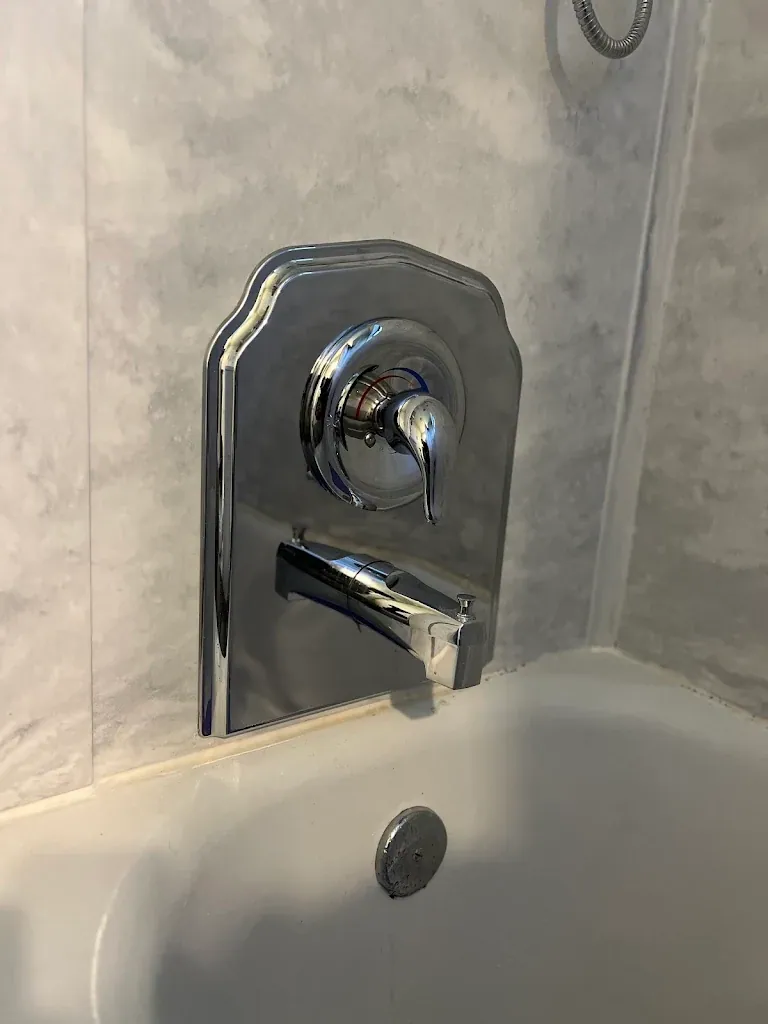
Washington Plumbing & Drain repairs and replaces shower and tub valves in homes across Kitsap County, in Gig Harbor, Tacoma and the Key Peninsula, and out to Belfair, Union and Shelton. Moen, Delta and Kohler cartridges, pressure-balance spools, thermostatic elements, diverters, tub spouts, trim and the valve bodies themselves when a rebuild is no longer the answer.
We quote flat, before the first screw comes out, and we tell you which repairs are front-access and which need the wall opened. When the wall does have to open, we open it from the back where we can, or we cut a clean access that a remodel plate or a panel will cover.
What is behind the handle
Single-handle tub and shower valves made since the mid-1990s are pressure-balanced. Inside the body is a cartridge that mixes hot and cold, and a spool or diaphragm that reacts in a fraction of a second when someone flushes a toilet, so the shower does not scald. Older two- and three-handle valves use compression stems with washers, one for hot, one for cold, and sometimes a third for the diverter. Thermostatic valves, found in higher-end showers and remodels, hold a set temperature with a wax or bimetal element and have a separate volume control.
Every one of those has parts that wear. Cartridges lose their O-rings and let water weep past when the handle is off. Pressure-balance spools stick from mineral scale and leave the shower stuck on cold or stuck on hot. Compression washers flatten and the seats behind them pit. Diverter gates in tub spouts wear until half the water keeps coming out of the spout when the shower is on.
Knowing which valve is in the wall tells us what parts to bring. The brand is usually on the trim or the cartridge, and a photo of the handle before you call saves a trip.
Drips, no hot water, and the fixes from the front
A shower that drips after it is shut off is a cartridge or a stem seal, and it is a front-access repair. The handle and trim come off, the retaining clip comes out, and the cartridge is pulled with a tool made for that brand, because a cartridge that has sat in scaled water for fifteen years does not come out by hand. The new one goes in with the hot and cold oriented correctly, and the drip is gone. On compression valves we replace the washers and dress or replace the seats.
A shower with no hot water while the sink next to it is fine is almost always the pressure-balance spool or the cartridge limit stop. The spool seizes, or the stop has been turned down to limit the hot side, sometimes during a past repair. Both are addressed from the front. The same goes for a shower that is scalding hot or that swings temperature wildly: the balancing part has stopped balancing.
A handle that spins without changing anything has stripped the splines on the stem or the cartridge, which is a handle or a cartridge replacement. A handle that is seized solid is scale in the cartridge, and forcing it breaks the stem off inside the body, which turns a cartridge job into a valve job. If yours is stiff, stop and call.
Tub spouts, diverters and showerheads
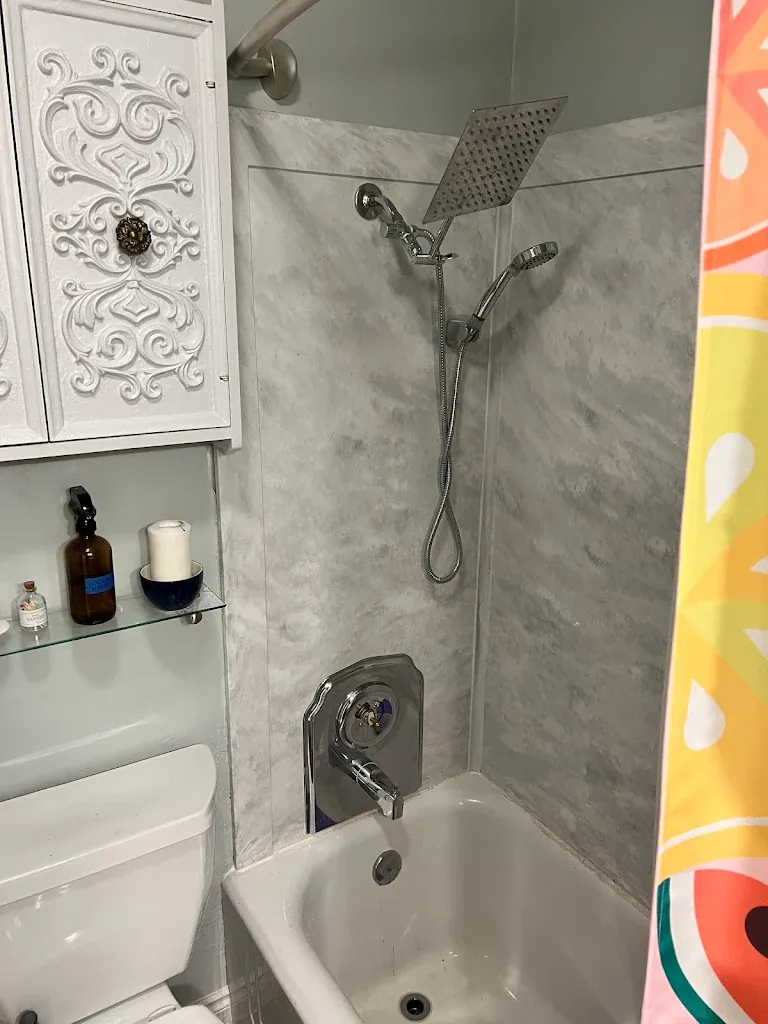
Tub spouts fail two ways. The diverter inside wears out and the shower gets only part of the water, or the spout leaks where it meets the wall and water runs down inside the surround. The second one is the quiet, damaging one; it feeds the framing behind the tub and shows up as a soft spot in the floor or a stain on the ceiling below. Spouts thread onto a nipple or slip over a copper stub with a set screw, and we match the replacement to the stub so the new spout seals to the wall.
Three-handle valves with a separate diverter handle in the middle wear the diverter stem and its seat, and the symptom is the same half-and-half flow. Those stems are still available for most brands and we carry the common ones. On some older valves the diverter is built into the valve body and cannot be serviced separately, which is one of the reasons we recommend replacing those valves outright.
When the valve body itself has to go
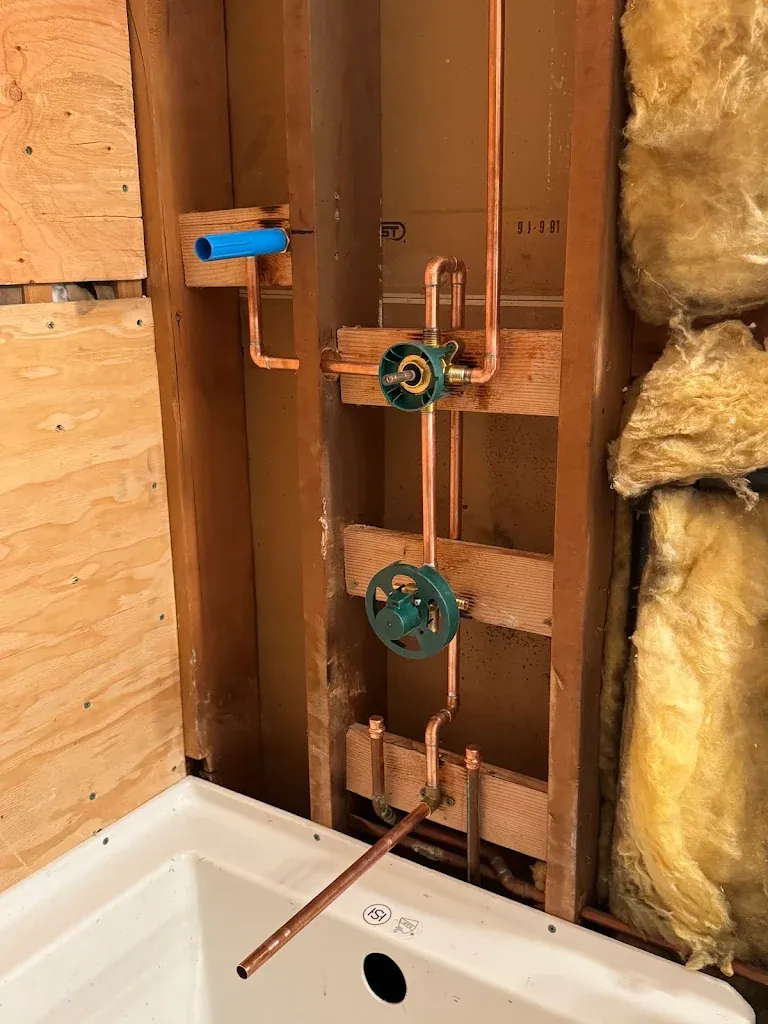
Valve bodies are replaced when the cartridge is no longer made, when the body has cracked from a freeze, when the stem has snapped off inside, or when a two- or three-handle valve is being upgraded to a pressure-balanced single handle for safety and simplicity. That is inside-the-wall work. Where there is a closet, hallway or another bathroom on the other side of the wall, we open from the back and the tile stays untouched. Where there is not, we cut an access on the tile side and fit a remodel cover plate large enough to cover the hole, which most brands make for exactly this purpose.
The new valve is set to the right depth for the finished wall, strapped to blocking so it does not move when the handle is turned, and connected in copper or PEX with stub-outs for the spout and the shower arm. We pressure-test it before the wall closes. A pressure-balanced valve is required on any new or replaced shower valve in Washington, and we install only those.
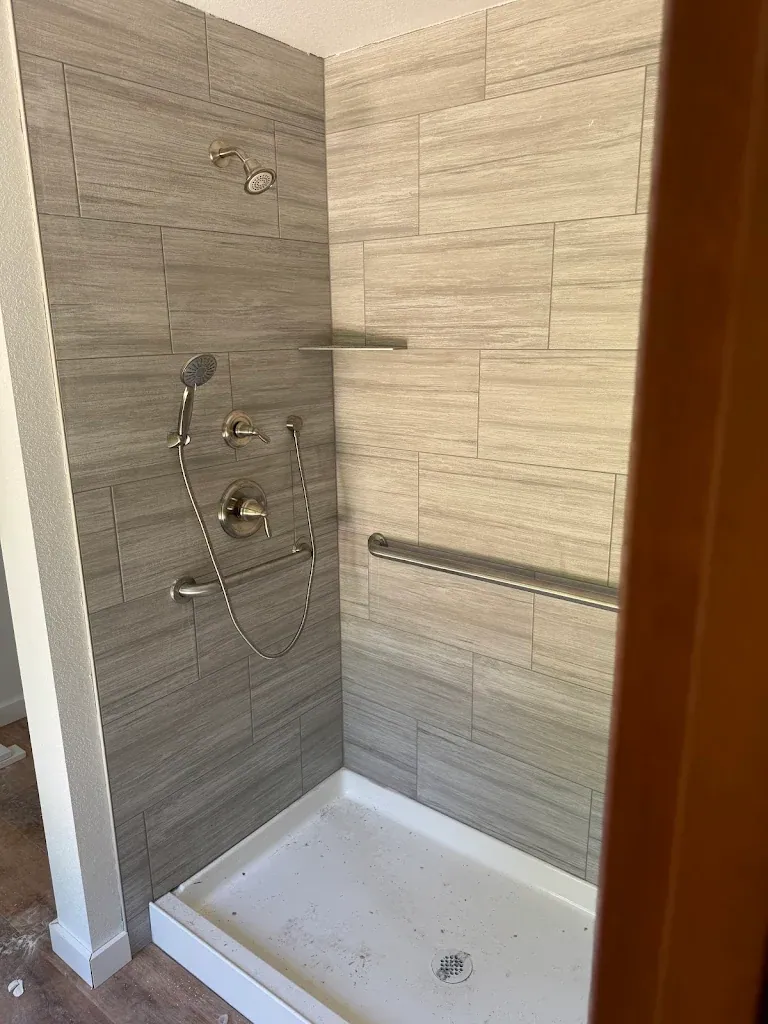
This is also the point where a tub-to-shower conversion or a surround replacement becomes practical, since the wall is open. Many of the tile walk-in showers we have built with grab bars and handhelds started as a leaking three-handle valve. We can quote the valve alone or the larger project, and the choice is yours.
Local wrinkles: scale, freezes and older bathrooms
Well water on the Mason County side and in rural Kitsap carries enough hardness and iron to seize cartridges and spools in a few years, and a shower that drifts cold is often the balancing spool coated in scale. We clean and lubricate where that is enough and replace where it is not. If every valve in the house is scaling, we will mention filtration, because cartridges are not the long-term answer to a water problem.
The December 2022 and January 2024 freezes cracked a lot of shower valve bodies on exterior walls, particularly in Bremerton and Port Orchard homes from the 1950s through 70s where the valve sits in an uninsulated wall. The crack shows itself as a drip inside the wall or a ceiling stain once the thaw comes. Those are valve replacements, and we insulate the cavity before closing it.
Older bathrooms near the shipyard and in Manchester, Tracyton and South Kitsap often have original two- or three-handle valves with no shutoffs anywhere nearby. The house has to be shut off to work on them. We note where the main valve is and, if it is a seized gate valve, suggest replacing it while the water is off.
Flat-rate repair with the access spelled out
A cartridge, stem or spout repair from the front is a modest service call plus parts. A valve body replacement is quoted with the access method named, the trim included, and the wall closure described, so you know whether you are getting a remodel plate, a patched wall or an access panel. Nothing changes after approval unless we find something in the wall, and if we do, you see it before we touch it.
The satisfaction guarantee and extended labor warranty cover every valve we repair or replace. If a cartridge we set drips or a valve we installed weeps in the wall, we come back.
Signs you need shower valve & tub repair
Call if you notice
- The showerhead or tub spout drips after the handle is fully off
- The shower runs cold or lukewarm while the sink has plenty of hot water
- Water temperature swings when a toilet flushes or a faucet opens elsewhere
- The handle spins freely, is stiff to turn, or has broken off
- Water comes out of the tub spout and the showerhead at the same time
- A stain on the ceiling below the bathroom or a soft spot in the bathroom floor
- Water runs down the wall behind the tub spout when the shower is on
- A hissing or whistling sound from inside the wall when the shower runs
- The valve is an old two- or three-handle style and parts are getting hard to find
How a shower valve & tub repair call goes
Identify the valve
Corinne or Greg will ask for the brand on the trim, the number of handles, and the symptom. A photo of the handle helps us bring the right cartridge, stem or spool the first time.
Assess from the front
Trim off, cartridge or stems inspected, pressure and temperature tested, spout and diverter checked, and the wall behind looked at for a back-access option if the body needs replacing.
Flat price with access named
Front repair or valve replacement, with the parts, the trim and the wall access described, sent to your phone and approved before the work begins.
Repair or replace
Seized cartridges pulled with the brand tool, seats dressed, spools cleaned or replaced, or the body cut out and a new pressure-balanced valve set to depth on blocking and pressure-tested.
Test hot, cold and balance
Full temperature range checked, a toilet flushed mid-shower to confirm the balance works, spout and head checked dry at the wall, and the trim set clean.
Questions we get about shower valve & tub repair
Can you fix a dripping shower without opening the wall?
Almost always. A drip is a cartridge or a stem seal, and both are replaced from the front with the trim removed. The wall only opens when the valve body itself has failed or no cartridge is made for it.
Why does my shower have no hot water when the sink does?
The pressure-balance spool in the shower valve has stuck, or the cartridge's hot limit stop has been turned down. Both are fixed from the front. If the hot side is weak everywhere, the problem is at the water heater instead, and we check that.
My shower handle is stuck. Should I force it?
No. A seized cartridge will snap off at the stem if forced, and then the valve body has to be replaced instead of just the cartridge. Call us; we have pullers for every common brand.
Do you have to cut the tile to replace a shower valve?
Only when there is no access from the back. If a closet or another room shares the wall, we open from there and the tile stays. Otherwise we cut a clean opening on the tile side and cover it with a remodel plate made for that purpose.
Water comes out of the tub spout while the shower is running. What is wrong?
The diverter has worn out, either in the spout itself or in the valve on a three-handle setup. Spout diverters are replaced with the spout; valve diverters get a new stem. Both are quick repairs.
Why is there a stain on the ceiling under my bathroom?
Often a tub spout or valve leaking inside the wall, or a tub drain or overflow gasket. We find which by running the shower and tub separately and looking from below. It is worth calling before the drywall sags.
Can you convert my three-handle tub valve to a single handle?
Yes. The old body comes out and a pressure-balanced single-handle valve goes in, with a large remodel plate covering the old handle holes. It is safer, simpler and the parts will be available for decades.