
Washington Plumbing & Drain repipes homes across Kitsap, Pierce and Mason counties, from the 1950s and 60s ramblers around the Bremerton shipyard that still run on galvanized steel, to 1980s and 90s homes in Silverdale and Gig Harbor plumbed in polybutylene, to waterfront houses whose copper has been eaten from the inside by aggressive well water. Most of our repipes are PEX. Some are copper. We will tell you which fits your house and why.
A repipe is a big job done in a small number of days. We plan the routes before we cut, open walls only where we have to, keep the water on each night, and leave you with full pressure at every fixture, new shutoffs everywhere, and a plumbing system that will outlast the mortgage.
Which pipes are worth replacing, and why
Galvanized steel was the water pipe of choice through the early 1970s, and it is the main reason older West Sound homes have weak showers. The zinc coating wears away, the steel underneath rusts, and the rust builds inward until a three-quarter-inch pipe has a quarter-inch opening. The photo at the top of this page is a section Greg cut out of a Port Orchard crawlspace, and it is not unusual. Galvanized also sheds rust into the water and fails at the threads, usually where a horizontal run meets a vertical one.
Polybutylene, the gray plastic with gray or copper crimp fittings, went into thousands of Kitsap and Pierce County homes between the late 1970s and mid 1990s. Chlorine in municipal water makes it brittle from the inside, and it fails without warning at fittings and along the pipe wall. Insurers increasingly decline or surcharge homes that still have it, and buyers' inspectors flag it. There is no good repair for polybutylene other than removing it.
Copper is a fine material, and most copper houses do not need a repipe. The ones that do have thin-wall type M copper that is pinholing, usually on the hot side, often because of acidic well water or because the copper was tied to an electrical ground. One pinhole is a repair. A pattern of them, especially in a house on a Mason County or North Kitsap well with low pH, means the rest of the copper is thinning at the same rate.
- Galvanized steel: replace. Low pressure, rust, and thread failures only get worse.
- Polybutylene: replace. Brittle, insurance problems, no reliable repair.
- Copper with repeated pinholes: replace, usually the hot side first or the whole system.
- Copper in good condition: leave it, and we will say so.
- Mixed systems with steel-to-copper transitions: replace the steel, check the copper at the joints.
PEX or copper for the new system
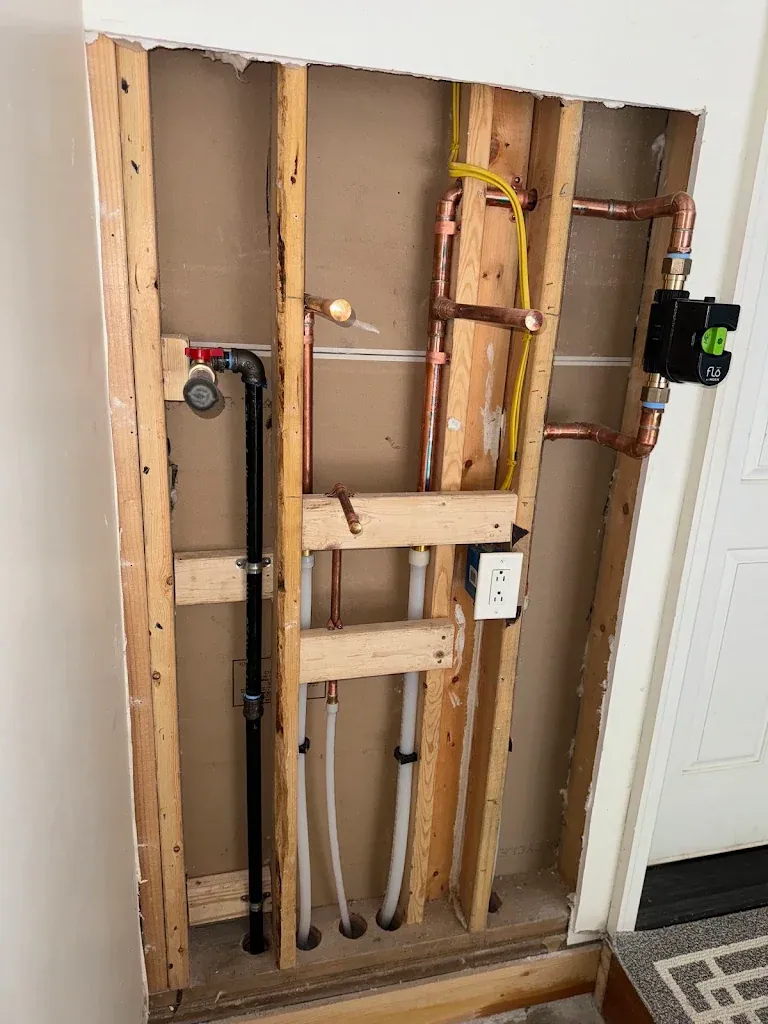
PEX is what we install on the large majority of repipes, and it is what we would put in our own houses. It snakes through existing walls and floors with far fewer openings than rigid pipe, it is not affected by the acidic water that pinholes copper, it survives freezing far better, and it is quiet. We use expansion-style fittings, which have the same inside diameter as the pipe and do not restrict flow the way crimp rings can. Each fixture gets its own home run or a short branch from a manifold, so one shutoff closes one fixture.
Copper still has its place. Some homeowners prefer it, some jurisdictions and some inspectors like to see it at the water heater and the main entry, and in an open, unfinished basement or crawlspace where runs are exposed it goes in cleanly. We also use copper for the first few feet off a water heater and anywhere pipe is exposed to sunlight, which degrades PEX. A copper repipe costs more in material and labor, and we will quote it alongside PEX if you want to compare.
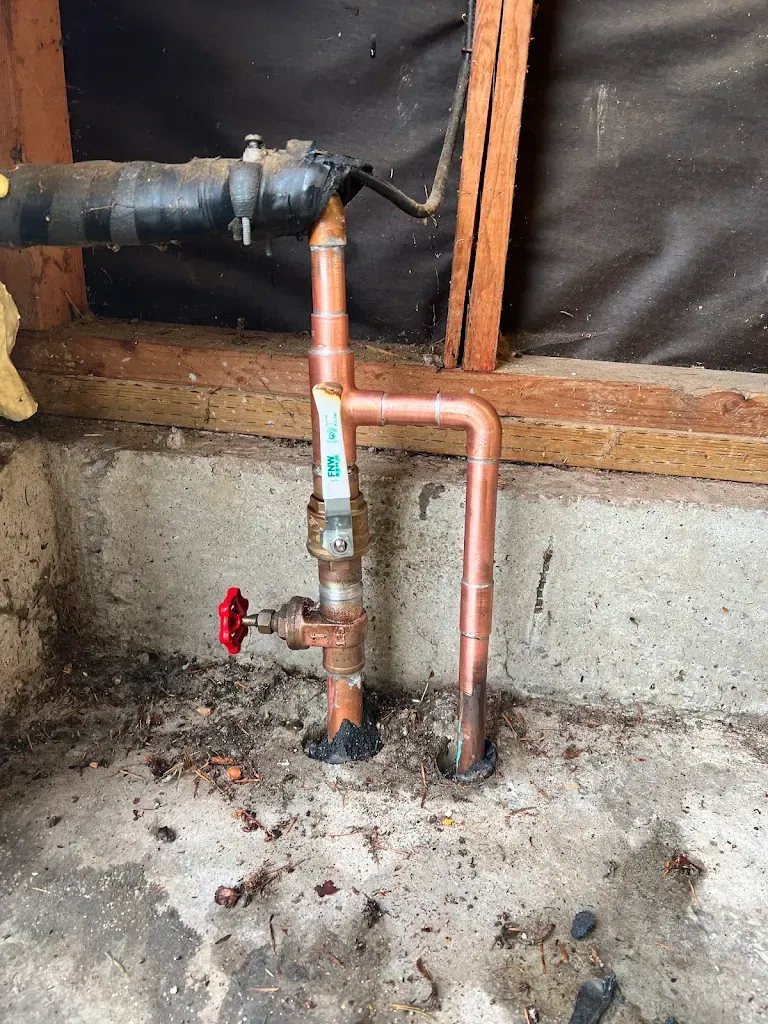
Whatever the material, every repipe includes new quarter-turn shutoffs at each fixture, a new full-port ball valve at the main, new supply lines to faucets and toilets, hose bibs replaced with frost-free models where the wall allows, and a thermal expansion tank if the house is on a closed system. If the water heater connections are tired, that is the time to redo them.
How a repipe actually goes, day by day
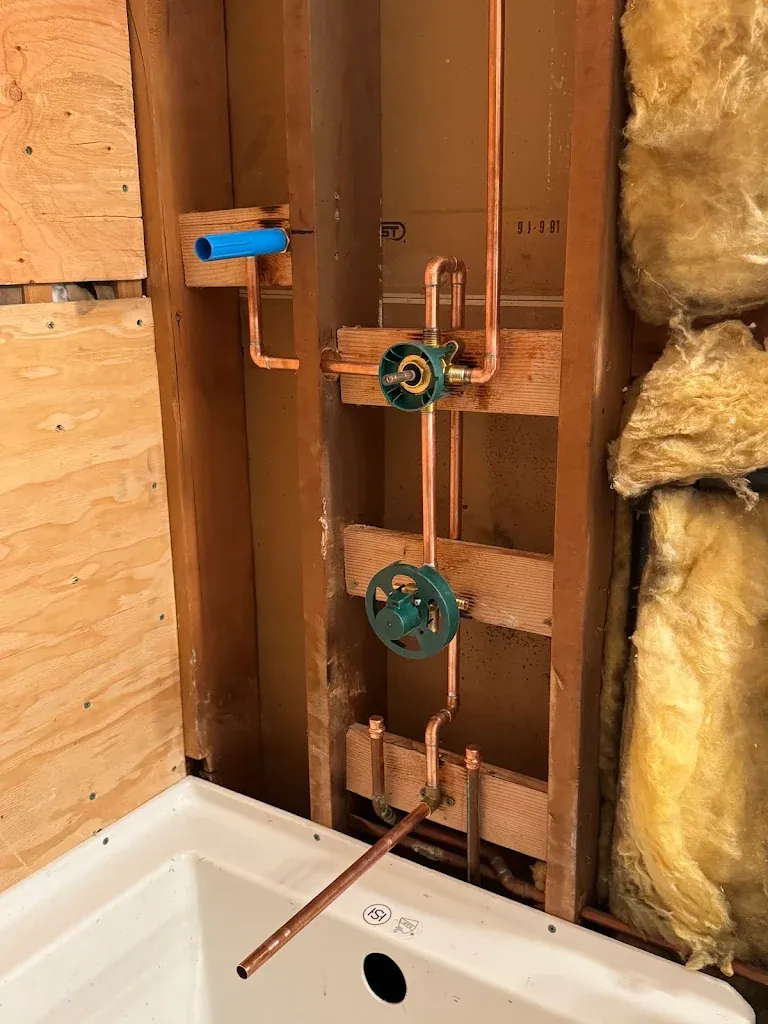
Before any work, Greg walks the house with you and maps every fixture, the water heater, the main entry and the likely routes. On a single-story home with a crawlspace, most of the new pipe runs under the floor and comes up through the same holes the old pipe used, so wall openings are limited to the spots behind tubs and showers where the valves live. Two-story homes and slab-on-grade homes need more access openings, and we show you on the walls where each one will be before you approve the price.
On the first morning we shut the water off, cut the old system loose at the main, and begin running the new lines. The old pipe is removed where it is accessible and abandoned in place where it is buried in a wall; there is no benefit to tearing out a wall to remove a dead pipe. By evening of the first day, on most homes, the kitchen, one bathroom and the water heater are reconnected and the water is back on. The rest of the fixtures follow on the second day. Larger homes run into a third.
After every fixture is tied in we pressure test the whole system, flush each line to clear any debris, check every connection with the water on and the house quiet, and call for the plumbing inspection. Drywall patching is a separate trade; we leave clean, square openings that are easy to close, and we can recommend someone who patches after our repipes regularly.
Repiping on the peninsula: crawlspaces, wells and waterfront
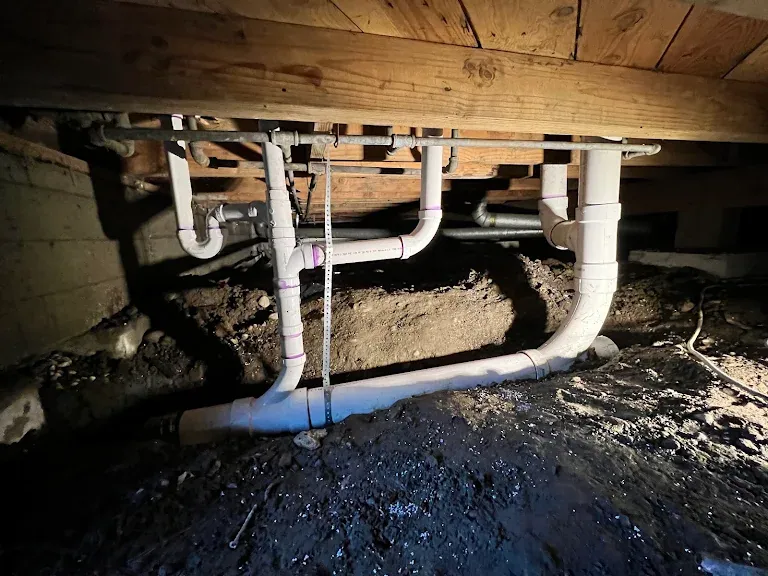
The crawlspace is where most of the work happens around here, and crawlspaces in Kitsap and Mason County are low, damp and often full of surprises. We have found old galvanized lines buried in dirt, copper resting on the ground, and polybutylene snaked through standing water. New PEX is strapped to the joists, kept off the ground, insulated where it runs near a vent, and routed clear of the ductwork. A repipe is also a good time to fix a drain line or add a cleanout while the crawlspace is open.
Homes on private wells get extra attention at the pressure tank and the filtration. Acidic well water is often what killed the copper, so we talk about a neutralizer or a sediment filter ahead of the new system. If the pressure tank is also tired, replacing it during the repipe saves a second disruption.
Waterfront and bluff homes in Gig Harbor, Manchester, Hansville and along Hood Canal often have supply runs that wander around additions built over decades. A repipe is a chance to straighten that out: shorter runs, fewer fittings, hot water arriving faster at the far bathroom, and a recirculation line if the kitchen is a hundred feet from the water heater.
What it costs, what it changes, and what it is worth
A whole-house repipe is a four-figure project for a small rambler and climbs from there with the number of fixtures, the stories, and whether the house is on a slab. You get a single flat price for the entire job before we start, with the access openings marked and the material chosen. Drywall repair is quoted separately by a drywall contractor so you can see both numbers.
What changes is immediate. Full pressure at every fixture, including when two are running. Clear water from the first tap in the morning. A main shutoff that closes with a quarter turn and fixture stops that actually stop. No more watching the ceiling. For a house with polybutylene, the repipe also removes an item from the insurance questionnaire and from a future buyer's inspection report.
We stand behind every repipe with our satisfaction guarantee and an extended warranty on the work. If a joint we made ever weeps, we come back. In practice, PEX repipes we have done simply stay fixed, which is the point.
Signs you need whole-house repiping
Call if you notice
- Pressure drops to a trickle when a second fixture is turned on
- Rust-colored or brown water first thing in the morning
- More than one pinhole leak in the last year or two
- Gray polybutylene pipe visible in the crawlspace or at the water heater
- Galvanized steel pipe at the main entry or under sinks
- Insurance company asked about the plumbing material or declined coverage
- Fixture shutoff valves that will not close or break when turned
- Hot water takes several minutes to reach the far bathroom
- A home inspection flagged the supply piping before purchase
- A freeze split pipes in several places at once
How a whole-house repiping call goes
Walkthrough and route plan
Greg maps every fixture, the main entry, the water heater and the routes, then marks on the walls where any access openings will be so you see the whole plan before approving.
One flat price, material chosen
A written price for the complete repipe in PEX, or in copper if you prefer, including new shutoffs, hose bibs, supply lines and an expansion tank where required. Drywall patching is quoted separately.
Day one: main, kitchen, water heater
Water off in the morning, new main valve and trunk lines in, kitchen and one bathroom reconnected, water heater tied in and relit. Water is back on by evening on most homes.
Day two: remaining fixtures
Every remaining bath, laundry, hose bib and appliance is connected with its own shutoff. Larger homes take a third day.
Pressure test, flush, inspect
The full system is pressure tested, every line flushed, every joint checked with the house quiet, and the jurisdiction's plumbing inspection scheduled.
Clean up and hand over
Old pipe hauled out where it was removed, openings left square for the drywall contractor, and a walkthrough so you know where every new valve is.
Questions we get about whole-house repiping
How do I know if my house needs a repipe or just a repair?
One leak is a repair. A pattern of leaks, galvanized steel anywhere in the system, polybutylene anywhere in the system, or pressure that has faded over years all point to a repipe. We will tell you plainly which you have, and we have told plenty of homeowners their copper was fine.
How long does a whole-house repipe take?
Two days for most single-story homes, with water restored each evening. Two-story and slab homes often run three days. You can stay in the house the whole time.
Will you have to tear up all my walls?
No. On a crawlspace home most of the new pipe runs under the floor and comes up through existing holes. Openings are needed behind tub and shower valves and sometimes at a second-floor bathroom. We mark each one before you approve the job.
Is PEX safe and will it last?
PEX has been used in Europe since the 1970s and in the United States for decades, and it carries lengthy manufacturer warranties. It resists the acidic water that pinholes copper, tolerates freezing better, and is quieter. We use expansion fittings with a full-flow inside diameter.
Does a repipe require a permit?
Yes, in every jurisdiction we work in. We pull the plumbing permit, schedule the inspection, and the permit stays with the house as proof the work was done to code, which matters when you sell.
Can you repipe just the hot side or just one bathroom?
Yes, and sometimes that is the right call, for example when copper is pinholing only on the hot side or a single addition was done in polybutylene. We will quote the partial job and the whole house so you can see the difference.