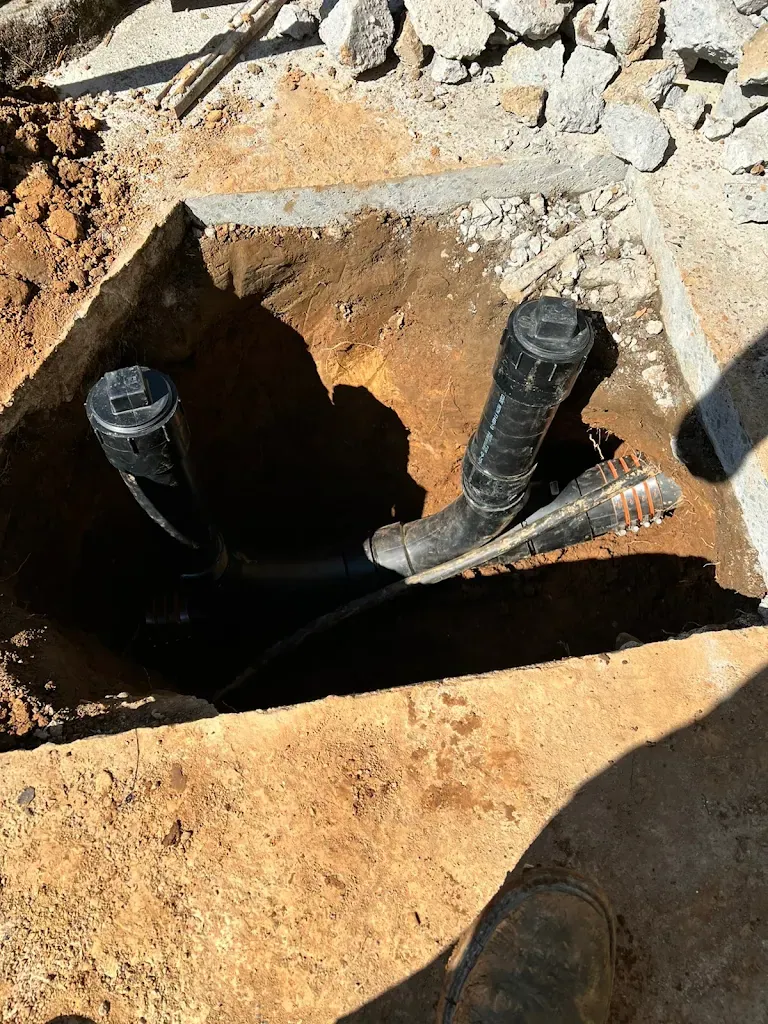
A cleanout is a capped access point on the sewer line, usually a pair of risers brought to grade just outside the foundation. One leg points toward the street for clearing the lateral; the other points back toward the house for clearing the building drain. With one in place, a plumber can cable, jet or camera the whole line from the yard in a fraction of the time.
Washington Plumbing & Drain installs cleanouts across Kitsap, Pierce and Mason counties as stand-alone jobs and as part of sewer repairs. It is one of the few plumbing projects that pays for itself the very next time something goes wrong.
Why a missing cleanout costs you every time
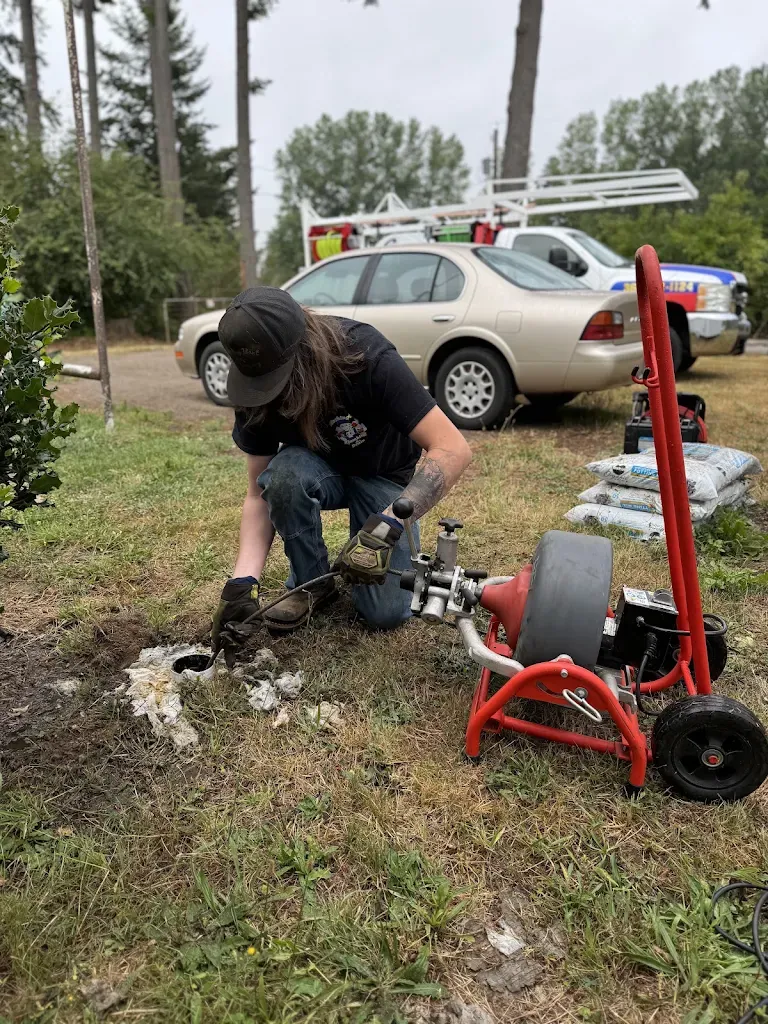
Clearing a main line through a roof vent means a plumber on a wet roof in November feeding a heavy cable down a 3 inch pipe, with limited reach and no way to get a jetter nozzle oriented properly. Clearing it through a pulled toilet means the toilet comes off, the cable goes through the flange, and the bathroom gets a new wax ring and a cleanup afterward. Both work. Both add time and cost to a job that should be routine.
Camera inspections are also harder without a cleanout. A push camera through a toilet flange has to make a tight turn, and through a roof vent it has to drop vertically before it can travel the lateral. From a two-way cleanout it goes straight in, which means a clearer picture and a better locate.
There is also a practical matter during a backup. When sewage is coming up the tub drain, opening an exterior cleanout cap lets the line relieve into the yard instead of the house while help is on the way. That alone has saved more than one floor.
Where the cleanout goes and why
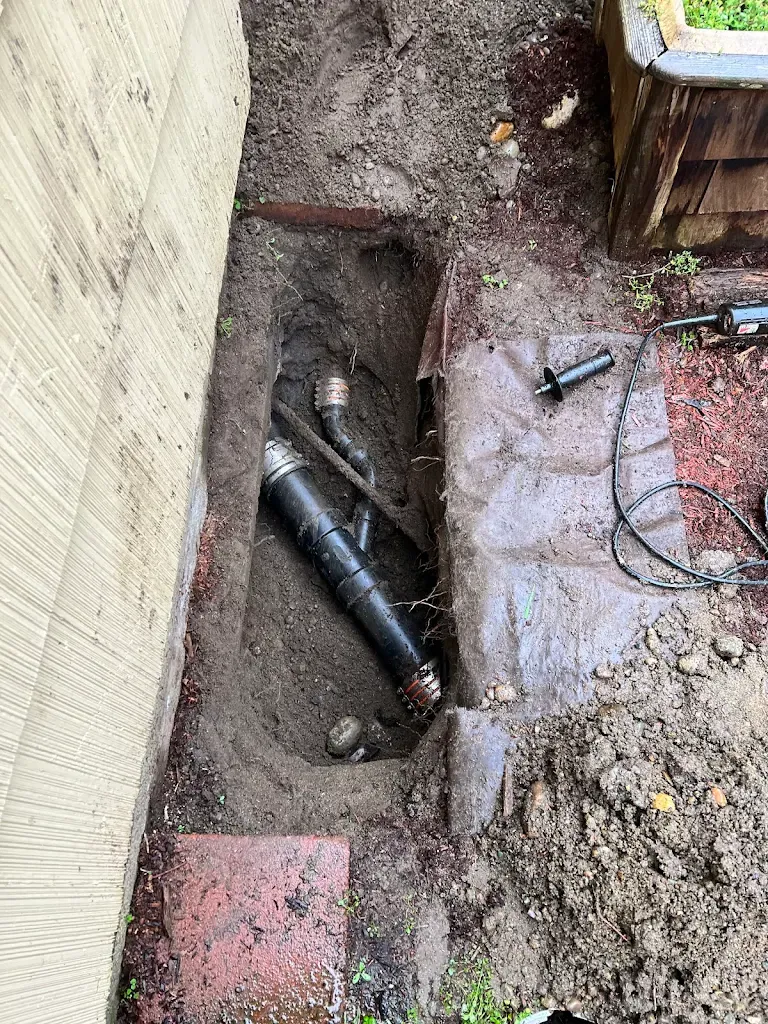
The standard location is just outside the foundation where the building drain becomes the lateral, which puts the access as close to the house as possible while keeping it outside. We locate the line with the camera beacon or by tracing from the known exit point, then dig a small excavation down to the pipe. On a 4 inch ABS or PVC lateral we cut in a wye fitting with risers brought to grade; on cast iron or clay we use shielded transition couplings to tie new plastic into the old pipe.
A two-way cleanout uses a double wye or two risers so both the house side and the street side can be accessed from the same spot. On a long lateral, or one that changes direction under a driveway, a second cleanout near the property line can save a lot of trouble later. On septic homes the cleanout sits between the house and the tank.
The risers come up to grade or just above it, with a cap that is easy to find and remove. We set them in a small concrete collar or a valve box lid depending on whether the spot is lawn, gravel or a walkway, so a mower or a car tire does not shear them off.
- Two-way access toward the house and the street
- Wye fitting cut into the existing lateral, not a tee
- Shielded couplings where plastic meets cast iron or clay
- Risers protected at grade in lawn, gravel or concrete
- Location noted and photographed so the next plumber can find it
Adding a cleanout during other work
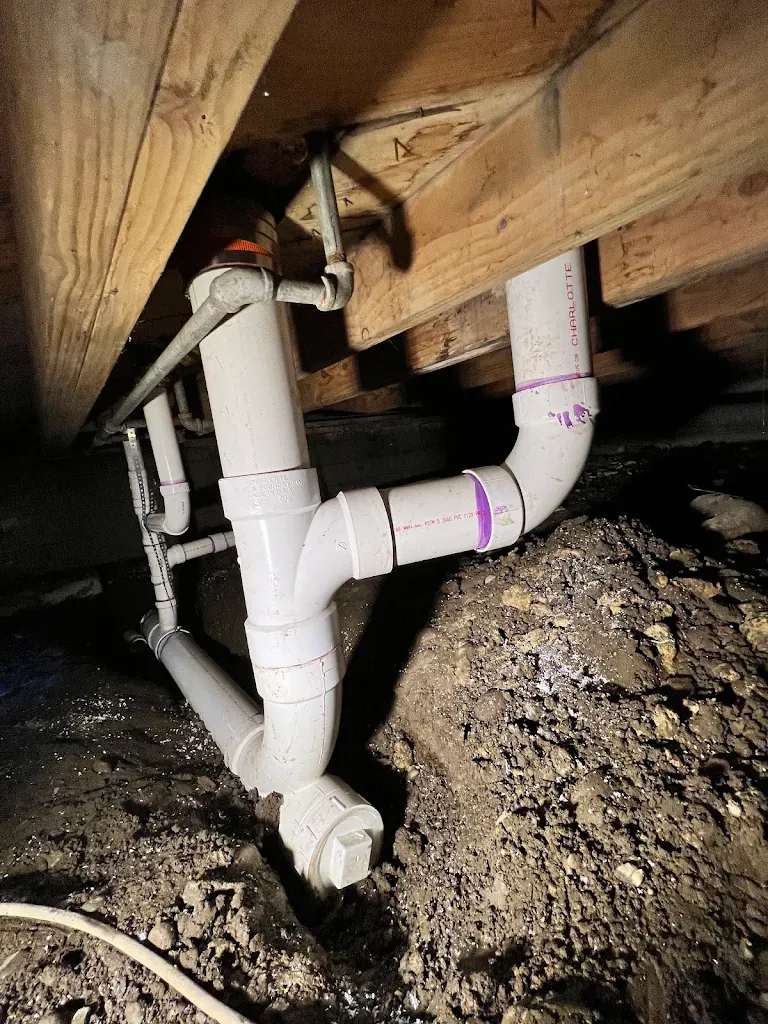
If we are already excavating for a sewer repair, a cleanout is a small addition to the job and we include one as a matter of course. Likewise in a crawlspace drain repipe: the new drain line gets a cleanout at the base of each stack and at the exit point so the house side can be serviced without crawling the whole length.
Many of our cleanout installations start as a drain call. We clear the main line through the roof or a toilet, show the homeowner what that involved, and quote a cleanout for next time. The quote is yours to think about; there is no rush, but most people take it after the second roof-vent clearing.
Cleanouts on Kitsap, Pierce and Mason County properties
Hillside and waterfront homes around Sinclair Inlet, Dyes Inlet, Gig Harbor and Hood Canal often have laterals that run downhill a long way or uphill through a pump. On those lines a cleanout near the foundation and another at the midpoint turns a two-hour jetting job into a short one and makes it possible to camera the line in both directions.
Older neighborhoods in Bremerton, Port Orchard, Manette and parts of Tacoma have cast iron under the house transitioning to clay or concrete outside, and the transition point is where the cleanout belongs. It is also where many of those lines first fail, so a cleanout there doubles as the access for the eventual repair.
On rural Mason County and north Kitsap septic properties, the line to the tank is often short, shallow and undocumented. A cleanout makes the line findable and gives a septic pumper and a plumber the same reference point.
Flat-rate pricing and permits
A stand-alone cleanout installation is a modest project priced by access and depth: a shallow lateral in lawn is quick, a deep one under concrete or in a tight crawlspace takes more. The price is quoted after we locate the line and approved on your phone before we dig. Added to a sewer repair that is already open, the cleanout is a small line item.
Cutting into a side sewer generally requires a permit from the local jurisdiction, and we handle it. You get the permit record, photos of the installed fitting before backfill, and the location noted on your invoice.
Signs you need sewer cleanout installation
Call if you notice
- Your last main line clearing went through the roof vent or a pulled toilet
- No capped pipe is visible anywhere outside the foundation
- The house was built before the 1980s and has never had sewer work
- A main line clog costs more every time because of the access
- A camera inspection could not get a good picture through the toilet flange
- You are already having a sewer repair or crawlspace repipe done
- Sewage backed up into a tub or shower and there was no way to relieve the line outside
- You own a rental and want the next drain call to be quick and cheap
How a sewer cleanout installation call goes
Locate the line
We trace the lateral from the foundation with the camera beacon or by following the known exit point and choose a spot just outside the house, or at the transition point on older lines.
Quote and permit
A flat price is sent to your phone based on depth and surface. We pull the side sewer permit where the jurisdiction requires one.
Excavate and cut in
A small excavation is opened to the pipe, a section is cut out, and a wye with two-way risers is installed using solvent weld on plastic or shielded couplings on cast iron and clay.
Set the risers at grade
The risers are brought to the surface with caps, set in a collar or box so they survive mowers and tires, and the excavation is backfilled and compacted.
Document and test
Photos of the fitting before backfill go in your records with the location noted. Water is run to confirm the line flows clean past the new fitting.
Questions we get about sewer cleanout installation
How do I know if my house has a sewer cleanout?
Look along the foundation on the side of the house facing the street or the septic tank for a capped 3 or 4 inch pipe at or just above ground level. Some are inside, at the base of a stack in a basement or crawlspace. If you cannot find one, there is a fair chance there is none, which is common on homes built before the 1980s around here.
Is a cleanout really worth installing if nothing is wrong right now?
If the main line has never clogged, it can wait. If it has clogged even once, the cleanout usually pays for itself on the next call by removing the roof or toilet access charge, and it makes jetting and camera work possible at all on some lines.
What is a two-way cleanout?
A fitting with access in both directions, so a cable or camera can go toward the street to clear the lateral or back toward the house to clear the building drain. A single-direction cleanout only helps with one side.
Can you add a cleanout to an old cast iron or clay sewer?
Yes. We cut out a section and tie in a plastic wye with shielded couplings rated for the transition. That spot often becomes the access point for a future repair, since the transition is usually where old lines fail first.
Where will the cleanout be in my yard?
Usually just outside the foundation where the line exits, set flush or slightly above grade with a cap. In lawn it gets a small collar; in gravel or walkway it gets a box lid. We note the location on your invoice and photograph it.
Do you need a permit to install a sewer cleanout?
Most jurisdictions in Kitsap, Pierce and Mason County treat it as side sewer work and require one. We pull it and include the record with your paperwork.
Can a cleanout be installed on a septic system?
Yes, on the line between the house and the tank. It gives both a plumber and a septic pumper a clear access point and makes the line easy to find on properties where it was never documented.
Will you install a cleanout while you are clearing my drain?
If the line is accessible and you approve the quote, often yes, though it may need a second visit for the permit and excavation. Many of our cleanout jobs start as a drain call where we clear the line through the roof and quote the cleanout for next time.