
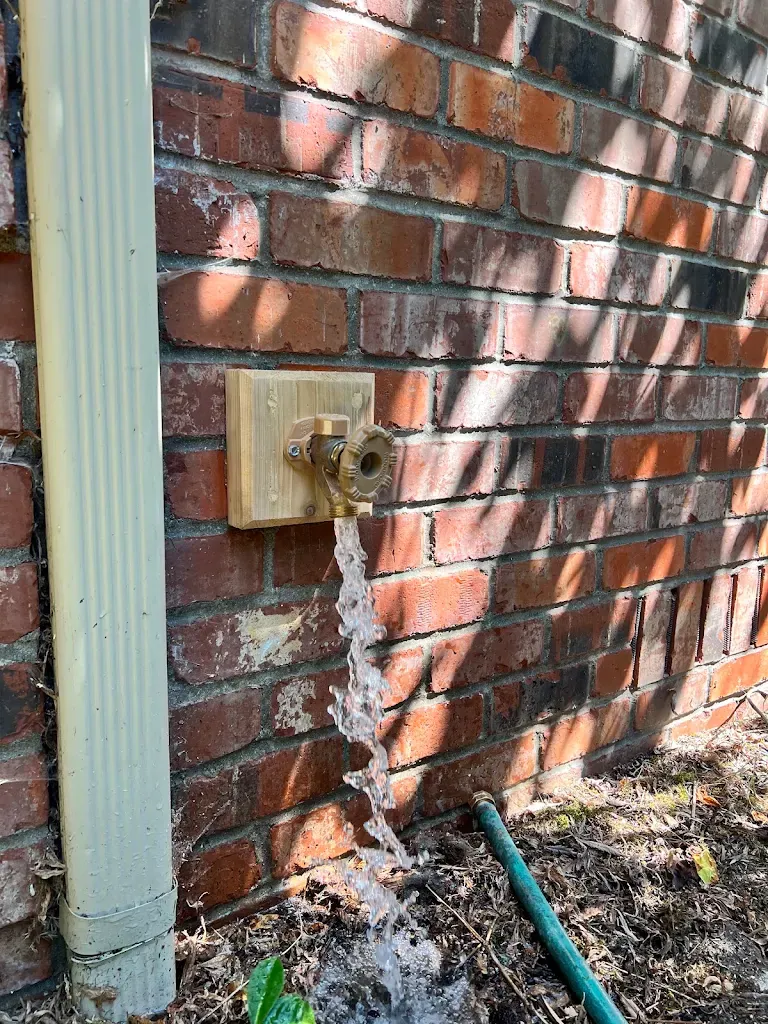
Washington Plumbing & Drain replaces hose bibs, sillcocks, wall hydrants and frost-free yard hydrants from Port Orchard and Bremerton out to Gig Harbor, Belfair and the Hood Canal. Most replacements are done in a single visit with a flat price sent to your phone before we touch the wall. If the faucet is the only thing you need, we are happy to come for just that.
We also fix the ones that were done wrong. A frost-free bib installed with a downhill pitch toward the house, a hydrant set without a gravel bed, a copper stub that was never strapped: these are the details that decide whether a faucet lasts twenty winters or two.
Why outdoor faucets fail around Puget Sound
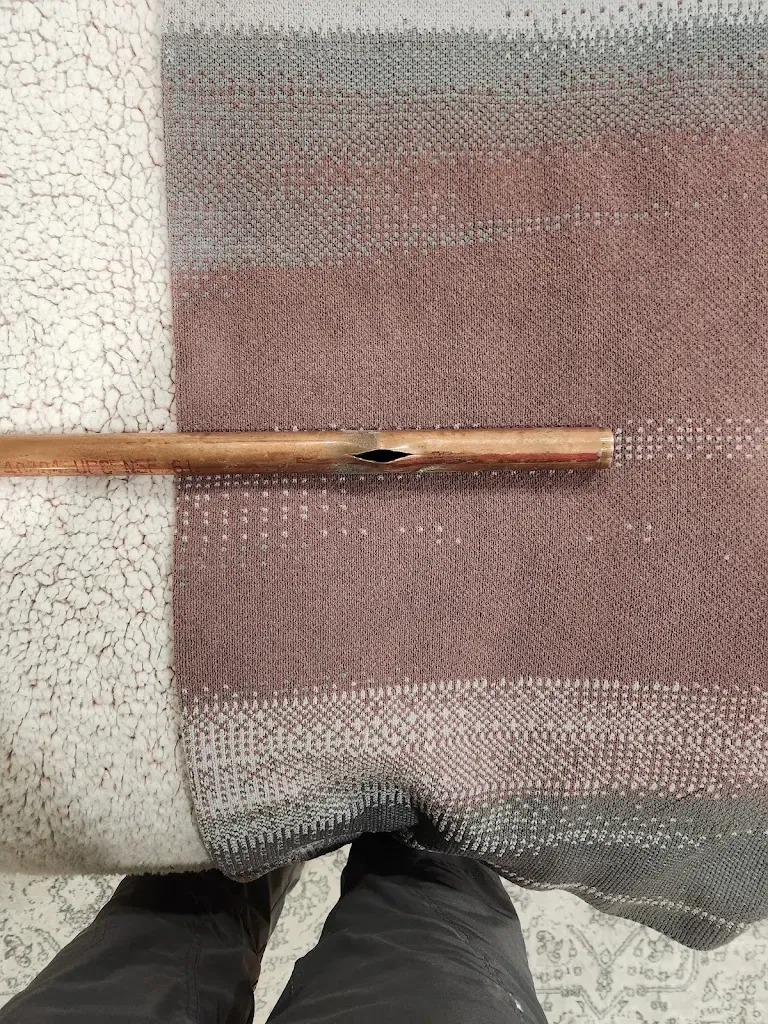
Western Washington winters are mild until they are not. The December 2022 freeze and the January 2024 cold snap both brought several days in the teens with an east wind, and a plain old brass hose bib with water sitting behind its seat does not survive that. Water freezes, expands, and the brass or the copper just behind it splits. The faucet looks fine from outside. The leak shows up inside the wall or down in the crawlspace a week later when the ice lets go.
A frost-free sillcock is built to avoid that. Its valve seat sits eight to fourteen inches back inside the heated part of the house, and the barrel between the handle and the seat is designed to drain empty every time you shut it off. That only works if two things are true: the faucet is pitched slightly downhill toward the outside, and there is no hose left attached to trap water in the barrel. A hose left on in December defeats the whole design, and we see that split barrel every spring.
Summer kills them differently. The washer under the handle wears out, the packing nut loosens, and the faucet drips at the stem or weeps at the spout. Vacuum breakers crack and spray from the top. On older homes near the shipyard the faucet is often threaded onto galvanized pipe that has rusted thin, so the moment you put a wrench on it, the pipe behind it crumbles.
Frost-free sillcocks, standard bibs and wall hydrants
For almost every house we recommend a quarter-turn frost-free sillcock with an integral vacuum breaker. The quarter-turn ball valve does not rely on a rubber washer that hardens with age, and the vacuum breaker keeps hose water from siphoning back into your drinking water if pressure drops on the street. On a City of Port Orchard or Silverdale Water District service, that backflow protection is also what the code expects.
Length matters. A frost-free bib has to be long enough that the valve seat ends up in conditioned space, not in the middle of a cold exterior wall or out in a vented crawlspace. We measure the wall and the framing before picking a length, and in a crawlspace home we often go longer so the seat lands above the floor insulation.
Where the pipe comes through brick, stucco or siding we mount the faucet on a backing block and seal the penetration so wind-driven rain stays out of the wall. Inside, the stub is secured so the faucet cannot rotate when someone cranks a hose nozzle. A faucet that spins in the wall eventually breaks its own solder joint.
Yard hydrants for driveways, gardens, barns and pump houses
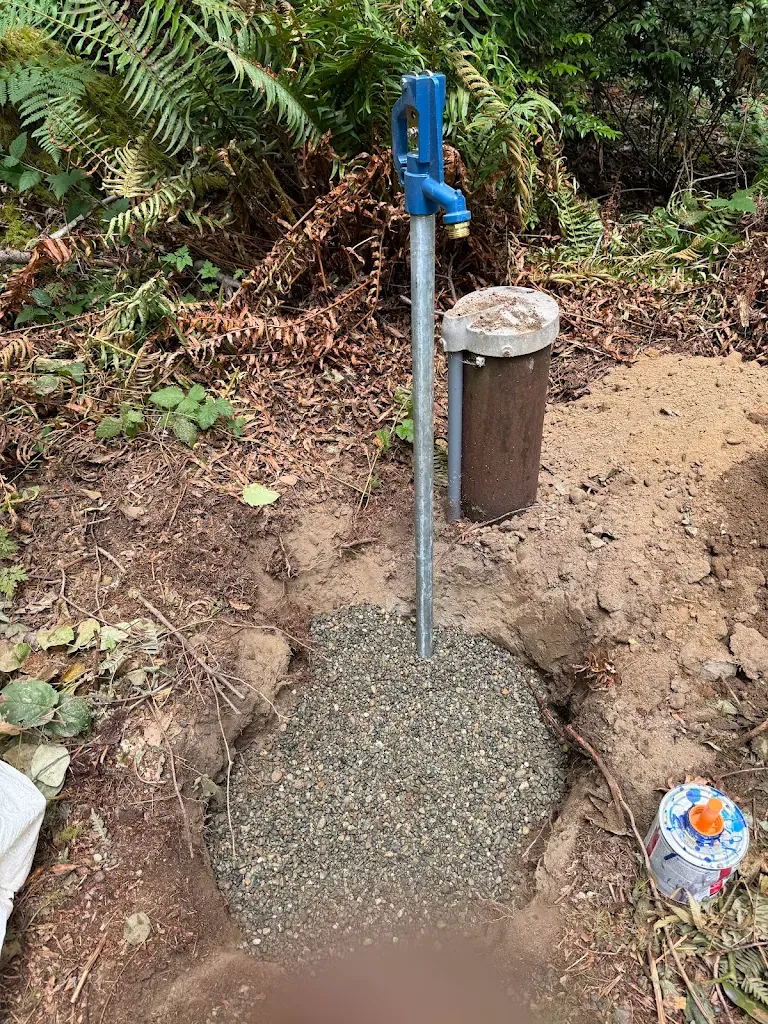
Out in Olalla, Seabeck, the Key Peninsula and most of Mason County, the water you need is often two hundred feet from the house: at the garden, the chicken coop, the shop, the RV pad or beside the well casing. A frost-free yard hydrant solves that. The valve sits at the bottom of a standpipe, below the frost line, and when you close the handle the water above the valve drains out through a weep hole into a gravel bed.
That gravel bed is the whole trick. We set each hydrant in a bucket or two of washed drain rock so the weep water has somewhere to go. A hydrant set in clay with no drainage sits in its own puddle, cannot drain, and freezes. We also pay attention to where the hydrant sits relative to a well head, because a hydrant that drains back into the soil within a few feet of the casing is not something the health district wants to see.
Hydrants are tied into the supply with PEX or poly pipe buried below the frost line and bedded in sand. We bring a trencher or hand-dig in rocky glacial till where a machine would tear up roots and irrigation, and we add a shutoff at the house or pump house so the hydrant line can be isolated without shutting off the whole property.
What a split hose bib does to a house
The costly part of a frozen outdoor faucet is never the faucet. It is the forty gallons an hour that run into a wall cavity, under a subfloor, or across a crawlspace while nobody is home. A faucet that split in a January freeze may not show itself until the first warm afternoon, and by then the insulation is saturated and the subfloor has swelled.
If you suspect a freeze split, shut off the main and call us before turning the water back on. We find the split, replace the faucet and the damaged pipe, and give you a written description of what we found for your insurance claim. We do not do water damage restoration, but we can tell you who to call and we will coordinate with them if they need access to the same wall.
After the repair we walk the house with you and point out the other hose bibs that are standard, not frost-free, and tell you plainly which ones are worth replacing before next winter. Sometimes the answer is just to add an interior shutoff with a drain so you can winterize them yourself.
Adding a faucet where there is none
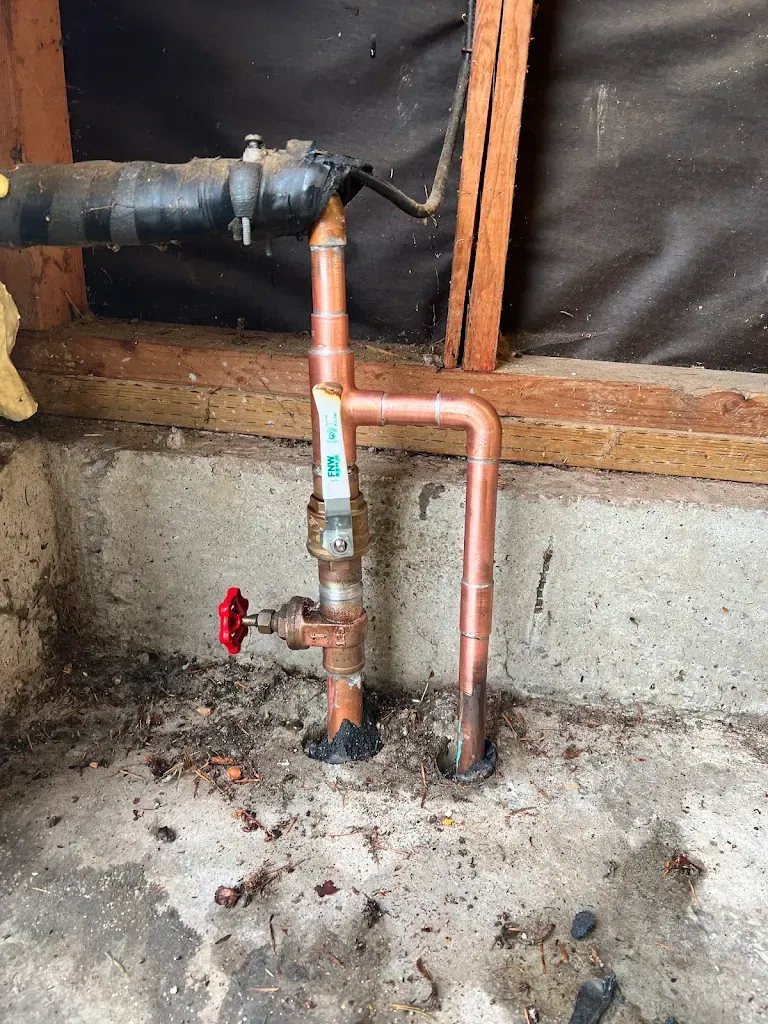
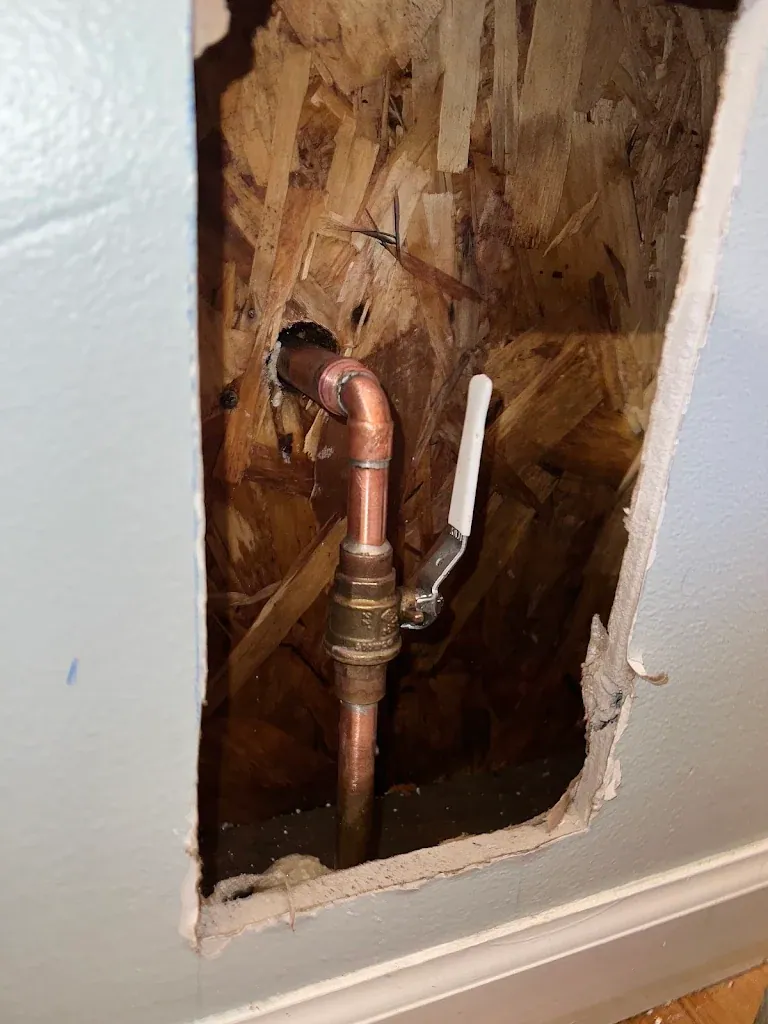
A lot of homes out here have one bib on the front and nothing on the back, which means a hundred-foot hose dragged across the driveway every time the garden needs water. We add new hose bibs by tapping a cold line in the crawlspace or basement, running PEX or copper to the exterior, and installing a frost-free sillcock with its own shutoff inside.
Detached shops, garages and ADUs usually need their own exterior faucet, and if the building is already plumbed we can add one in an hour or two. If you are building new, tell us during the rough-in. A hose bib stubbed out during framing costs far less than one added through finished siding later.
Signs you need hose bib & outdoor faucet replacement
Call if you notice
- The outdoor faucet drips from the handle or spout even when it is closed tight
- Water sprays out of the top of the faucet when the hose is on
- A damp spot or stain appears on the wall, ceiling or crawlspace below an exterior faucet
- The faucet handle spins freely or will not turn at all
- You hear water running inside a wall after turning on a hose bib
- The faucet froze last winter and now flows weakly or not at all
- The spigot wobbles or moves in the wall when you attach a hose
- Your only outdoor water is a hundred feet from the garden, shop or RV pad
How a hose bib & outdoor faucet replacement call goes
Describe the faucet and the wall
Tell Corinne whether it drips, sprays, froze or is simply in the wrong place, and what the exterior is made of. A photo by text helps us bring the right length sillcock and the right mounting parts.
Shut off and inspect
We isolate the line, remove the old faucet and look at the pipe behind it. On galvanized or freeze-damaged copper we check how far back the damage goes before quoting.
Flat price before any cutting
You get a written flat-rate price for the replacement, including any wall or crawlspace access, approved electronically before work starts.
Install and secure
A quarter-turn frost-free sillcock with vacuum breaker, pitched to drain, strapped inside, and sealed at the penetration. Yard hydrants are set in a gravel bed below the frost line.
Pressure test and show you
We turn the water back on, check every joint under pressure, run the faucet, and show you how to winterize it properly.
Questions we get about hose bib & outdoor faucet replacement
Why does my frost-free hose bib still freeze?
Nearly always because a hose was left attached. The barrel cannot drain with a hose on it, so water sits behind the seat and freezes. The second most common reason is a faucet pitched toward the house, which traps water inside. Pull hoses off by Thanksgiving and the problem usually goes away.
Can you replace a hose bib without opening the wall?
Often, yes. If the old faucet is threaded onto a fitting we can usually swap it from the outside. If the copper behind it split in a freeze or the galvanized is rotten, we may need a small access cut inside, and we quote that separately so you know before we cut.
What is a vacuum breaker and do I need one?
It is a small check device on the faucet outlet that keeps hose water from siphoning backward into your house plumbing. If you have ever left a hose end in a bucket of fertilizer or a kiddie pool, you want one. New frost-free sillcocks have it built in.
How far down does a yard hydrant need to go?
The valve sits below the local frost line, which around Kitsap and Mason County means we bury the supply and set the valve well below grade and in a gravel bed so it drains. Depth is decided on site once we see the soil.
My outdoor faucet is on a well. Does that change anything?
A little. A well home runs on a pressure tank, so a leaking bib can short-cycle the pump and wear it out. We also keep hydrants a safe distance from the well head so weep water does not drain back toward the casing.
Can you add a faucet on the back of the house?
Yes. We tap a cold line from the crawlspace or basement, run new pipe to the exterior, and install a frost-free sillcock with its own interior shutoff. Most additions are a half-day job.
Is a dripping hose bib really worth fixing?
A steady drip can waste hundreds of gallons a month, and on a City of Bremerton or West Sound Utility District bill you pay for every one of them. More importantly, a drip at the stem means the packing is failing, and that faucet is on its way to a real leak.
Do you winterize outdoor faucets for seasonal homes?
We can add interior shutoffs with drain ports for each bib so you or a caretaker can close and drain them in the fall. For Hood Canal and Mason County cabins that sit empty in winter, that small upgrade prevents most freeze damage we see.