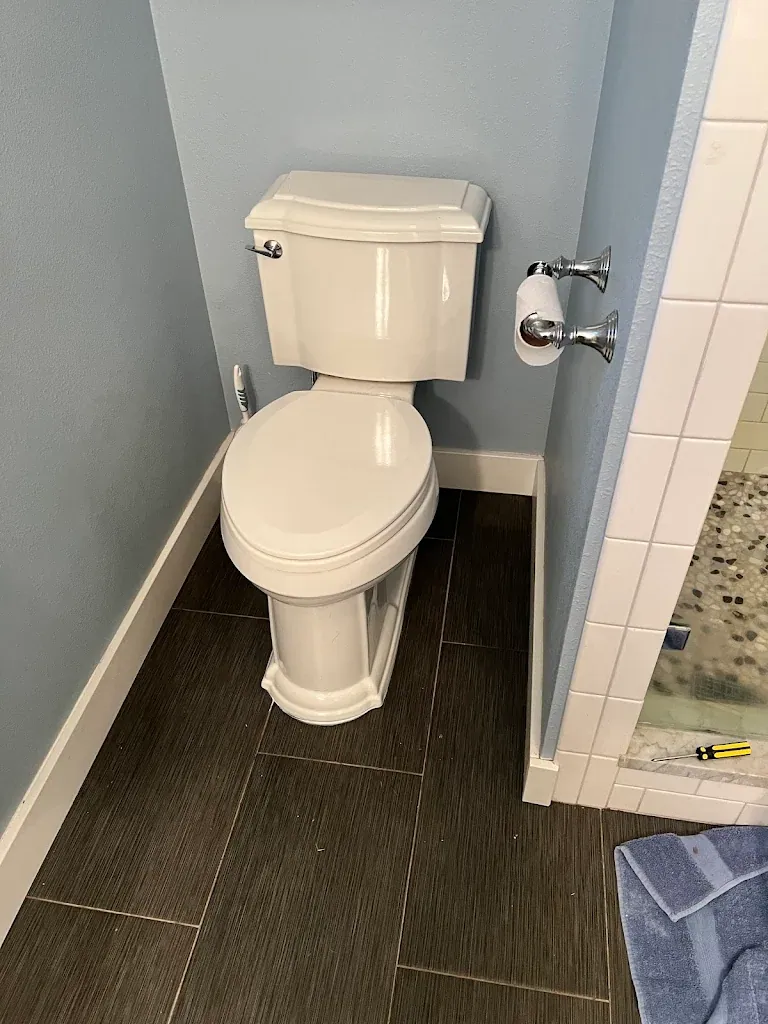
Washington Plumbing & Drain repairs and replaces toilets every week from Port Orchard to Bremerton, Silverdale and Poulsbo, across the bridge to Gig Harbor and Tacoma, and down to Belfair and Shelton. Fill valves, flappers, flush valves, supply lines, shutoff valves, wax rings, flanges and full replacements, all with a flat price you approve on your phone before we start.
We carry quality replacement toilets and the parts to fix most brands on the truck. If your toilet is worth fixing, we fix it. If it is a 1970s water hog with a cracked tank and a corroded flange, we will say so and show you what a new one would involve, then let you decide.
Running toilets and the parts inside the tank
A toilet that runs is losing water from the tank to the bowl and refilling to make up for it. Three parts are responsible for almost every case. The flapper is a rubber seal at the bottom of the tank; it warps, stiffens and stops sealing, and chlorine tablets in the tank speed that up dramatically. The fill valve controls the refill and can stick, chatter or fail to shut off. The float is set too high and water trickles over the overflow tube continuously.
A simple test tells which one it is. Put a few drops of food coloring in the tank and wait fifteen minutes without flushing. Color in the bowl means the flapper or flush valve seat is leaking. No color but a hissing sound means the fill valve. Water running into the overflow tube means the float needs adjusting or the fill valve has failed.
We replace fill valves and flappers with quality universal or brand-specific parts, not the thinnest thing on the hardware store peg. When the flush valve seat itself is pitted, we replace the whole flush valve, which means pulling the tank. Either way it is a modest repair, and it stops the water meter from spinning on a toilet that was running a hundred gallons a day.
Leaks at the base and what the floor is telling you
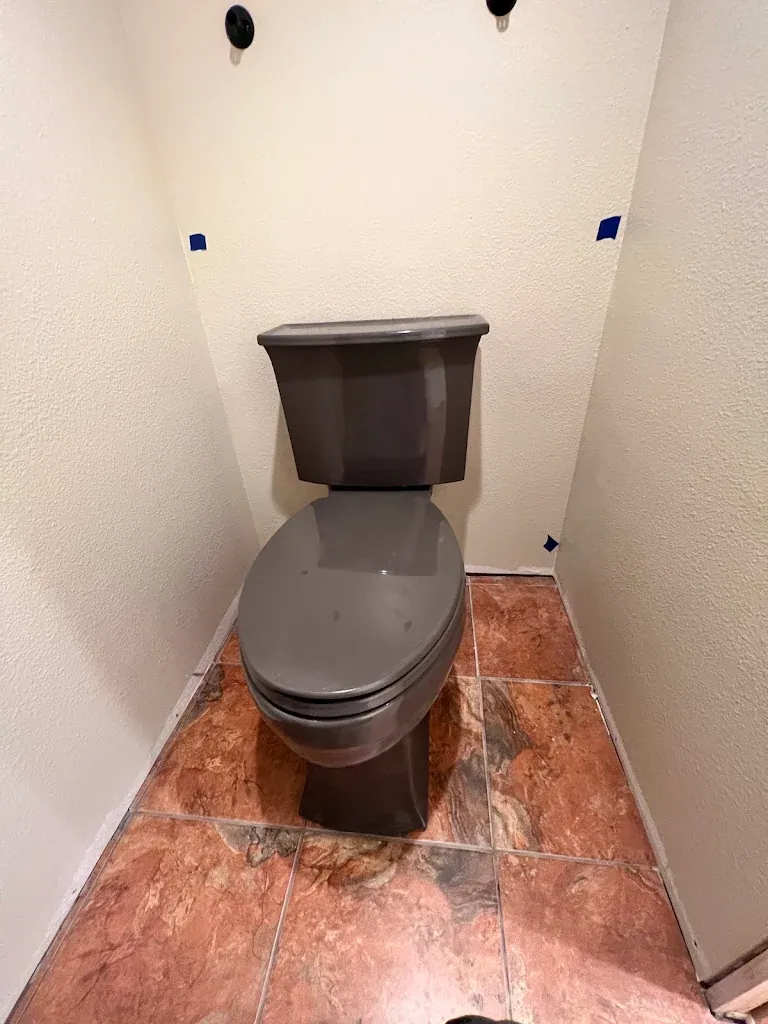
Water at the base of a toilet is a wax ring that is not sealing, a flange that is broken or set too low, or a bowl that rocks on an uneven floor and has worked the seal loose. In the mid-century homes around the Bremerton shipyard and in older Port Orchard neighborhoods we often find all three: a cast-iron flange that has rusted through on one side, a floor that was re-tiled over the original without raising the flange, and a toilet that was simply caulked to the floor to hide the wobble.
Caulking around the base does not fix a leaking wax ring. It traps the water under the toilet where it soaks the subfloor. The first clue is usually a soft spot in the floor in front of the bowl, a stain on the ceiling below, or a smell that comes and goes. By the time any of those show up, the ring has been leaking for a while.
The repair is to pull the toilet, inspect the flange and the subfloor, and fix what is actually wrong. A rusted cast-iron flange gets a repair ring or a replacement flange. A flange below the finished floor gets a spacer or an extension so the wax has something to seal against. Soft subfloor gets pointed out to you plainly, because resetting a toilet on rotted wood just means doing this again next year.
Weak flushes, clogs and when it is the toilet versus the drain
A toilet that needs two flushes has either lost water volume or lost its rim jets. Mineral scale closes the small holes under the rim over the years, especially on well water with iron or hardness, and the swirl that clears the bowl disappears. A flapper that closes too early cuts the flush short. A partial clog in the trapway, often a toothbrush, a toy or a wad of flushable wipes that were not, chokes the flush without blocking it entirely.
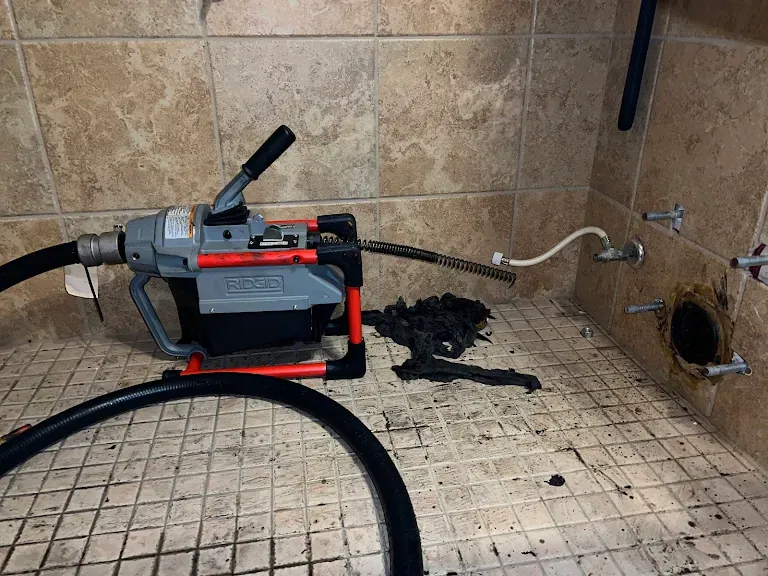
We clear toilet clogs with a closet auger that is built to go through the trapway without scratching the porcelain. If the auger does not find it, we pull the toilet rather than drive the object into the drain line where it becomes a main line problem. When every toilet in the house is slow and the tub gurgles, the toilet is not the issue; that is a drain or sewer call and we switch tools.
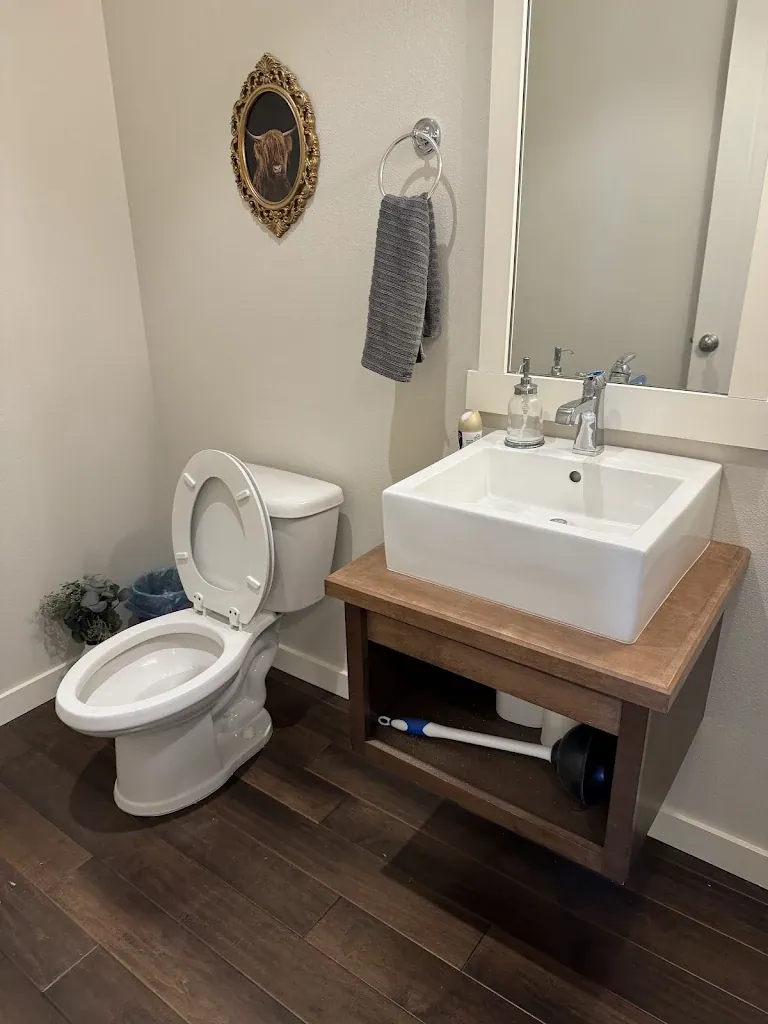
Replacing a toilet and choosing the right one
A toilet replacement is more than lifting the old one out and setting the new one down, although that is the part people picture. We shut off and usually replace the supply valve while the toilet is out, because an old multi-turn angle stop that has not moved in twenty years will leak the moment it is touched. We check the flange and the floor, set a new wax ring or a waxless seal, bolt the bowl down without cracking it, and level it with shims so it does not rock.
Choosing the toilet matters more than people expect. Comfort-height bowls are a couple of inches taller and make a real difference for anyone with knees, hips or a back that complains. Elongated bowls are more comfortable but need an extra inch or two in front, which does not always exist in a 1960s hall bath. The rough-in, the distance from the wall to the flange bolts, is usually twelve inches but is ten or fourteen in some older homes, and the wrong one will not fit.
Flush performance is published, and we pay attention to it. A toilet rated to move a large mass of test media with a single flush will not need two flushes and will not clog on normal use. Dual-flush and pressure-assist models have their places, and we will tell you where they make sense and where they are just a more expensive way to flush.
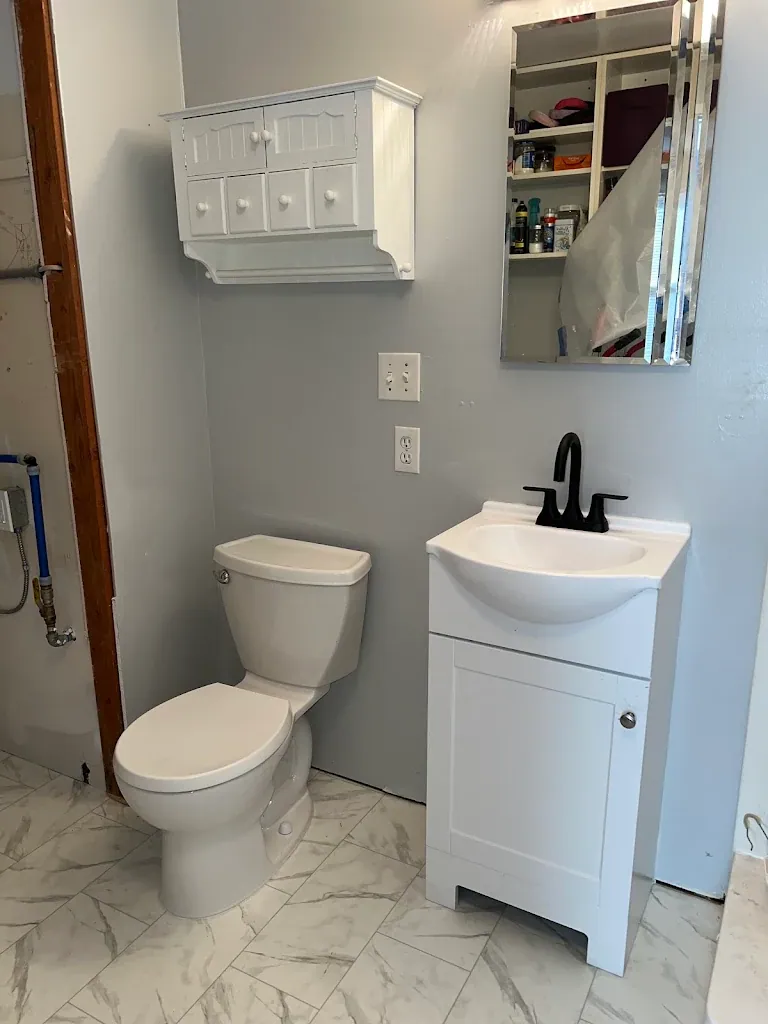
Older homes, septic systems and the local details
Houses from the 1950s through 70s near PSNS, in Tracyton, Manchester and the older parts of Port Orchard, frequently have cast-iron closet bends and flanges that have corroded where the wax ring sits. Sometimes the flange is screwed to a subfloor that has gone punky from decades of small leaks. We carry repair flanges and spacers and the tools to transition from cast iron to ABS if the bend itself has failed.
On a septic system, toilet problems reach further than the bathroom. A running toilet pours hundreds of gallons a day into a tank sized for a fraction of that, and the drain field pays for it. Flushable wipes, which do not break down, end up in the tank and the pump chamber. If you are on septic in South Kitsap, Olalla, Belfair or the Key Peninsula, a running toilet is worth fixing the week you notice it, not the month.
Flat-rate repair with no pressure to replace
You get a written flat price for the repair before we start. A fill valve and flapper is a modest service call. A pull-and-reset with a new wax ring and flange repair is more because of the time and the parts, and a full replacement is quoted with the toilet of your choice included so there is one number to approve. If we pull a toilet for one reason and find a second problem, we show it to you and quote it separately. Nobody is upsold in their own bathroom.
Our satisfaction guarantee and extended labor warranty apply to every toilet we set. If a toilet we installed rocks, runs or weeps at the base, we come back.
Signs you need toilet repair & installation
Call if you notice
- The toilet refills on its own every few minutes with nobody using it
- Water seeps out around the base after a flush, or the floor feels soft in front of the bowl
- The bowl rocks or shifts when you sit
- It takes two flushes, or the flush swirls weakly and does not clear
- A hissing, gurgling or whistling sound after the tank fills
- The supply valve behind the toilet drips or will not turn
- A hairline crack in the tank or bowl, or a tank that sweats heavily
- Sewer smell near the toilet that comes and goes
- The water bill jumped and no faucet is dripping
How a toilet repair & installation call goes
Tell us the symptom
Corinne or Greg will ask whether it runs, leaks, rocks, clogs or needs replacing, and what brand it is if you know. That decides which parts and which toilet come on the truck.
Diagnose the tank and the base
A dye test, a look at the fill valve and flapper, a check of the supply valve, and a rock test on the bowl. If there is a leak at the base, we pull the toilet and inspect the flange and subfloor before quoting.
Flat price approved by you
Repair or replace, with the toilet model named if it is a replacement. Sent to your phone, approved before work starts.
Repair or set it right
Quality fill valves and flappers, a new angle stop where the old one is suspect, flange repair where needed, a fresh seal, bowl leveled and bolted without cracking the porcelain.
Test and clean up
Multiple flushes, a check for weeping at the base and the supply, a dry floor, and the old toilet hauled away if we replaced it.
Questions we get about toilet repair & installation
Can you fix a running toilet the same day?
Usually. We carry fill valves, flappers, flush valves and supply lines on the truck, and a running toilet is typically a modest repair done in under an hour. Call (360) 812-1124 and Corinne will find a window.
Is it cheaper to repair or replace my toilet?
Repair, almost always, if the porcelain is sound and the problem is internal parts. Replacement makes sense when the tank or bowl is cracked, the toilet is an early low-flow model that never flushed well, or you want comfort height. We give you both numbers when it is a close call.
Why is there water around the base of my toilet?
Most often a wax ring that has stopped sealing, frequently because the toilet rocks or the flange sits below the floor. Caulk hides it but does not fix it. We pull the toilet, repair the flange if needed, and reset it on a new seal.
What is a comfort height toilet?
A bowl that sits about two inches taller than a standard toilet, close to the height of a chair. It is easier on knees and hips and is what most of our customers choose when replacing. We will measure your space to make sure an elongated comfort-height bowl fits.
Do you replace the shutoff valve behind the toilet?
If it is an old multi-turn stop that has not been turned in years, yes, and we recommend it. They tend to leak the moment they are moved. A quarter-turn ball-style stop is a small part of the job and saves a call later.
Why does my toilet keep clogging?
Either something is lodged in the trapway, the rim jets are scaled, or the toilet is a poor flusher by design. We clear it with a closet auger and tell you which it is. Flushable wipes are the most common cause we see, and they are even harder on septic systems.