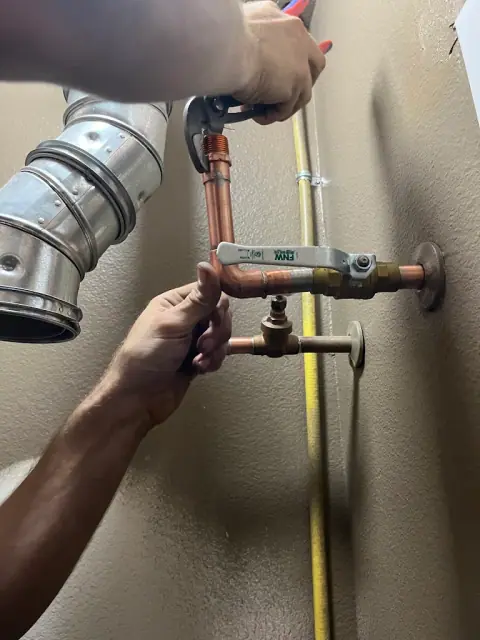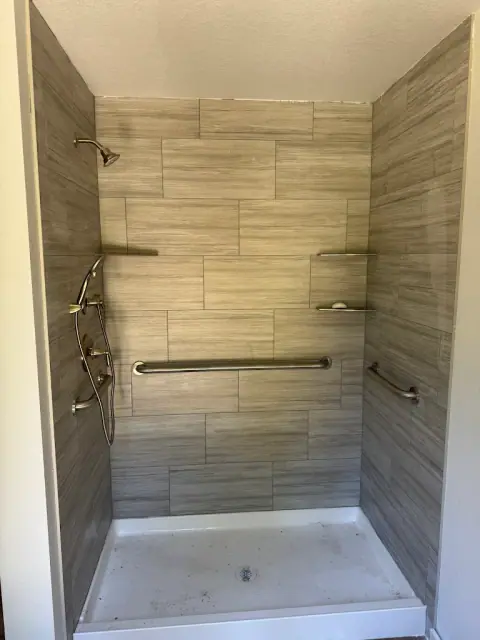
We cross the Narrows Bridge from Port Orchard most days of the week for Tacoma calls: cast iron drain replacement under a Stadium District basement, a clay side sewer full of roots on a Proctor street, a galvanized repipe in Hilltop, a water heater in a South Tacoma garage. Flat-rate pricing, a four-hour window, and a text from the plumber when he is on his way.
Washington Plumbing & Drain is veteran-owned and family-run. Over 200 Google reviews at five stars, a lot of them from Tacoma homeowners who called us after another company told them they needed something they did not.
Tacoma at a glance for plumbing
Water
Tacoma Water, part of Tacoma Public Utilities, serves the city from the Green River watershed with groundwater wells, including the South Tacoma wellfield, backing it up. Green River water is soft, which is why hard-water scale is a minor issue in Tacoma compared with the well country across the bridge.
Sewer or septic
Essentially all of Tacoma is on city sewer run by Tacoma Environmental Services, with the Central and North End treatment plants. Some older neighborhoods have combined or very old side sewers in clay, concrete or cast iron. Septic is rare and limited to a few unincorporated pockets at the edges.
Homes
Tacoma's bones are old. The North End, Stadium District, Old Town, Hilltop and Lincoln are full of 1890s to 1920s Victorians and Craftsman bungalows, with 1940s wartime housing in South Tacoma and the East Side. That means cast iron drains, galvanized supply, lead-jointed clay side sewers, basements with floor drains, and original fixtures that have been patched by six generations of owners.
Ground and weather
Built on glacial drift above Commencement Bay and the Narrows, with steep bluffs on the Ruston Way side and the West End, a tideflat on the port side, and gulches like Puget Creek and Garfield Gulch cut into the hills. Basements in the North End sit in clay that holds water, and the gulches carry a lot of groundwater toward old sewers. Tacoma gets a touch less rain than Seattle and a touch more wind off the Narrows. The December 2022 and January 2024 cold snaps froze uninsulated basement lines, garage water heaters and attic pipes in the older houses, and the big winter rains overload old side sewers and basement floor drains.
Old pipe in old Tacoma houses
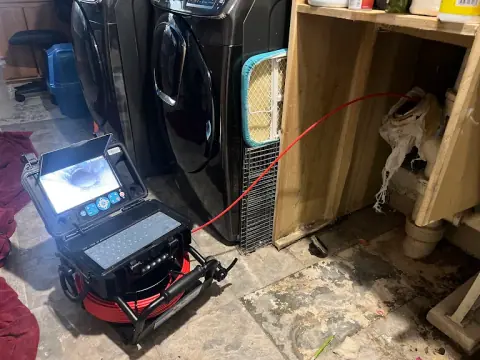
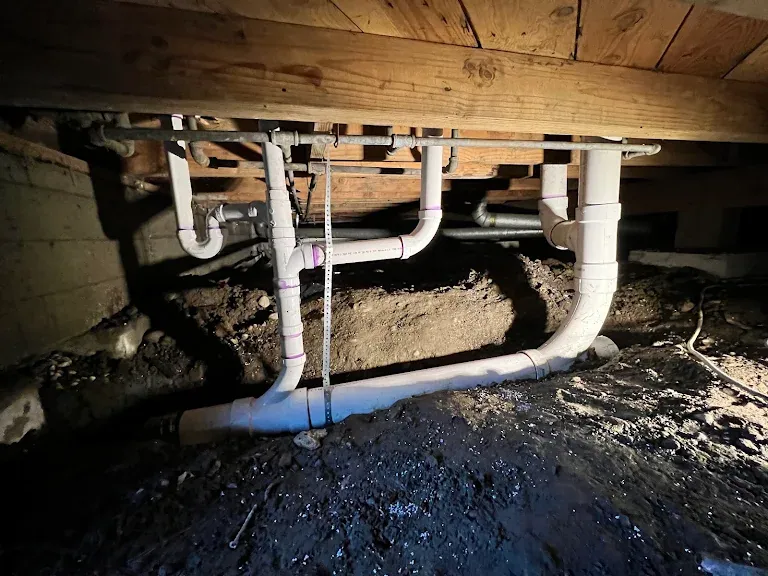
Most of the North End, Stadium, Old Town, Hilltop and the Lincoln District was built before 1930. The drains in those houses are cast iron with lead and oakum joints, and after a century the pipe is thinning from the inside, channeling along the bottom, and cracking at the hubs. Symptoms show up as a sewer smell in the basement, a slow main drain that a cable only fixes for a few months, or rust stains on the slab under a cleanout. We replace cast iron with PVC in sections or whole runs, usually from the basement or crawlspace, and we show you the camera footage first.
Supply side, the enemy is galvanized steel. The pipe looks fine from the outside while the inside closes to the diameter of a drinking straw. If the upstairs shower loses pressure when someone flushes downstairs, that is galvanized. A whole-house repipe in PEX restores pressure throughout the house and gets rid of the rusty first-draw water. In Tacoma's plaster-and-lath houses we plan the routing to open as few walls as possible.
The water service from the meter to the house is the third old pipe. Many pre-war Tacoma lots still have galvanized or, occasionally, lead services. If the meter spins with every fixture off, or the street-side pressure is strong and the house pressure is weak, the service line is the suspect, and we replace it with a new line and a proper main shutoff valve.
Side sewers, roots and the big street trees
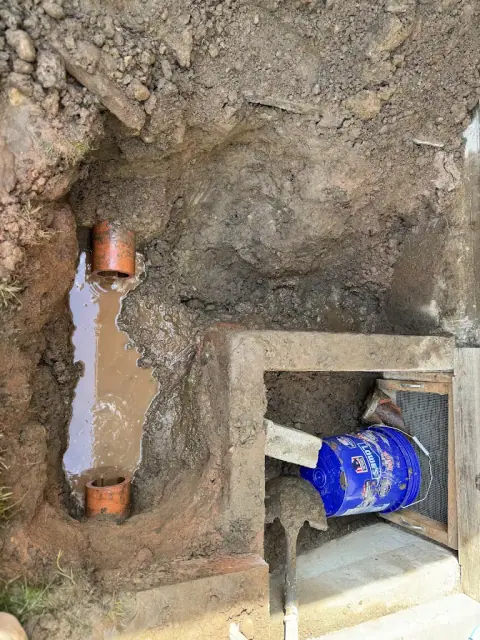
Tacoma's side sewers are the homeowner's responsibility out to the city main, and on the older streets that line is usually vitrified clay or concrete with joints every few feet. The maples and oaks that make Proctor and the Stadium District so pretty send roots into every one of those joints. A root ball in a clay sewer shows up as a backup in the lowest fixture, often a basement floor drain or a tub.
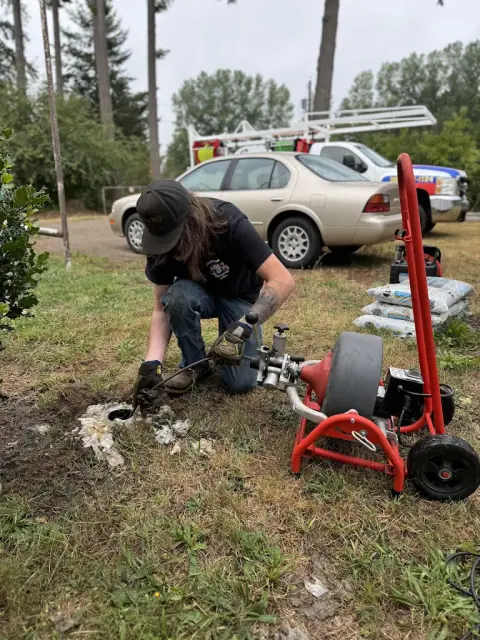
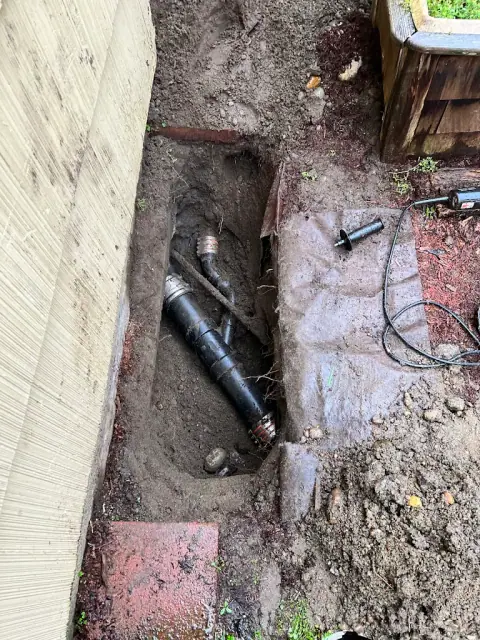
We clear roots with a sectional machine and a root-cutting head, then run the camera so you know whether this is a maintenance item or a pipe that has broken. When it is broken we excavate, replace the bad section with PVC, and add a two-way cleanout at the property line so the next cleaning takes an hour instead of an afternoon. Tacoma requires a side sewer permit for that work and we pull it.
If the drains only back up during a heavy rain, groundwater is finding its way into the pipe. That is a cracked or offset joint, and the camera finds it. On some North End streets the side sewer runs through a gulch, and those long, deep lines are the ones most worth inspecting before they fail.
Basements, floor drains and ejector pits
A basement is rare in Kitsap and common in Tacoma, and basements add fixtures that the rest of our service area does not have: floor drains, laundry sinks below grade, and sewage ejector pits serving a basement bathroom. When an ejector pump dies the basement bathroom fills, and when a floor drain trap dries out the house smells like sewer. We replace ejector pumps, check valves and floats, and we rebuild floor drains with new traps and backwater valves where a street main surcharges in storms.
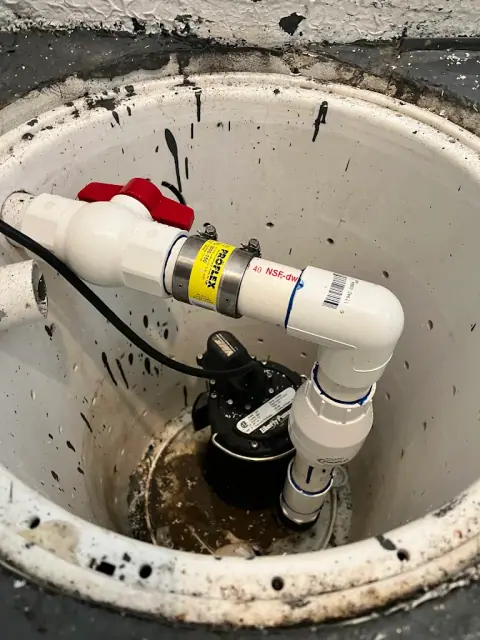
The clay under the North End holds water, and many basements that were dry for decades started taking on groundwater after the big atmospheric river years. A sump pump with a sealed basin and a discharge line that daylights away from the foundation is a modest project that saves a flooded basement. We install Liberty pumps with battery backup for houses where the power goes out with the storm.
Water heaters in Tacoma garages and basements
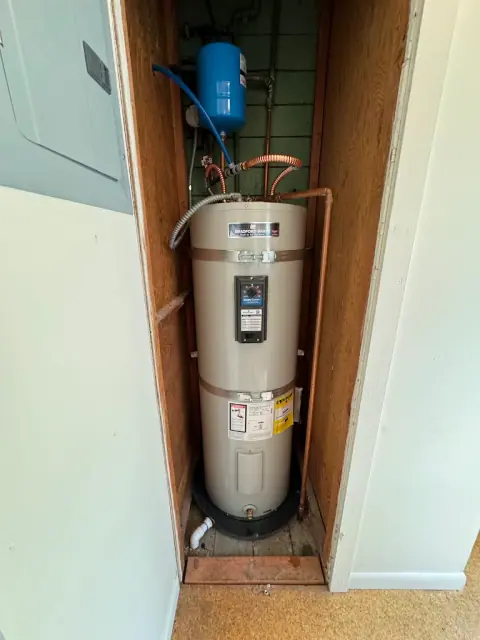
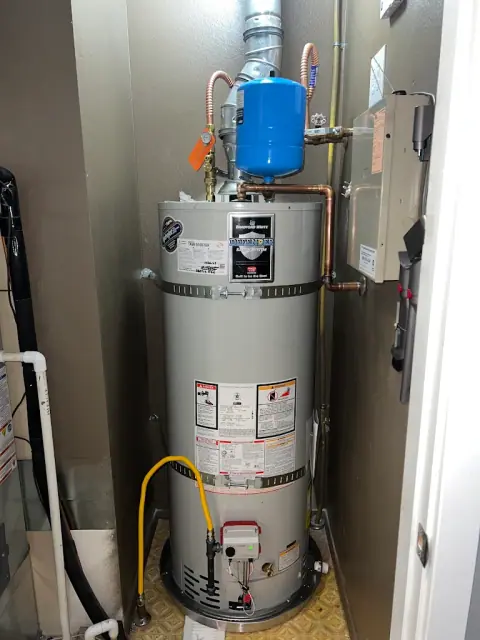
Tacoma's soft Green River water is kind to water heaters, so a tank that is maintained can run a long time here. What kills them in this city is location. Heaters in unheated detached garages and in damp basements rust from the outside in and freeze their supply lines in a cold snap. In January 2024 we replaced several heaters that split after the garage dropped below freezing for three nights.
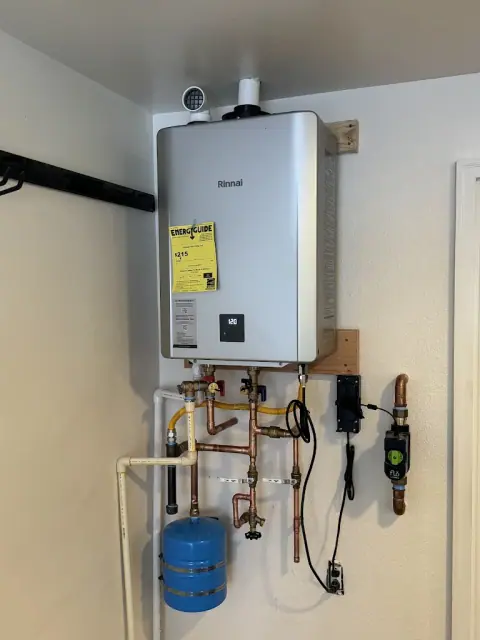
We install Bradford White and A. O. Smith tanks, Rinnai tankless units for gas homes on Puget Sound Energy service, and we bring older installs up to code with expansion tanks, seismic straps and proper venting. If your heater is in a basement without a drain, we add a pan and a leak sensor, or a Flo by Moen shutoff, so a failed tank does not become a flooded room.
Plumbing problems we see most in Tacoma
Local patterns
- Cast iron main drains in 1900s to 1940s homes rusted thin, cracked or holding sludge
- Galvanized supply lines reducing flow to a trickle on the second floor of North End houses
- Clay side sewers with root intrusion under the big street trees in Proctor and Stadium
- Basement floor drains and old ejector pits backing up during atmospheric rivers
- Lead and galvanized water services between the meter and the house on pre-war lots
- Water heaters installed in unheated garages and basements freezing or rusting out
- Un-permitted remodels in flipped houses with bad venting and S-traps
Neighborhoods and areas in Tacoma we serve
We work throughout Tacoma, including North End and Proctor, Stadium District, Old Town, Hilltop, Downtown and the Dome District, South Tacoma, Lincoln District, East Side and McKinley Hill, Northeast Tacoma and Browns Point and West End and Narrows, and around Point Defiance Park, Tacoma Dome, Museum of Glass, Stadium High School, Ruston Way waterfront, Tacoma Narrows Bridge. Population is about 220,000, the third-largest city in the state; ZIP codes include 98402, 98403, 98404, 98405, 98406, 98407, 98408, 98409, 98418, 98421, 98422, 98444, 98445, 98465.
Tacoma plumbing questions
Do you really come to Tacoma from Port Orchard?
Every week, usually several days of it. The Narrows Bridge puts most of Tacoma 35 to 40 minutes from our shop, and our flat-rate prices do not change for the drive.
How do I know if my Tacoma house still has cast iron or galvanized pipe?
Look at the exposed pipe in the basement or crawlspace. Cast iron drains are dark gray or black and heavy; galvanized supply is gray steel with threaded fittings and often rust at the joints. A house built before 1960 almost certainly started with both unless it has been repiped. We can confirm in a few minutes on site.
Who is responsible for the side sewer in Tacoma?
The property owner, from the house to the connection at the city main, including the part under the sidewalk and street. Tacoma requires a side sewer permit for repairs, which we handle as part of the job.
My basement floor drain backs up when it rains hard. Can you fix that?
Usually. It is either roots and debris in the side sewer, groundwater entering a cracked line, or the city main surcharging. A camera inspection sorts out which. The fixes range from a cleaning to a backwater valve to a section of new pipe.
Do you install tankless water heaters in older Tacoma homes?
Yes, on both gas and electric service. In pre-war houses the gas line and venting usually need upgrading, and we price that into the quote up front so there is nothing added later.
Is Tacoma water hard on plumbing?
No. Tacoma Water comes mostly from the Green River and is soft. Scale is a small issue here, which is a nice change from the well water we deal with on the Kitsap side.