
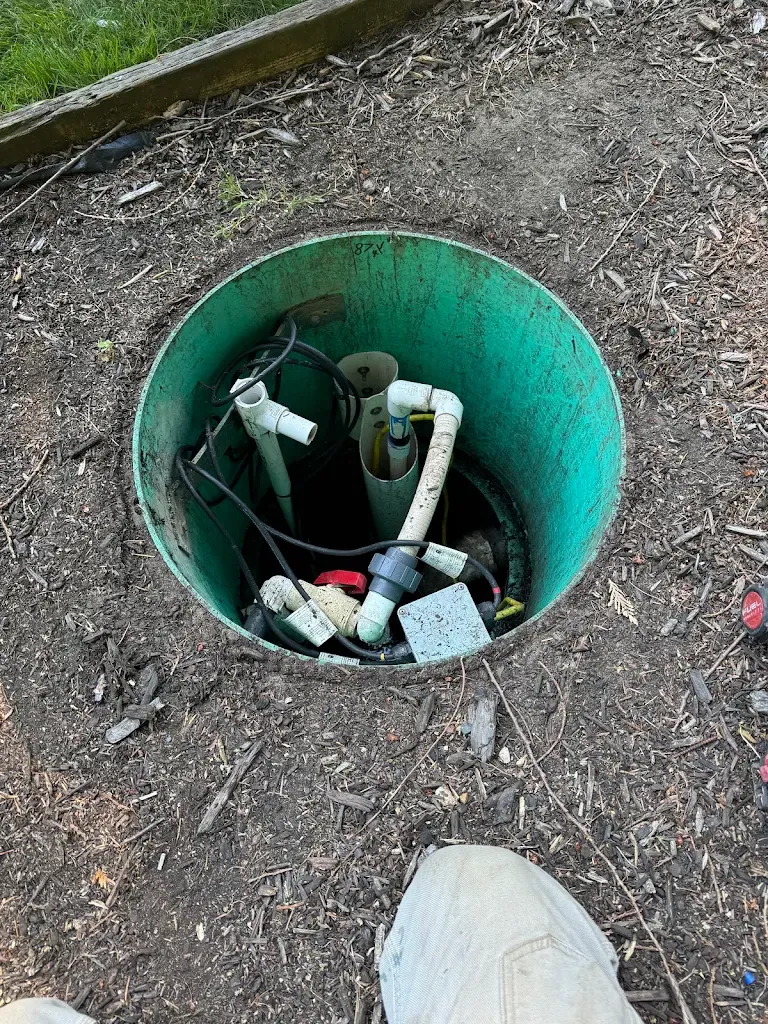
Washington Plumbing & Drain repairs and replaces sewage ejector pumps, grinder pumps and septic effluent pumps for homes and small commercial buildings throughout Kitsap, Pierce and Mason counties. We stock Liberty pumps, floats and check valves on the truck, we know the pump-to-sewer systems in neighborhoods along the Kitsap and Gig Harbor shorelines, and we handle the plumbing side of septic pump chambers on the many lots out here with a pressurized drainfield.
A pump alarm is not an emergency yet. It means the pump has not kept up and the basin is higher than it should be, which gives you a window of a few hours of light water use to get it looked at. We answer those calls evenings and weekends because waiting until Monday usually means a basement floor covered in what should have left the house.
Ejector, grinder or effluent: which pump you have
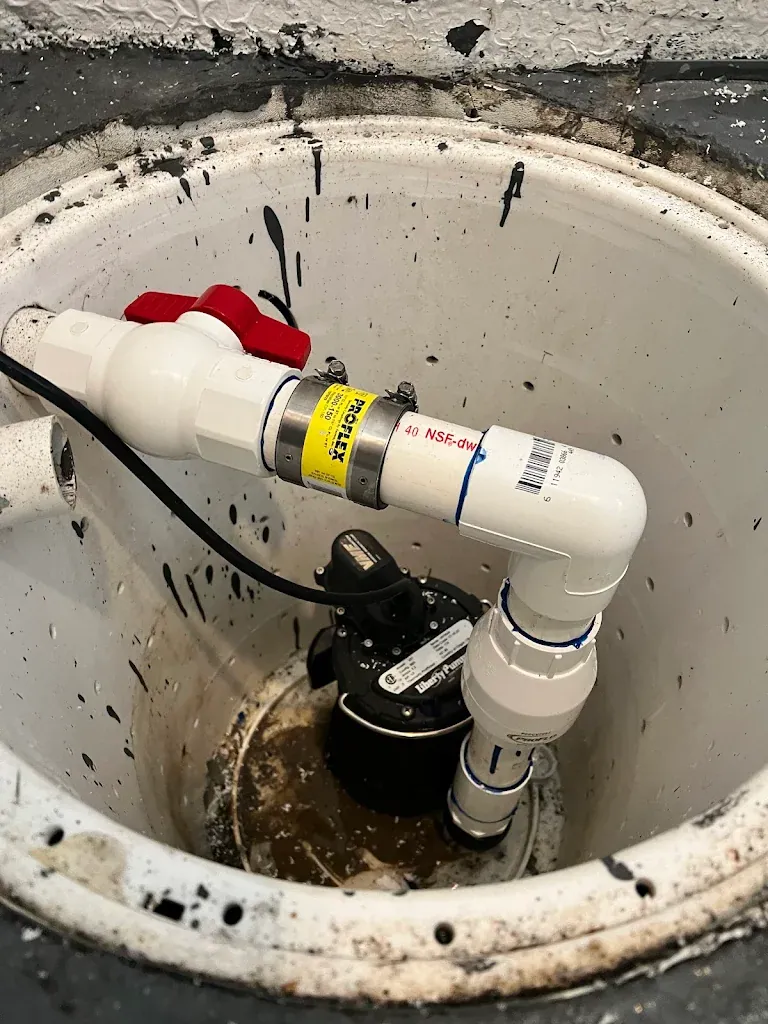
A sewage ejector pump handles raw waste from fixtures below the main drain, typically a basement bathroom or laundry. It sits in a sealed basin inside the house with a vent to the roof, and it has an impeller that can pass solids up to about two inches without grinding them. It pumps up to the main building drain, where gravity takes over. These are common in the daylight-basement homes on the hillsides of Bremerton, Port Orchard and Gig Harbor.
A grinder pump does what the name says: it shreds waste into a slurry and pushes it through a small-diameter pressure line, sometimes hundreds of feet and uphill, to a sewer main or a septic tank. Low-pressure sewer neighborhoods in Kitsap County, parts of the Manchester and Kingston sewer areas, waterfront lots on Fox Island and the Key Peninsula, and houses well below the road all rely on grinder pumps. Some of those systems are owned by the sewer district up to a certain point; many are the homeowner's responsibility entirely.
A septic effluent pump moves clarified liquid from a pump chamber to a drainfield or mound that sits higher than the tank, or doses a pressure-distribution field in timed shots. It never sees solids, so it is a lighter pump, but it lives in a wet chamber outdoors and its floats and splice box are what fail. Most septic systems installed in Kitsap and Mason County since the 1990s have one.
What fails and what the alarm means
Floats fail more than pumps. A tethered float gets tangled on the discharge pipe or the pump cord and never rises, or it rises and never falls, and the pump either sits silent while the basin fills or runs dry until it burns out. Vertical float switches and mechanical float assemblies on a rod are more reliable, and we install those when the basin allows it.
Check valves wear out and let the entire discharge column fall back into the basin after each cycle, which means the pump runs twice as often and the basin smells. A grinder pump's cutter dulls or jams on something it was never meant to see, like a rag, a wipe or dental floss. An effluent pump's splice box fills with water and shorts the circuit. And every pump has a motor that eventually just quits, usually after ten to fifteen years in a wet environment.
The alarm float sits above the pump-on float. When it rises, the panel sounds and lights. That tells you the pump did not turn on, cannot keep up, or the discharge is blocked. Silence the alarm, cut back to essential water use, and call. Do not reset the breaker over and over; a pump that trips its breaker is telling you something is wrong with the motor or the cutter.
Replacing a sewage ejector pump
An ejector replacement starts with isolating the discharge and pumping down the basin if the pump is dead. We pull the lid, remove the old pump and check valve, inspect the basin for cracks and the inlet for a sag that would hold waste, and clean it out. The new pump goes in with a union on the discharge so the next replacement does not require cutting pipe, a new check valve at the proper height, and a float set so the pump cycles with a reasonable volume rather than every thirty seconds.
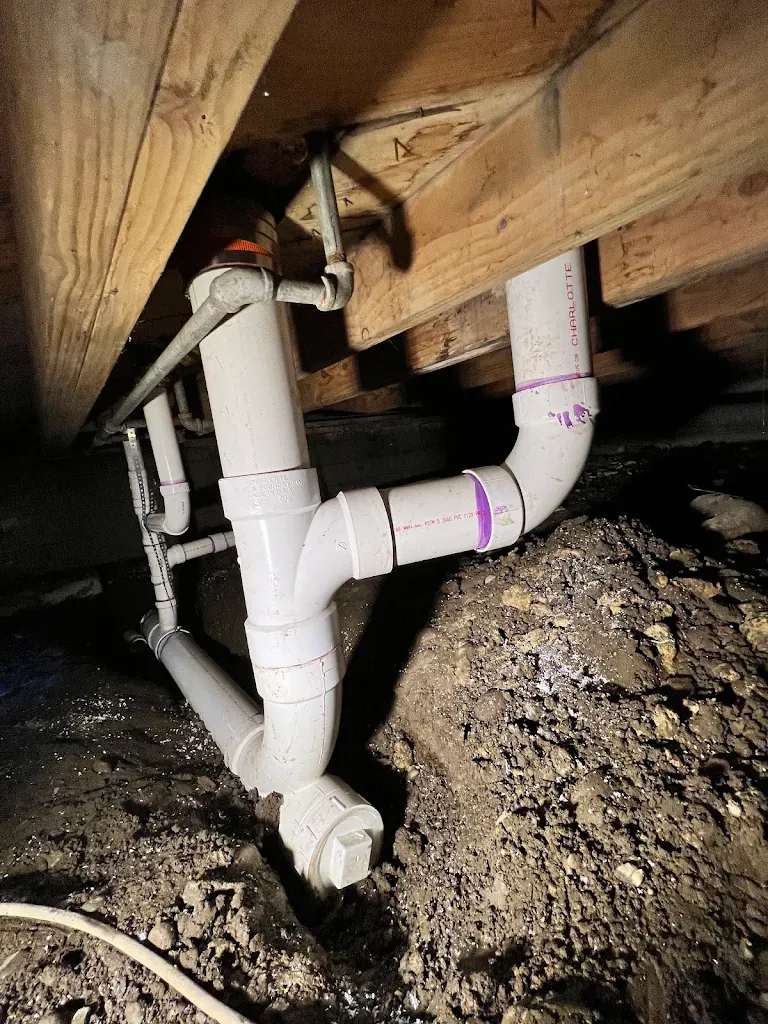
The basin lid is sealed and the vent is checked, because an ejector basin without a working vent will pull sewer gas into the room through the lid gasket. We test it by filling the basin through a fixture and watching a full cycle: pump on, discharge, check valve holds, pump off, no backflow. If the house has a battery backup or an alarm panel, we test that too.
On grinder systems that pump to a street main, we also look at the pressure line and the curb check valve. A grinder that runs long and loud without moving the level usually has a blockage or a collapsed section in the discharge, which is a different repair than the pump.
Septic pump chambers: what a plumber handles
The septic company pumps the tank and evaluates the drainfield. We handle the mechanical side of the pump chamber: the effluent pump, the floats, the union, the check valve, the splice box and the alarm panel wiring up to the point where an electrician is needed. When your septic alarm goes off and the pumper says the tank is fine but the pump is dead, that is our call.
We replace effluent pumps with units matched to the head and the dosing requirement in the system's design, which matters on pressure-distribution and mound systems where the pump has to deliver a specific flow. Floats are set to the levels on the design or the previous setup, the splice box is replaced if it has taken on water, and the whole thing is tested through a full dose cycle before the riser lid goes back on.
Older chambers without a riser to grade are miserable to service and usually have a pump that has been submerged in groundwater for years. We can add a riser so future work is a lid, not a shovel, and we will tell you when a chamber has deteriorated to the point that the septic designer needs to be involved.
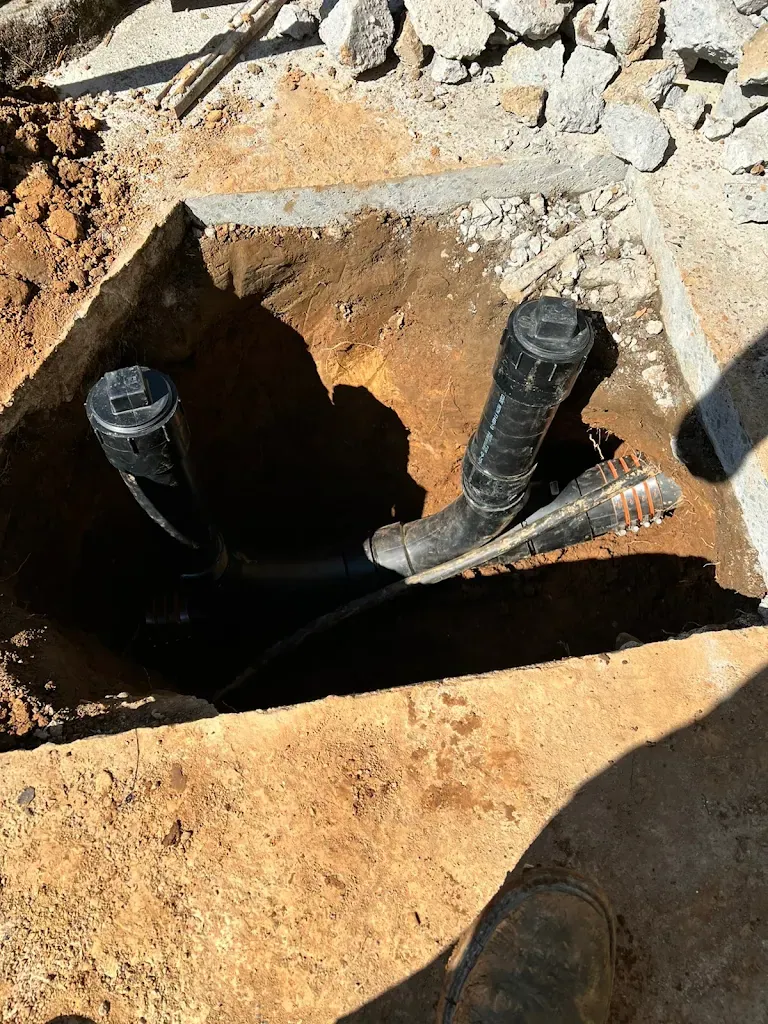
New installs for basements, additions and difficult lots
Adding a bathroom in a daylight basement, converting a garage below the main drain, or building on a lot where the sewer is uphill all call for a new ejector or grinder system. We size the basin and pump for the fixtures it will serve, set the basin into the slab or below the crawlspace floor, run a dedicated vent to the roof, install the discharge with a check valve and a union, and wire the float and alarm circuit to a dedicated receptacle.
The number of fixtures matters. A single toilet and sink is a different pump than a full bathroom, laundry and kitchen sink, and a grinder pushing three hundred feet uphill is a different pump than an ejector lifting eight feet to the main drain. We calculate the head and the flow from the layout and the pipe, not from the label on a box.
We also tell you plainly when a lot might not need a pump at all. Sometimes a little excavation gets a drain to run by gravity, and that beats adding a pump that will need replacement every decade.
Signs you need sewage ejector & grinder pumps
Call if you notice
- A pump alarm panel is sounding or showing a red light
- The basement toilet, shower or laundry is backing up or draining slowly while upstairs fixtures work fine
- The pump runs constantly, runs very often, or runs loud without the level dropping
- A sewage smell near the pump basin or around the septic pump chamber
- The pump breaker trips and resetting it only works briefly
- The pump hums but does not pump, or is silent with the basin full
- You are adding a bathroom or laundry below the main drain line
- The septic company says the tank is fine but the effluent pump is not running
How a sewage ejector & grinder pumps call goes
Call with the alarm or the symptom
Tell Corinne whether you have an alarm panel, where the pump is, and whether anything is backing up. We prioritize active alarms and backups, with evening and weekend response available.
Diagnose the pump, floats and discharge
We check power, test the floats, inspect the check valve and discharge, and determine whether the pump, a switch, or a blocked line is the problem.
Flat price for repair or replacement
You get a written price for the fix, whether that is a float, a check valve, a new pump, or a new basin setup, approved before we start.
Pump down, replace and test
The basin is pumped down and cleaned, the new pump is set with a union and check valve, floats are adjusted, and the system runs through full cycles with the alarm tested.
Document and advise
You get photos of the install, the pump model and float settings, and plain advice on what should never go down a drain that feeds a grinder or ejector.
Questions we get about sewage ejector & grinder pumps
What is the difference between a sewage ejector and a grinder pump?
An ejector passes solids whole and lifts waste a short distance to the main drain. A grinder shreds waste and pushes it through a small pressure line long distances or uphill to a sewer or tank. The house below the road with a line to the street has a grinder; the basement bathroom has an ejector.
My pump alarm is going off. Is it an emergency?
It is urgent but not yet a flood. The alarm means the basin is higher than normal. Silence the alarm, stop running water except what you must, and call us. A few hours of light use is usually fine; a full day of normal use is not.
Do you work on septic effluent pumps?
Yes. We replace effluent pumps, floats, check valves, unions and splice boxes in septic pump chambers. We do not pump tanks or evaluate drainfields; that is the septic company's work, and we coordinate with them when both are needed.
How long does an ejector or grinder pump last?
Ten to fifteen years is typical in a residential basin, less if it runs constantly or has been fed wipes and grease. Floats and check valves often fail earlier than the pump itself.
Can wipes go down a toilet on a grinder pump?
No. Wipes, floss, feminine products and grease jam grinders and clog ejector impellers. On a pump system the rule is simpler than on gravity: only waste and toilet paper.
Why does my ejector basin smell?
Usually a lid gasket that no longer seals, a vent that is blocked or missing, or a failed check valve leaving waste in the discharge pipe. All three are fixable; the vent is the one most installs got wrong originally.
Can you install a bathroom in my basement if the sewer is higher?
Yes. We set a sealed ejector basin in the slab, size the pump for the fixtures, run a dedicated vent, and connect the discharge to the main drain with a check valve. It is a common part of basement finishing in hillside homes around here.
Who owns the grinder pump in a low-pressure sewer neighborhood?
It varies by district. Some sewer districts own and maintain the pump up to the property line; in many neighborhoods it is entirely the homeowner's. Check with your district, and if it is yours, we service it.