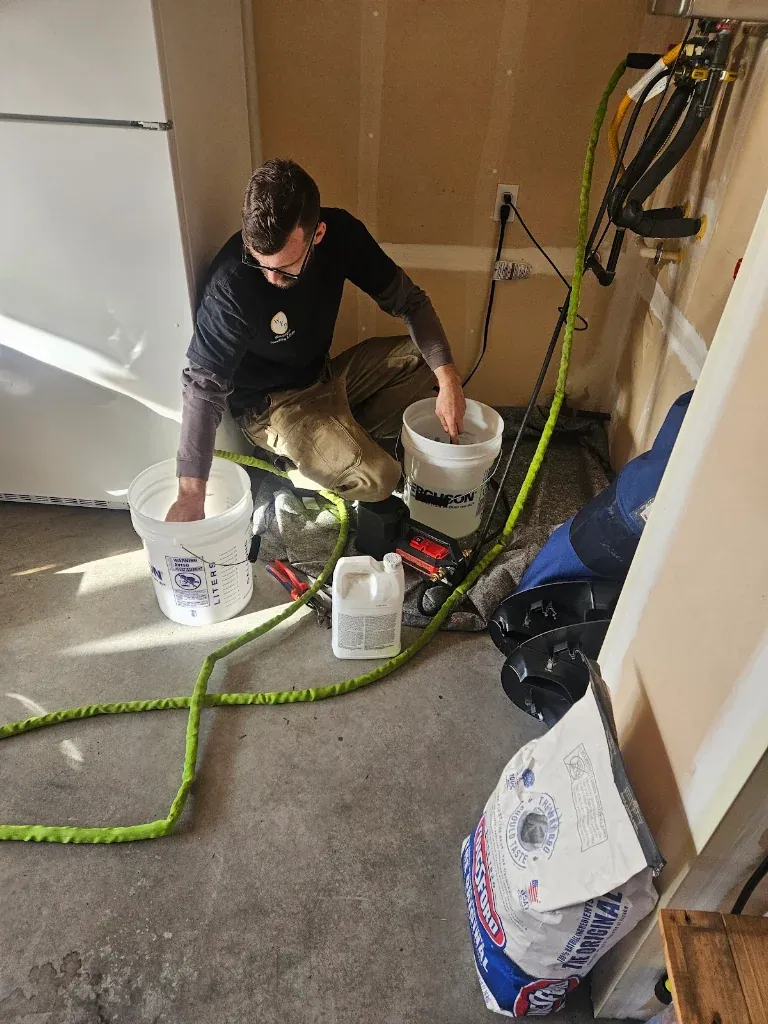
Washington Plumbing & Drain services gas, electric and tankless water heaters from Port Orchard through Bremerton, Silverdale and Poulsbo, across the Narrows into Gig Harbor and Tacoma, and down into Belfair and the Hood Canal cabins of Mason County. We carry the descaling pump, the hoses, the food-grade descaler and the anode rods on the truck, so a maintenance visit does not turn into a second trip.
Greg and the crew install Rinnai tankless units and Bradford White and A. O. Smith tanks every week, which means we know what a well-cared-for unit looks like at year eight and what a neglected one looks like at year four. This page explains what maintenance actually involves, how often it is worth doing around here, and what we check while we are standing in front of your heater.
What descaling a tankless water heater actually does
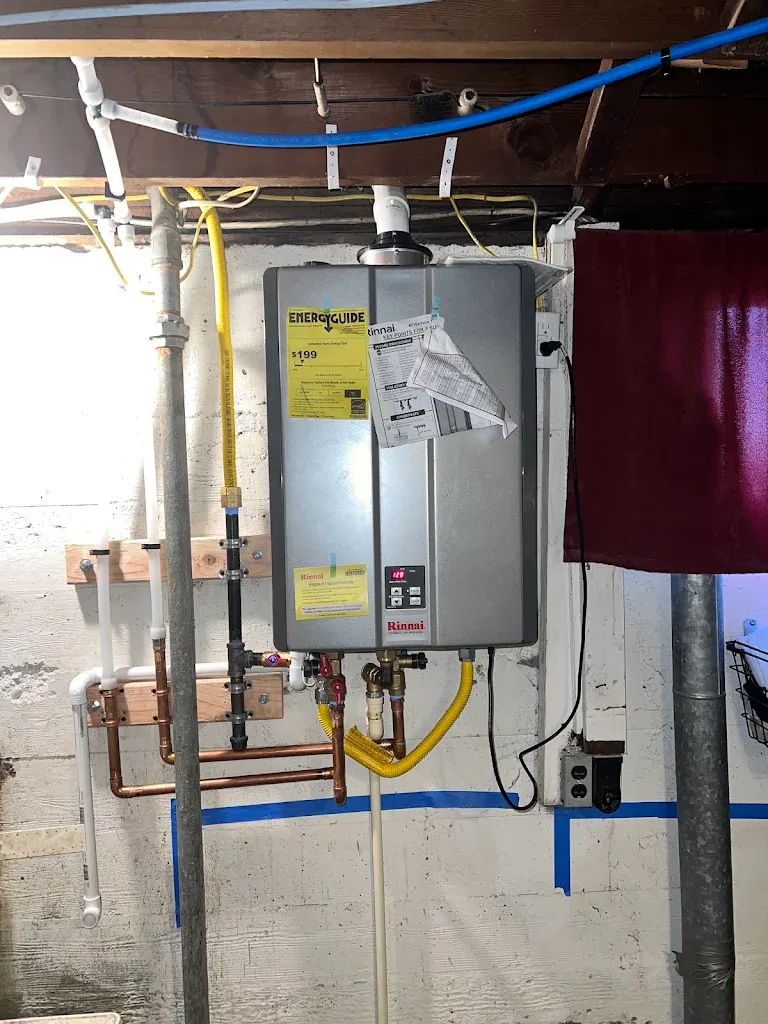
A tankless heater pushes cold water through a copper or stainless heat exchanger with narrow passages and a burner underneath it. Every gallon leaves a little mineral behind, and the minerals bake onto the hottest surfaces first. Over a year or two the passages narrow, the exchanger has to run hotter to hit the set temperature, and the unit begins throwing error codes, cycling the burner, or delivering water that swings between hot and lukewarm mid-shower.
Descaling reverses that. We close the isolation valves on the hot and cold sides, connect a small circulation pump and a bucket to the service ports, and run a food-grade descaling solution through the exchanger for roughly forty-five minutes to an hour. The solution dissolves the scale, the bucket turns cloudy, and the unit is flushed clean with fresh water before the valves go back to normal. We also pull and clean the cold-water inlet screen, which catches grit from the supply and is often half plugged in homes on wells.
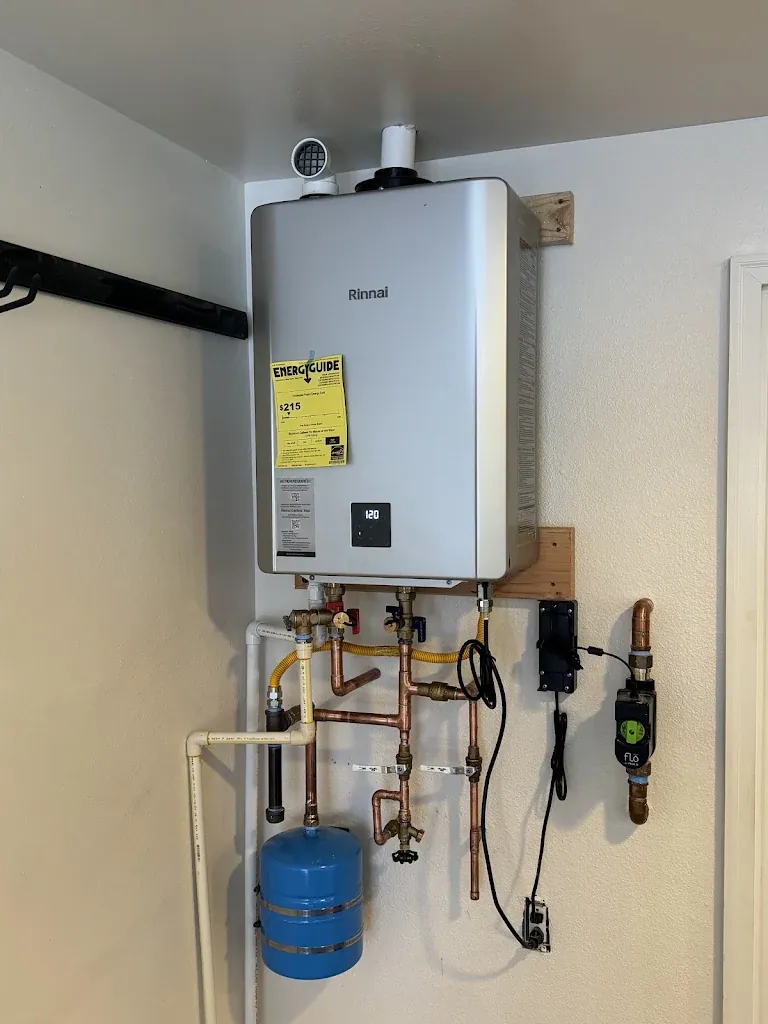
If your tankless was installed without isolation valves, we cannot descale it properly, and neither can anyone else. We see this on units a handyman or a general contractor hung during a remodel. Adding a valve kit is a small job, and it is the first thing we recommend because every future service depends on it.
Why western Washington water still scales a heater
Homeowners here are often told our water is soft, and compared with Phoenix or Denver it is. But a lot of Kitsap and Mason County homes draw from private wells and small community systems pulling groundwater out of glacial deposits, and that water carries calcium, magnesium and iron that city water from Bremerton or Tacoma does not. Kitsap PUD wells vary from one aquifer to the next; two houses a mile apart can have very different water.
Iron is the one that surprises people. It does not form hard white scale, but it leaves a reddish sludge in the bottom of a tank and a film on a tankless exchanger that is every bit as insulating as calcium. Hydrogen sulfide, the rotten-egg smell common in Hood Canal and Belfair wells, reacts with the anode rod in a tank heater and eats it faster than normal.
So the honest schedule depends on your water. A home on Silverdale Water District or City of Port Orchard water might go two years between tankless flushes. A home on a Seabeck or Tahuya well with visible iron staining should be on an annual schedule, and a sediment filter ahead of the heater is usually money well spent.
Tank water heater service: flush, anode and the small parts
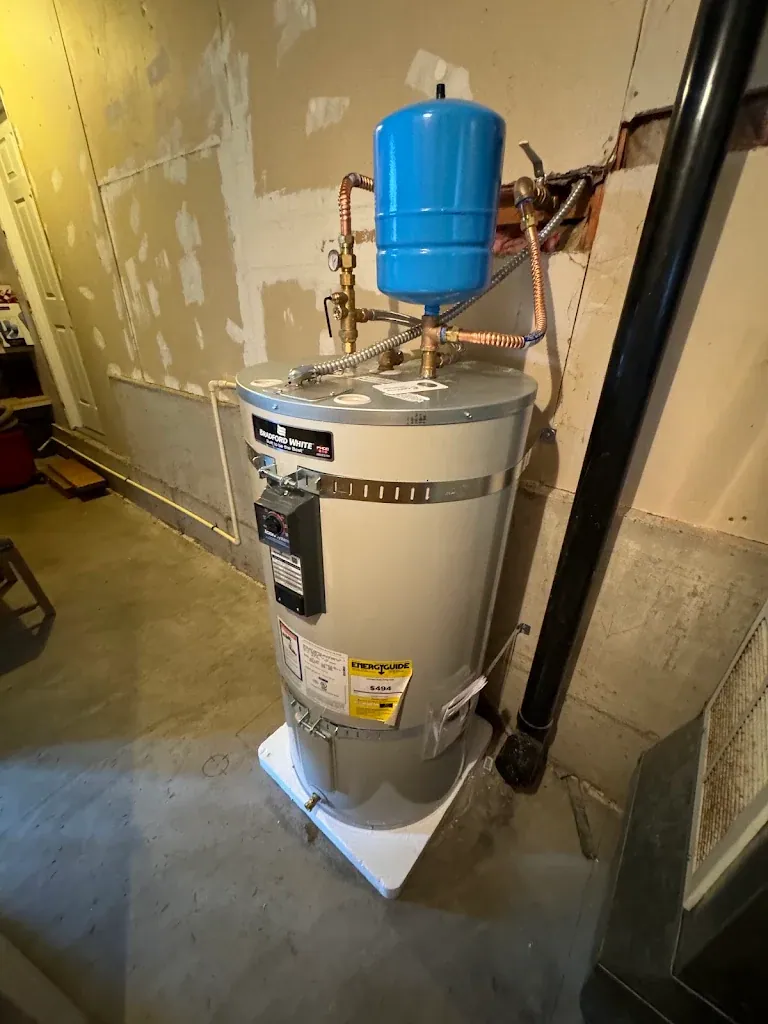
A tank heater collects sediment at the bottom, right where a gas burner fires. That layer of mineral and sand insulates the water from the flame, so the burner runs longer, the steel underneath overheats, and the tank starts to rumble and pop as water trapped under the sediment flashes to steam. On an electric heater the same sediment buries the lower element and shortens its life.
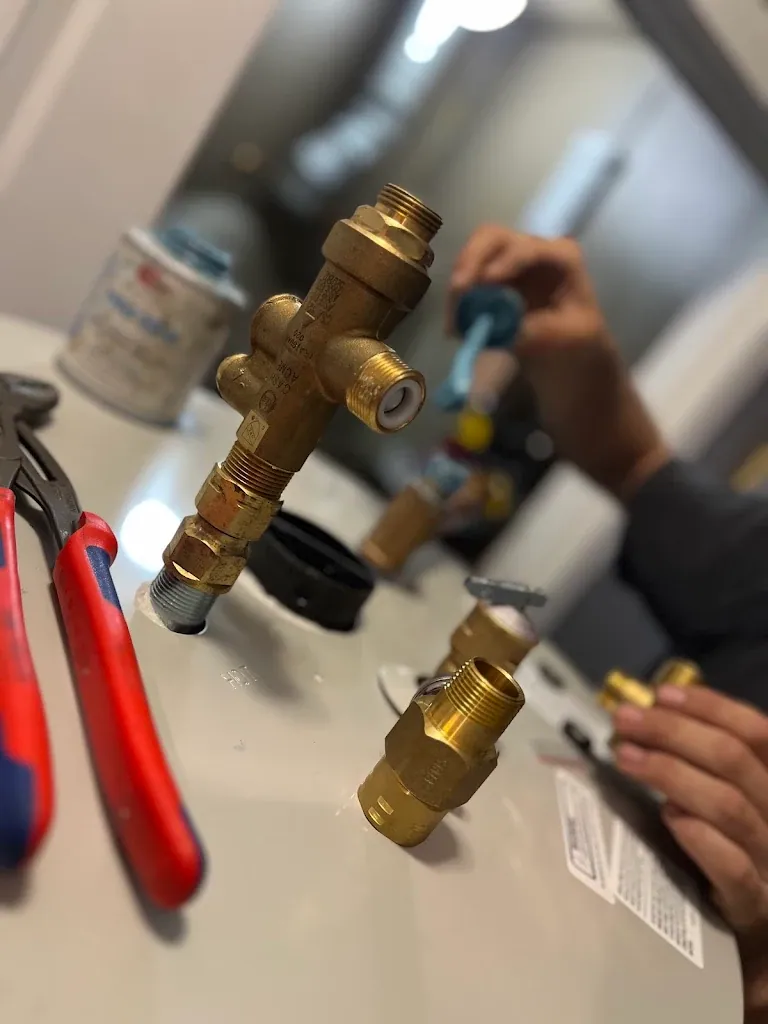
We drain and flush the tank until the water runs clear, then check the anode rod. The anode is a sacrificial magnesium or aluminum rod that corrodes so the tank lining does not. Once it is consumed down to the steel core wire, the tank itself starts rusting from the inside, and that is the leak that ends a heater's life. Pulling the anode needs a breaker bar and sometimes an impact driver, which is why most homeowners never do it. We replace it when it is more than half gone.
While the tank is open we test the temperature and pressure relief valve, check the expansion tank's air charge with a gauge, look at the burner and flue on gas units, confirm the thermostat settings, and inspect the flex connectors and shutoff. On electric heaters we test both elements and thermostats. If anything is marginal, you get a flat price to fix it and the choice of doing it now or later.
- Drain and flush the tank until sediment stops coming out
- Pull, inspect and replace the anode rod when needed
- Test the T&P relief valve and check the expansion tank charge
- Inspect burner, pilot assembly and draft on gas units
- Test elements and thermostats on electric units
- Check the water heater pan, drain line and seismic straps
Keeping a Rinnai or other tankless under warranty
Tankless manufacturers write annual maintenance into their warranty terms, and when a heat exchanger fails at year six they ask for service records. We leave you with a dated invoice that describes exactly what was done, and we can keep a reminder on file in the office so Corinne reaches out when you are due. That record has saved customers the cost of an exchanger more than once.
We also look at the things descaling does not touch: the condensate drain on high-efficiency units, which clogs with a white sludge and backs acidic water into the unit; the venting and intake screens, which wasps and leaves find; the gas pressure and burner flame; and the error history stored in the unit's controller. A code that cleared itself last winter is still worth knowing about.
What maintenance tells you about replacement
A service visit is the best time to get a plain answer about how much life your heater has left. A tank that gives up rusty water on the first flush, or whose anode is gone and whose drain valve weeps afterward, is sending a signal. We will tell you whether it makes more sense to keep maintaining it or to plan a replacement on your schedule instead of the heater's, which is usually a cold morning in January.
We do not use maintenance visits as a door into a sale. More than one customer has called us after another company told them a flush revealed a tank that needed replacing, and we found a heater with years left in it. If your heater is fine, we say so, and the visit costs you a modest service call.
Signs you need water heater maintenance & tankless descaling
Call if you notice
- Your tankless unit shows an error code or shuts off mid-shower
- Hot water takes longer to arrive than it did a year ago
- The tank rumbles, pops or knocks while heating
- The hot side of the house has a faint rotten-egg smell
- You are on a well and have never had the heater flushed
- The tankless unit is more than a year past its last descaling
- Hot water flow is noticeably weaker than cold at the same faucet
- Your heater is past its fifth birthday and has never been serviced
- Rusty or sandy water comes out when you open the tank drain
How a water heater maintenance & tankless descaling call goes
Tell us what you have
Gas, electric or tankless, the brand if you know it, and whether you are on city water or a well. That tells us which parts and which pump to put on the truck.
Inspect before we touch anything
We check the heater, the venting, the expansion tank, the relief valve and the shutoffs, and give you a flat price for the service and for anything optional we find.
Flush or descale
Tanks are drained and flushed until clear. Tankless units are isolated and circulated with descaler for the time the manufacturer calls for, then rinsed and the inlet screen cleaned.
Replace the wear parts
Anode rods, drain valves, condensate traps and gaskets are replaced from truck stock when they are due, with your approval first.
Fire it, test it, document it
We relight or restart the unit, confirm outlet temperature with a thermometer, and leave a dated service record you can keep for warranty purposes.
Questions we get about water heater maintenance & tankless descaling
How often should a tankless water heater be descaled in Kitsap County?
Once a year on well water or any supply with noticeable minerals or iron, and every one to two years on most municipal water. If the unit has a scale-inhibitor cartridge or a softener ahead of it, we can often stretch the interval. The manufacturer's warranty language is a good tiebreaker.
Can I descale my own tankless heater?
If it has isolation valves and you own a pump and the right hoses, yes, and some customers do. The common mistakes are running vinegar for too short a time, forgetting the inlet screen, and not checking the condensate drain. If you would rather have a record from a licensed plumber for the warranty file, that is what we are for.
Is it worth flushing an old tank water heater?
Usually, with one caution. A tank that has never been drained can have a drain valve that will not reseal, and a very heavy sediment layer can break loose and clog the valve. We bring replacement drain valves and know when to stop. If the heater is very old and already weeping, we will tell you flushing is throwing good money after bad.
What does an anode rod do and how do I know if mine is gone?
It corrodes in place of the tank's steel lining. You cannot tell from outside; the rod has to be pulled with a socket and a long handle. A heater on well water with sulfur smell can consume a rod in two or three years, while city water may give you five or more.
My hot water smells like rotten eggs. Will maintenance fix it?
Often. The smell comes from bacteria reacting with the magnesium anode. Flushing the tank and switching to an aluminum-zinc or powered anode usually ends it. If the smell is in the cold water too, the problem is the well, and we can talk about filtration.
Do you service water heaters you did not install?
Yes. Rinnai, Navien, Noritz, Bradford White, A. O. Smith, Rheem and the box-store brands all come through our schedule. If a unit was installed without isolation valves or an expansion tank, we will point that out and quote the fix separately.
Will maintenance lower my gas or electric bill?
A clean heat exchanger or a tank without a sediment blanket heats water with less run time, so yes, modestly. The bigger savings is the replacement you put off by several years.
Can you check my water heater during another service call?
If we are already at the house for a drain or a faucet and you ask, we will take a look at the heater, the relief valve and the expansion tank at no extra charge and tell you what we see. Scheduling the full flush or descale is a separate flat-rate job.