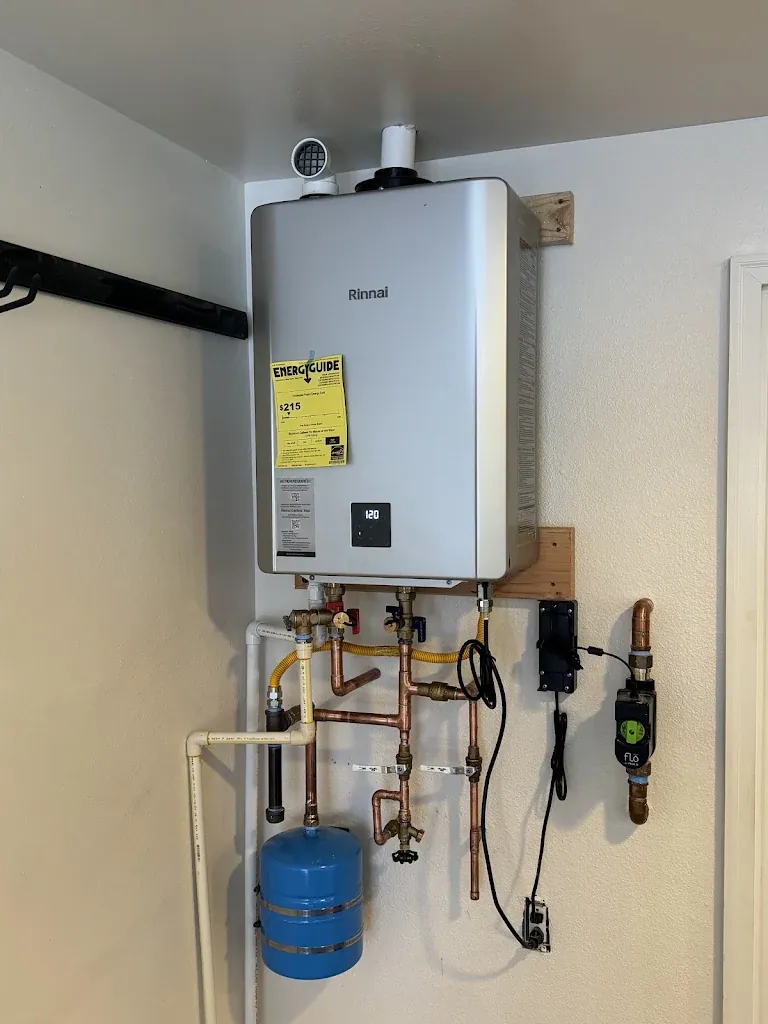
Washington Plumbing & Drain installs Rinnai tankless units across Kitsap, Pierce and Mason counties, as conversions from tank heaters and as replacements for older tankless units. We size the gas supply, run proper venting, install isolation valves so the unit can be descaled, and handle the condensate on condensing models. We also service and descale tankless units, which is how we know what a bad installation looks like five years later.
Tankless is not the right answer for every house, and we will say so when it is not. For the right household, with the right fuel and the right water, it is one of the better upgrades a home can get.
How a tankless heater works and what it needs
When a hot tap opens, a flow sensor in the unit detects water moving, the burner ignites, and the water is heated in a heat exchanger on its way to the fixture. Close the tap and the burner stops. There is no standby loss from keeping a tank warm, and the hot water does not run out because nothing is being drawn down.
That burner is large. A tankless heater sized for a family needs several times the gas flow of a tank heater, which means the gas line from the meter or the propane tank often has to be upsized, and the meter itself may need to be checked for capacity. A unit on an undersized line will fire, starve, and throw a code or deliver lukewarm water at full demand. We calculate the gas load for the whole house before we quote.
Venting is the other requirement. Condensing units vent in PVC or polypropylene with a condensate drain; non-condensing units need stainless vent. Either way the run has to be sized and terminated to the manufacturer's rules, and the old tank heater's flue is not reusable.
Converting from a tank to tankless
A conversion is the most common tankless job we do. The tank comes out, the wall gets a mounting location with clearances, the gas line is upsized where needed, the vent is run, and the water connections are re-plumbed with isolation valves and a small expansion tank where the house has a pressure reducing valve. On gas conversions in older Port Orchard and Bremerton homes we often find the original gas line is half-inch black iron that fed only a tank heater and a stove, and it has to grow.
Converting from an electric tank to a gas tankless is a bigger project that needs a gas line run to the location, which we do, and a gas service if the house has none, which involves the utility or a propane supplier. Electric tankless units exist but draw very large electrical loads and rarely make sense in a whole-house role around here; we will tell you if your situation is one of the exceptions.
Most conversions are finished in a day, with hot water back by evening. The old tank goes on the truck.
Why we install Rinnai and how we install it
We have installed and serviced enough tankless brands to have an opinion. Rinnai units have been reliable in this climate, the parts are available locally, the diagnostic history on the unit tells a technician what happened, and the company honors its warranty. That combination matters more than a slightly lower price on a unit nobody stocks parts for.
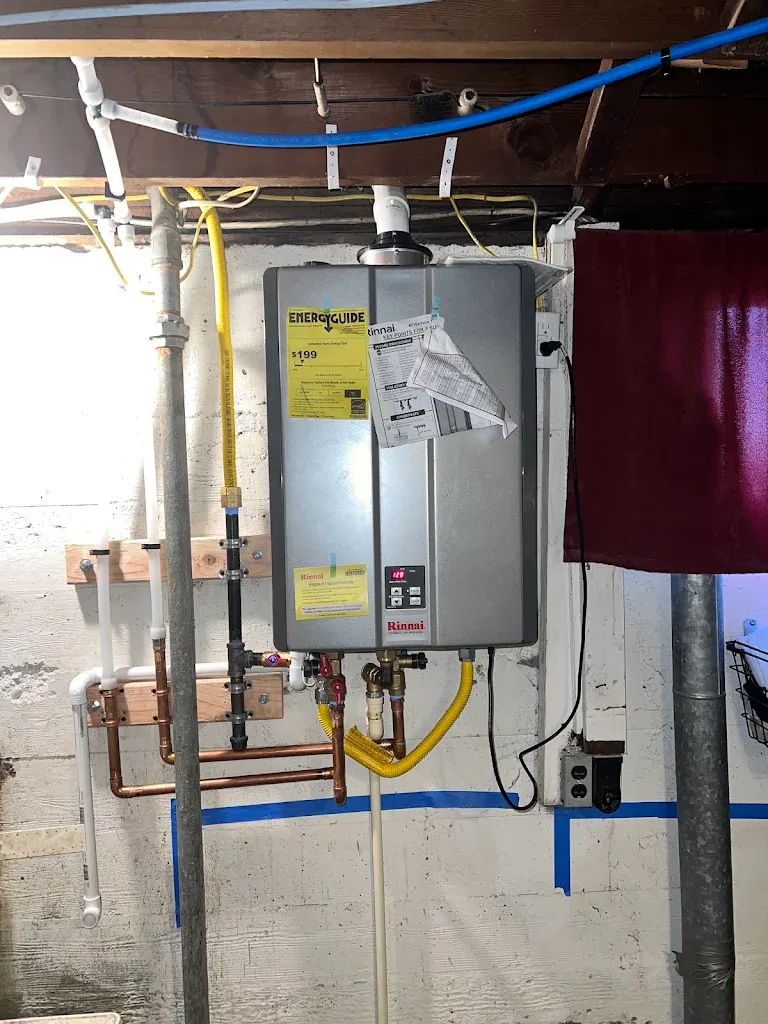
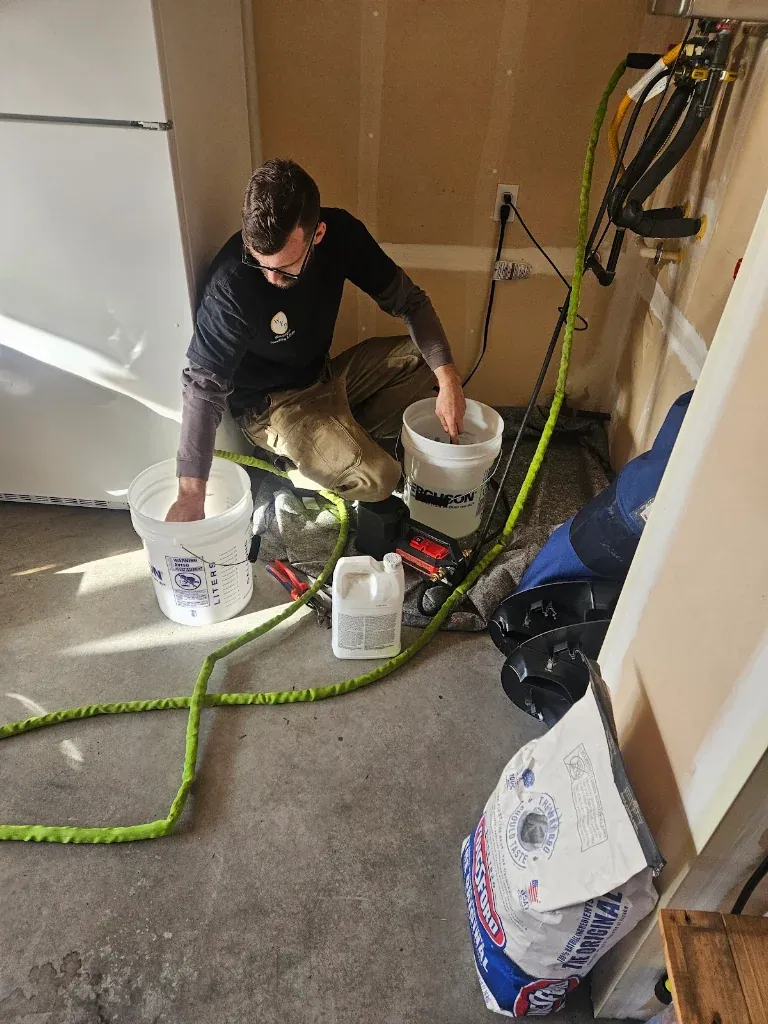
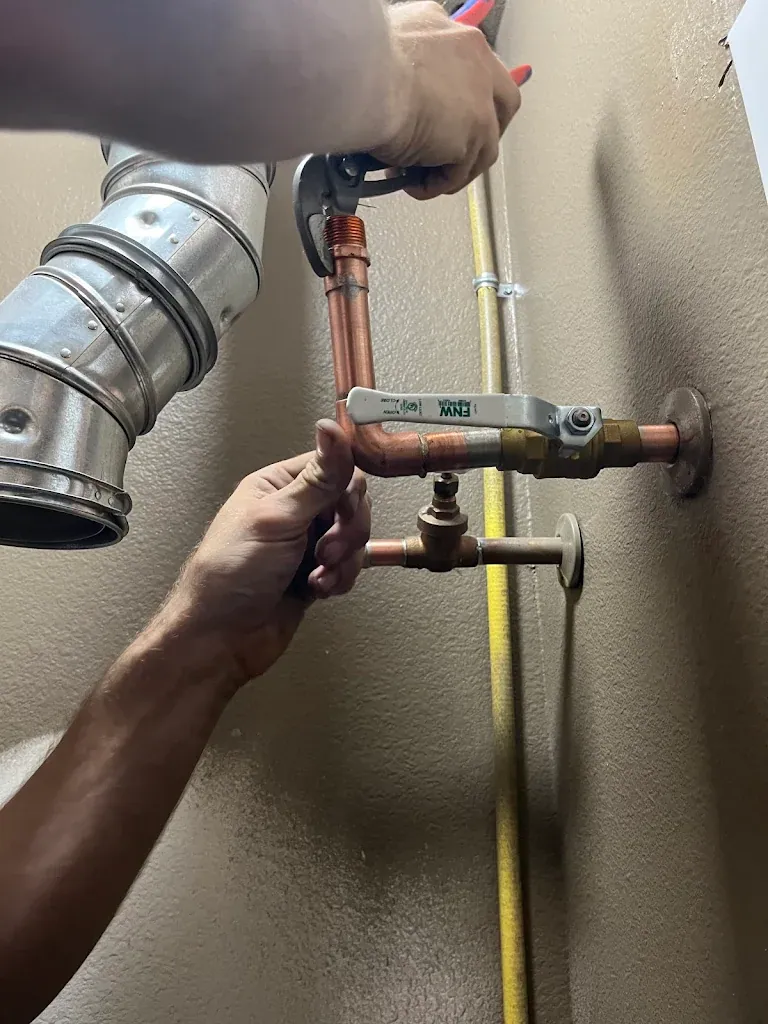
Every installation gets a service valve kit, which is a pair of isolation valves with hose ports on the hot and cold sides. Without them the unit cannot be descaled, and a tankless unit that is never descaled will fail early on the mineral content in much of our local water. We also install a sediment filter ahead of the unit on well water, a condensate neutralizer where the drain requires it, a drip leg on the gas, and a dedicated shutoff.
The unit is commissioned by checking gas pressure under load, confirming the vent is sealed and drafting, setting the outlet temperature, and running multiple fixtures at once to confirm it keeps up. You get a walkthrough of the controller and a descaling schedule that fits your water.
- Gas load calculation and line upsizing where needed
- Manufacturer-rated venting with proper termination
- Isolation valves with service ports for descaling
- Sediment filter on well water, expansion tank where required
- Condensate drain and neutralizer on condensing units
- Commissioning under load and a descaling schedule
Is tankless right for your house
The strongest cases are households that run out of hot water, homes where the tank occupies space that could be reclaimed, and owners who plan to stay long enough to see the efficiency pay back. Natural gas or propane service is nearly a prerequisite. A newer home in Silverdale or Gig Harbor North with gas already at the heater location is an easy conversion; a 1960s all-electric rambler in East Bremerton is not, unless the owner is adding gas for other reasons.
Water quality matters too. Much of Kitsap's municipal water is moderate, but wells in Mason County and north Kitsap can run hard or carry iron and sediment that scale a heat exchanger quickly. On those homes we pair the unit with filtration and set a shorter descaling interval, or we talk plainly about whether a tank heater with a sediment filter is the more sensible choice.
Cold incoming water in winter, which runs noticeably colder here than in warmer parts of the country, reduces the flow rate a tankless unit can heat to shower temperature. We size the unit for January, not July, so two showers at once still work.
Replacing an existing tankless unit
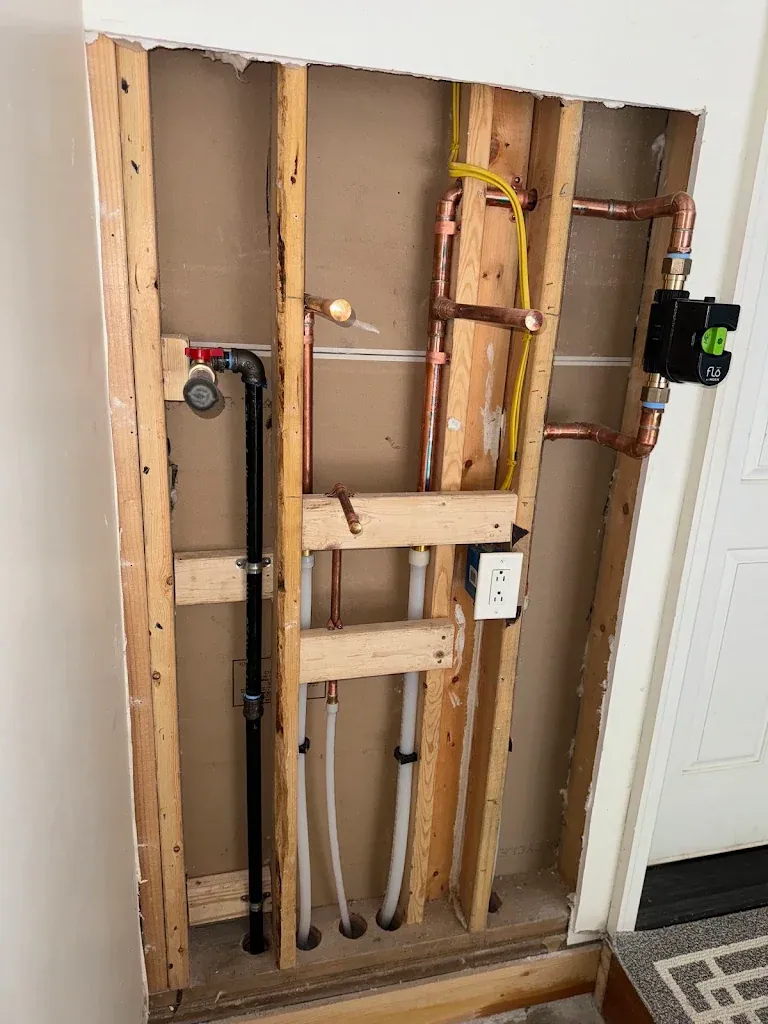
Tankless heaters installed during the first wave of conversions a decade or more ago are starting to reach the end of their service lives, especially the ones that were never descaled. If your unit throws codes repeatedly, has a leaking heat exchanger or is a brand whose parts have become hard to find, replacement is often more sensible than another repair. The gas and vent are usually already in place, which makes a like-for-like replacement a short job.
We will look at the existing installation first. A surprising number of older tankless installs have no isolation valves, undersized gas or a vent that was never right, and the replacement is the moment to fix all of it.
Pricing, permits and what to expect
A tankless conversion is a larger project than a tank swap, generally a four-figure job that depends most on the gas line work and the vent run. Replacing an existing tankless with the infrastructure already in place is less. The quote is flat, itemized so you can see what the gas line, venting and unit each contribute, and approved on your phone before anything is removed.
The work is permitted and inspected, including the gas line. We register the unit for warranty, and our own extended warranty covers the installation. Most customers also put the unit on a descaling schedule with us, which is the single best thing you can do to make it last.
Signs you need tankless water heater installation
Call if you notice
- The household runs out of hot water with two showers back to back
- You want the closet or garage space the tank occupies
- The tank heater is at the end of its life and gas is already at the location
- You are adding gas service or a gas line for other appliances
- An existing tankless unit throws error codes or leaks at the heat exchanger
- A vacation or rental home sits empty for stretches and a stored tank is a leak risk
- You plan to stay in the house long enough for the efficiency to pay back
- A remodel or ADU is adding hot water demand the current tank cannot meet
How a tankless water heater installation call goes
Assess fuel, gas capacity and water
We check what fuel serves the house, calculate the total gas load with a tankless unit added, look at the meter or propane setup, and ask about water source and hardness.
Choose the unit and the location
The model is sized for winter inlet temperatures and the household's peak demand, and the mounting location is chosen for vent routing, condensate and service access.
Flat, itemized quote
The gas line work, the vent run, the unit and the accessories are each listed so you see what drives the price. Approve on your phone whenever you are ready.
Install and connect
The old heater is removed, gas is upsized where needed, the vent is run, and the unit is mounted and plumbed with isolation valves, a filter where the water needs it and an expansion tank where the house requires one.
Commission under load
Gas pressure is checked with the burner running, the vent is verified, the outlet temperature is set, and several fixtures are run together to confirm capacity.
Permit, warranty and schedule
The inspection is handled, the unit is registered, and you get a controller walkthrough plus a descaling interval matched to your water.
Questions we get about tankless water heater installation
Is a tankless water heater worth it in Kitsap County?
For a household on natural gas or propane that runs out of hot water or wants the space back, usually yes. For an all-electric home without plans to add gas, a tank heater is often the better choice. We will tell you which applies to your house.
Why do you install Rinnai?
They have held up in this climate, local supply houses stock the parts, the units keep a diagnostic history that makes service faster, and the warranty is honored. We would rather install one brand we trust than whatever is cheapest that week.
Will my existing gas line work for a tankless heater?
Often not without upsizing. A tankless burner draws several times the gas of a tank heater, and lines sized for a tank and a stove starve it. We calculate the load and include any upsizing in the quote.
Can I convert from an electric tank to a gas tankless?
Yes, if the house has gas or propane service or you are adding it. We run the gas line, the vent and the water connections. If there is no gas service at all, the utility or a propane supplier has to set that up first.
How much maintenance does a tankless heater need?
A descaling flush on a schedule that depends on your water, from yearly on hard well water to every few years on soft municipal supply. The isolation valves we install make it a quick job, and we can put you on a schedule.
Does a tankless heater deliver hot water instantly?
It heats instantly, but the water still has to travel the pipe to the tap, same as with a tank. A recirculation setup can shorten the wait at distant fixtures and we can quote one if that matters to you.
Can a tankless heater handle two showers at once?
A properly sized unit can, even with winter inlet temperatures. We size for January, not summer, and run multiple fixtures during commissioning to prove it.
Is a permit needed for a tankless installation?
Yes, for the plumbing and the gas line. We pull both and schedule the inspection.