
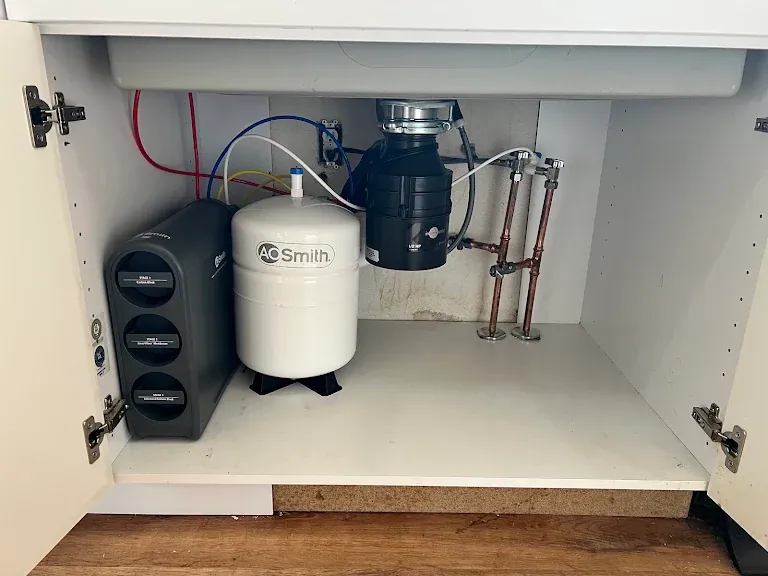
Washington Plumbing & Drain repairs and replaces garbage disposals in kitchens from Port Orchard and Bremerton to Gig Harbor, Tacoma, Poulsbo, Belfair and Shelton. We carry replacement units on the truck in the sizes most homes use, along with the mounting hardware, tailpieces and dishwasher connections that a clean install requires. The price is flat and approved before the cabinet doors open.
We also give a direct answer to the question a lot of people in this area should ask first: whether a disposal belongs in a house on a septic system at all. The short version is that it can, with the right habits, and we will explain the long version at your sink.
Humming, jammed, tripped or dead: sorting out what failed
A disposal hums because the motor is trying to turn and cannot. Something is wedged between the impeller plate and the grind ring: a fruit pit, a bottle cap, a piece of a broken glass, a bone. Left humming, the motor overheats and trips the red reset button on the bottom of the unit. The fix is to cut power, free the plate with the hex wrench that fits the socket on the underside, remove the object, press reset and try again. We do this on most jammed disposals and charge a modest service call for it.
A disposal that is completely silent has no power or a tripped overload. Check the reset button first, then the wall switch, then the breaker. If the unit is on a cord and plug under the sink, confirm the outlet is live; a GFCI elsewhere on the circuit may have tripped. When all of that checks out and the disposal is still dead, the motor or the start switch has failed, and on a unit more than a decade old replacement is the sensible move.
A disposal that spins but will not grind, drains slowly, or sends water back up into the other bowl has worn or broken impellers, a seized swivel lug, or a clogged discharge. Those get looked at individually. Sometimes the fix is clearing the trap; sometimes the grind chamber is simply worn out.
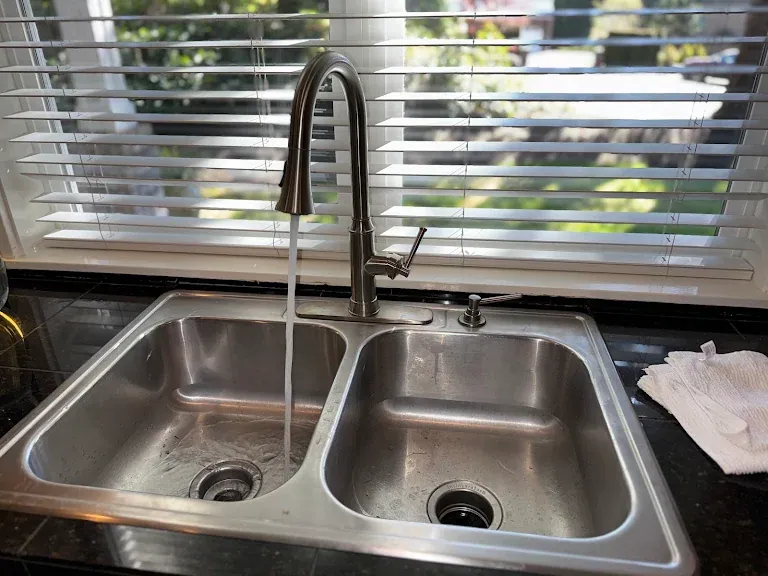
Leaks, and where they come from
Disposals leak from three places, and each one means something different. A leak at the top, where the unit meets the sink, is the sink flange: the putty has dried out or the mounting ring has loosened. That is a reseal. A leak at the side is the dishwasher inlet or the discharge elbow, where a gasket has hardened or a clamp has slipped. Also repairable.
A leak from the bottom of the unit, where water drips from the housing itself or from around the reset button, is the internal seal. The grind chamber has cracked or the motor seal has failed, and water is getting into the motor. There is no repair for that; the unit is replaced. We tell you which of the three you have within a minute of looking, and we quote accordingly.
Water in the cabinet is not always the disposal. The faucet supply lines, the dishwasher drain hose, the sink drain basket on the other bowl and the trap are all suspects, and a disposal often takes the blame because it is the biggest thing in the cabinet. We dry everything and run water through each piece before we decide.
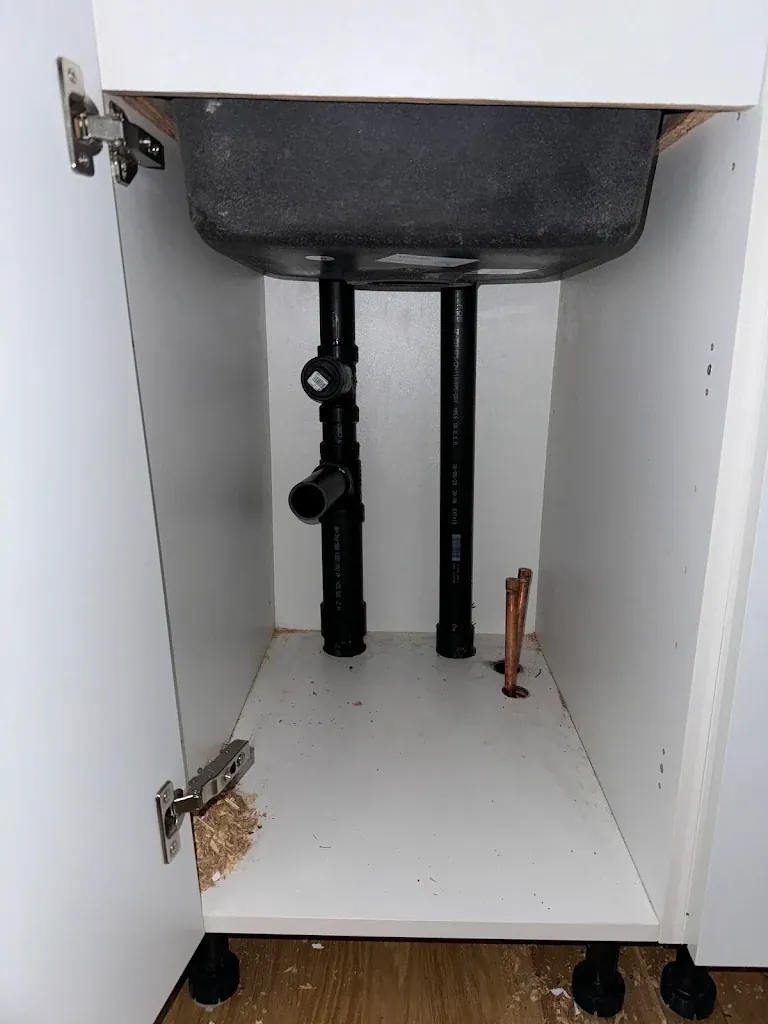
Replacing a disposal properly
A replacement that matches the old unit's brand and mounting system drops onto the existing sink flange, and the job is quick. A different brand or an upgrade from a budget model to a heavier one means a new flange and mount, and sometimes a new discharge elbow and tailpiece, because the outlet lands in a different place. Either way, we replace the putty at the flange, set the mount square, and reconnect the trap so it slopes to the wall and does not strain the fittings.
The dishwasher connection is the step most do-it-yourself installs get wrong. A new disposal ships with the dishwasher inlet plugged, and a knockout has to be removed before the hose is attached. Leave it in and the dishwasher floods on its first cycle. We also loop the hose high or run it through the air gap, which Washington code requires on new kitchen installs, so a backed-up sink cannot drain into the dishwasher.
Power is either a cord-and-plug into an outlet under the sink or a hard-wired connection through a wall switch. We handle the cord and plug on a replacement. If a kitchen has no disposal outlet and needs new wiring or a new switch, that is an electrician's work and we will say so rather than wire it ourselves.
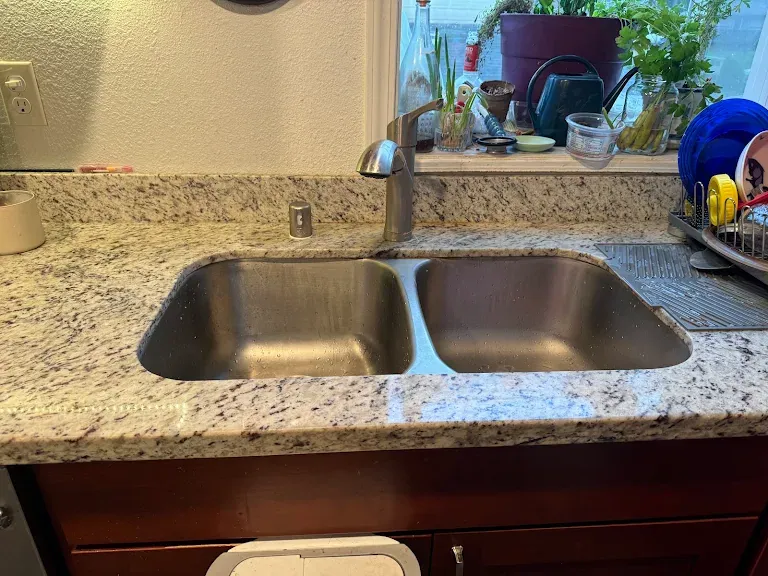
Choosing a disposal that will last
Horsepower is the number on the box, but it is not the whole story. A heavier unit with a stainless grind chamber, an induction motor and more sound insulation will outlast a light builder-grade unit several times over and run quieter doing it. InSinkErator units in the mid-range are what we install most because the parts are available, the mounting is universal, and they hold up in a busy kitchen.
Size matters in a cabinet shared with a water filter, an RO system, a pullout trash bin or a deep single-bowl sink. A taller, heavier disposal can leave no room for the trap to make its slope. We measure the space from the sink flange to the trap arm before recommending a unit, and we tell you if the deeper sink and the bigger disposal cannot both fit.
Disposals on septic systems
A large share of South Kitsap, Olalla, Belfair, the Key Peninsula and rural Mason County is on septic, and the question of whether to have a disposal at all comes up constantly. A disposal adds ground-up food solids to the tank, which means more sludge and more frequent pumping. It does not ruin a system, but it changes the maintenance schedule. Some septic designers size the tank larger when a disposal is planned; many older systems were not sized for one.
If you have a disposal on septic, the habits are what count. Grease, coffee grounds, eggshells, fibrous vegetables and large volumes of anything go in the trash, not the sink. Run cold water before, during and after. Treat the disposal as a convenience for scraps you missed, not a second trash can. We will give you our honest opinion about whether to replace a failed disposal on your system or simply install a basket strainer and skip it.
On city sewer in Port Orchard, Bremerton, Silverdale and Gig Harbor, the only real consideration is the kitchen drain line itself. Old galvanized or cast-iron kitchen drains do not like disposal output, and a disposal feeding a rough, half-closed pipe will clog it faster. If the kitchen line has been cabled more than once, we will mention it.
Flat-rate repair or replacement with the whole cabinet checked
Freeing a jam or resealing a flange is a modest service call. A replacement is quoted with the unit, the mounting hardware, the dishwasher connection and the trap reconnection as one price so you are approving a finished job. If the trap, the tailpiece or the dishwasher hose should be replaced while we are there, we show you and list it separately.
Every disposal we install is covered by our satisfaction guarantee and the extended labor warranty we offer. The manufacturer's warranty on the unit itself applies on top of that.
Signs you need garbage disposal repair & installation
Call if you notice
- The disposal hums but the plate does not turn
- Pressing the reset button fixes it for a day and then it trips again
- Water drips from the bottom of the unit or around the reset button
- A grinding, rattling or metallic noise during use
- The sink drains slowly or water backs up into the second bowl
- A persistent sour smell that rinsing does not clear
- The dishwasher is leaving standing water or draining into the sink
- The unit is more than ten or twelve years old and struggling
- Nothing happens when you flip the switch
How a garbage disposal repair & installation call goes
Quick phone triage
Corinne or Greg will ask whether it hums, is silent, or leaks, and from where. That often tells us whether to bring a replacement unit and which size.
Diagnose at the sink
Power off, reset checked, plate turned with the wrench, leak points dried and tested, trap and dishwasher connection inspected. You get a plain explanation of what failed.
Flat price on your phone
A jam clearing, a reseal, or a replacement with the unit named, all as a single approved number before the work starts.
Repair or replace
Object removed and motor confirmed, or old unit out, flange re-puttied, new unit mounted square, dishwasher knockout removed, hose looped or run through the air gap, trap reconnected with proper slope.
Run it and check it dry
Disposal run with water, dishwasher drained into it, every connection checked with a dry towel, and the cabinet left clean.
Questions we get about garbage disposal repair & installation
My garbage disposal is humming but not spinning. Can I fix it myself?
Often, yes. Turn off the switch, use the hex wrench that fits the socket on the bottom of the unit to work the plate back and forth, remove whatever is wedged in there, press the red reset button, and try it. If it still hums or trips again, call us; the motor may be failing.
Is it worth repairing a disposal or should I replace it?
Jams, flange leaks and loose connections are worth repairing on any unit. A dead motor, a cracked housing or a leak from the bottom on a unit more than ten years old means replacement, and a new mid-range unit costs less than people expect.
Do you bring a replacement disposal with you?
Yes. We carry InSinkErator units in the common sizes on the truck. If you prefer a specific model, we can install one you have purchased for the same labor price.
Why does my dishwasher drain into my sink after the disposal was replaced?
The knockout plug in the disposal's dishwasher inlet was left in place, or the drain hose was not looped high enough. Both are quick fixes. We check for both on every install.
Can I have a garbage disposal if I am on a septic system?
Yes, with discipline. A disposal adds solids to the tank and shortens the pumping interval. Keep grease, grounds and fibrous scraps out, run cold water, and treat it as a convenience rather than a trash can. We will give you our honest take on whether to keep one on your system.
What should never go down a disposal?
Grease and oil, coffee grounds, eggshells, celery and corn husks, potato peels in quantity, pasta and rice, bones beyond small ones, and anything that is not food. Most of what clogs kitchen drains in this area started as something someone thought a disposal could handle.
Does a disposal need its own electrical circuit?
It needs a switched outlet or a hard-wired switched connection under the sink. If your kitchen has no disposal wiring, an electrician installs it; we do not do electrical work, and we will coordinate the order of the job.
Why does my disposal smell even after I run it?
Food film on the splash guard and the upper chamber. Scrub under the rubber baffle, run ice and a little citrus peel, and use cold water. If the smell is coming from the drain rather than the disposal, the trap or the line may need cleaning.