
Short answer
A frozen pipe is a plumbing problem that becomes a water damage problem the moment it thaws. If a faucet stops flowing in a freeze, shut off the main, open the faucet, and warm the pipe slowly with a hair dryer or warm towels, never a torch. Most of the damage from the 2022 and 2024 freezes in Kitsap, Pierce and Mason counties happened not while the pipe was frozen but in the hours after it thawed, when a split that formed inside the ice started pouring water.
In this guide
Key takeaways
- Pipes do not usually burst where they freeze. The ice plug raises pressure in the trapped water between the plug and the closed faucet, and that is where the pipe fails.
- Open the faucet first. A pipe with the faucet open has somewhere to send pressure and is far less likely to split while you thaw it.
- Never use an open flame. Every winter someone sets a crawlspace on fire with a propane torch trying to thaw a pipe.
- Thawed is not the same as fixed. Walk the house and check every pipe you can see after the water comes back.
- A pipe that froze once will freeze again. The prevention work should happen the same week, not next fall.
- Shut off the water before leaving a house that has frozen pipes, even for an hour.
What actually happens inside a freezing pipe
Water expands roughly nine percent when it freezes, but that expansion by itself rarely splits a pipe. What splits the pipe is pressure. Ice forms first at the coldest spot, often where a line passes a crawlspace vent or runs through an exterior wall. As the ice plug grows, it pushes against the water between itself and the nearest closed faucet. That trapped water has nowhere to go, pressure climbs into the hundreds of pounds, and the pipe gives at its weakest point: a soldered elbow, a crimp fitting, a thin spot in old galvanized steel.
This is why we tell people to open a faucet when they suspect a freeze. An open tap gives the trapped water an exit. It is also why the burst is often some distance from the frozen section, in a spot that seemed warm and safe.
Copper fails by splitting lengthwise along the pipe or by blowing a solder joint. PEX tubing stretches and usually survives, but the brass crimp fittings and plastic shutoff valves do not. Galvanized steel, which still feeds plenty of 1950s homes in Bremerton and the older parts of Port Orchard, cracks at the threads. The material changes where the leak will be, not whether there will be one.
The spots that freeze in our houses
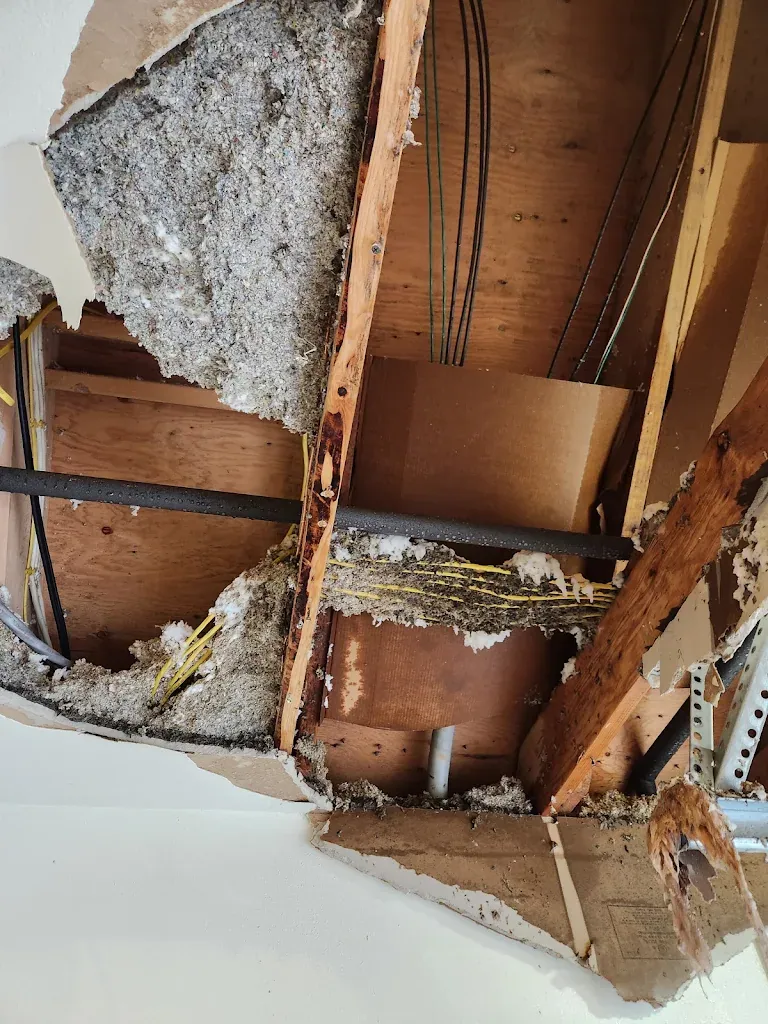
After two major cold events in two years we have a clear picture of where Western Washington homes fail. Hose bibs with a hose left attached top the list by a wide margin. Next come water lines in vented crawlspaces, particularly runs within a few feet of a foundation vent on the north or east side of the house, where the outflow wind hits hardest.
Pipes in exterior walls fail in kitchens and bathrooms, especially in additions and in the two-story tract homes built through the 1990s and 2000s in Silverdale and Gig Harbor North, where a sink sits against an outside wall with only a few inches of insulation behind it. Garage utility sinks and the lines feeding a garage water heater are another repeat. On well properties the pressure switch and tank tee in an unheated pump house freeze early and often.
Manufactured homes and older cabins in Mason County have their own pattern: heat tape that was installed twenty years ago and quit working, skirting with gaps, and water lines that run in the open air under the floor. Those homes need attention before every cold snap.
Preventing the freeze in the first place
Prevention is mostly about air movement and insulation at the specific weak points. Cold air moving over a pipe pulls heat out of it many times faster than still air at the same temperature, which is why closing crawlspace vents does more than wrapping the pipe. Do both. Foam sleeves on exposed runs, vent covers in place from the first freeze warning until March, and the gaps where pipes pass through the rim joist sealed with foam.
For a line that has frozen before, self-regulating heat tape wrapped along the pipe under the insulation is the reliable answer. It draws almost nothing when the pipe is warm and comes on as the temperature drops. Plug it into a receptacle you can reach and test it each November by feeling for warmth after it has been on in cold weather.
Inside the house, keep heat on in every room, open cabinets under sinks on exterior walls, and let a cold tap drip on the worst nights. If you will be away during a forecast freeze, leave the heat at a normal setting and ask a neighbor to check on the place, or shut the main off and drain down before you leave.
- Close crawlspace vents and seal rim joist penetrations before the first freeze
- Foam sleeve every exposed run in the crawlspace, garage and pump house
- Install self-regulating heat tape on any line that has frozen before
- Remove hoses and cover hose bibs
- Heat the well house or insulate it to the point it holds heat overnight
- Drip a cold faucet and open sink cabinets when lows drop into the low twenties
How to tell a pipe is frozen, not broken
The first sign is a faucet that produces a trickle or nothing while others in the house work. Frost on an exposed pipe, a bulge, or a pipe that is noticeably colder than those around it narrows down the spot. A toilet that will not refill while the sink next to it runs usually means the cold supply to that toilet froze in the wall or the crawlspace below.
If every fixture in the house is dead, the freeze is near the point where water enters the home: the main line in the crawlspace, the meter box, or the pump house on a well. On a well, check whether the pump is running. A pump that is cycling but delivering nothing may have a frozen pressure switch line, while a pump that is silent may have a frozen switch or a tripped breaker.
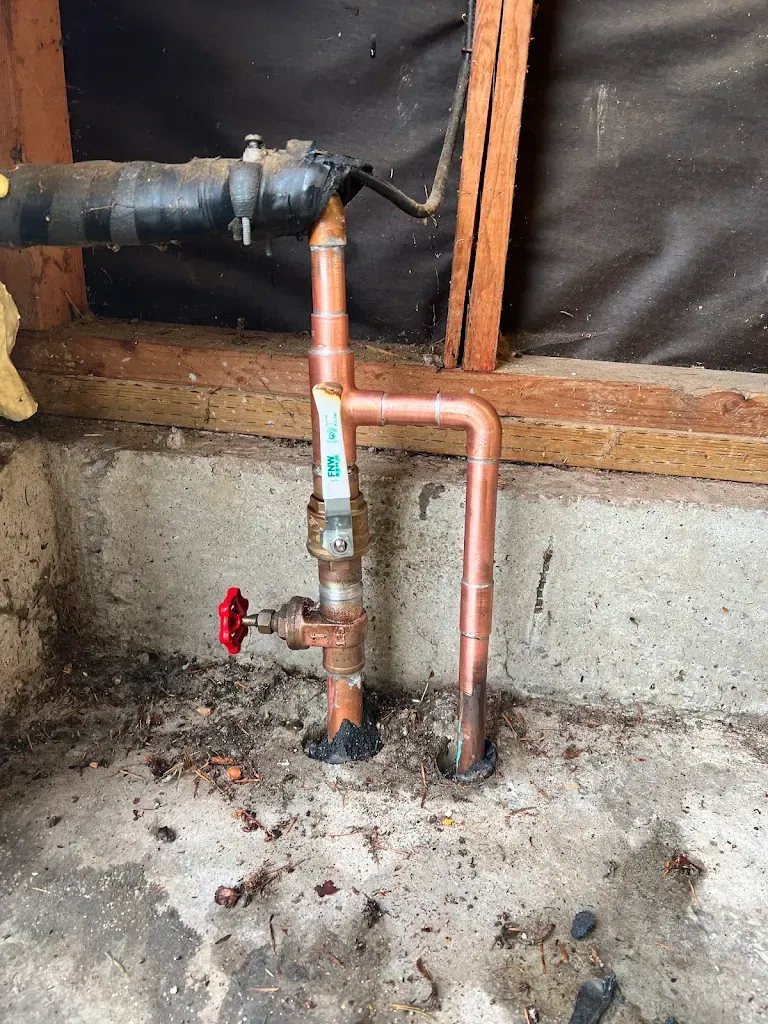
Before you start thawing, go shut the main water valve off and then open the affected faucet. If the pipe has already split, closing the main is what keeps the thaw from flooding the house. If the pipe is intact, the open faucet is what keeps it that way.
Thawing a pipe without burning the house down
Start at the faucet end and work toward the frozen section so melting water can escape as you go. A hair dryer on high, held moving along the pipe, is the safest tool most people own. Towels soaked in hot water and wrapped around the pipe work well on copper. A space heater aimed at a wall or cabinet warms a hidden section slowly. For a crawlspace run, a portable heater set on a dry surface and watched the entire time can bring a section of pipe back in an hour or two.
Do not use a torch, a heat gun on its high setting, or anything with an open flame. Copper carries heat along its length fast enough to ignite the wood it is strapped to several feet from where you are working, and crawlspace insulation and dust burn easily. We have been called to houses where the fire department had already been.
Once water starts flowing, keep the faucet open and let it run until the stream is steady. Then leave that faucet at a trickle for the rest of the cold spell. If you cannot locate the frozen section or it is inside a finished wall, that is a good point to call us. We find it with a thermal camera, warm it safely, and check for the split that may already be there.
After the thaw: the part people skip
The water is back on and everyone relaxes. This is the moment to be careful. Walk the house with the main valve open and look under every sink, behind the washing machine, at the water heater connections and along every pipe you can see in the crawlspace and garage. Listen in quiet rooms for hissing. Check the ceiling below any bathroom that had a frozen line. Then go read the water meter with every fixture off; if the dial is turning, water is going somewhere.
A split that opened while the pipe was frozen may have been sealed by the ice. It leaks the moment the ice is gone. Pinhole splits in copper can run for days inside a wall before a stain shows, which is how a freeze in January turns into a mold problem in April.
If you do find a leak, shut the main off again and call. If you find nothing, keep checking the meter daily for a week. And if the house was empty or the leak ran for a while before you caught it, call a restoration company for drying and your insurance agent for the claim. We provide the plumbing documentation insurers ask for, but drying and rebuilding are not plumbing work.
Repairing frozen pipe damage properly
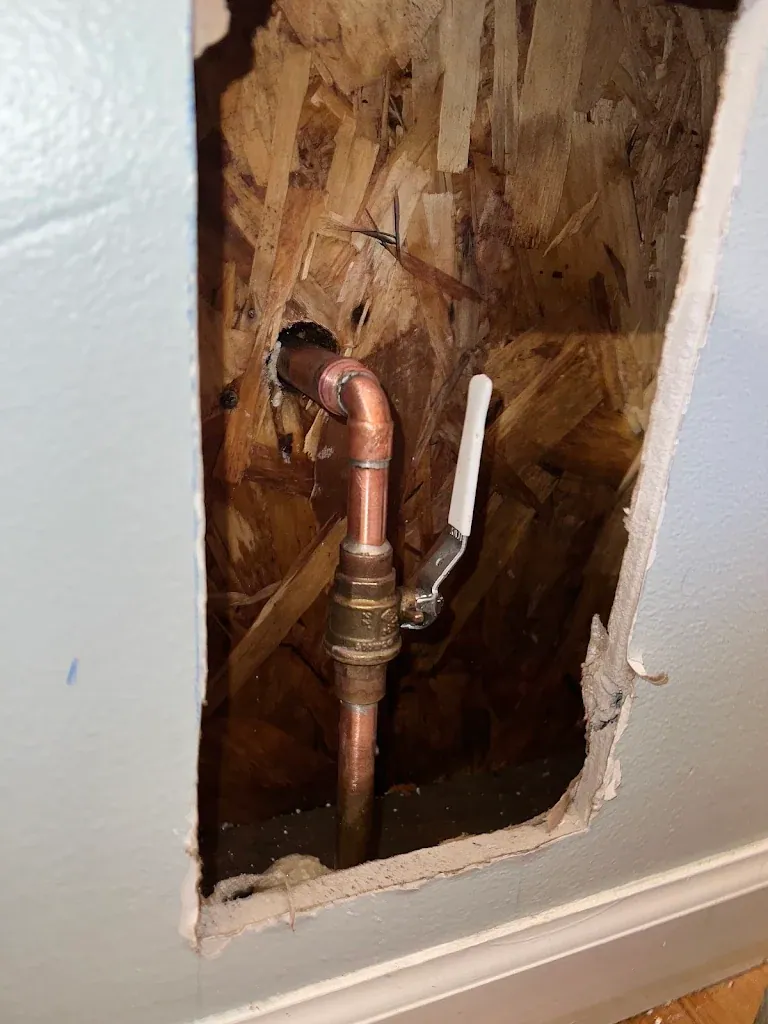
A burst copper line gets cut back to clean, sound pipe on both sides of the split and a new section soldered or press-fitted in. Galvanized is cut out and replaced with PEX or copper back to the next good joint, because the threads on old galvanized rarely survive being worked on. A failed PEX fitting is cut out and a new one crimped in. None of this is complicated, but it has to be done on pipe that is fully thawed and dry, and the section we replace should be the part that will freeze again if nothing changes.
That last part is the real job. Every freeze repair we do includes a conversation about why that spot froze and what will keep it from happening next year: moving the line off the exterior wall, insulating the crawlspace run, adding heat tape, or in older homes with several freeze repairs on the books, repiping the vulnerable runs entirely. The repair is a few hundred dollars; the second flood is not.
Frequently asked
Will a frozen pipe always burst?
No. Many frozen pipes thaw without damage, especially if a faucet was open to relieve pressure. But you cannot tell from the outside, which is why checking every visible pipe and the water meter after a thaw matters so much.
How long does a pipe take to thaw on its own?
Depends on the air temperature around it. A crawlspace line may stay frozen for days after the outdoor temperature rises if the vents are open and the ground is cold. Applying gentle heat usually brings a section back in thirty minutes to a couple of hours.
Can I use a heat gun to thaw a pipe?
On low, kept moving, and with nothing flammable nearby, a heat gun is manageable on exposed copper. Most heat guns run hot enough on high to scorch wood and melt PEX. A hair dryer is the safer choice and nearly as fast.
My pipes froze and now the water pressure is low everywhere. Why?
Either there is still a partial ice plug somewhere in the main line, or a split is bleeding pressure off before it reaches the fixtures. Check the meter. If it is spinning with everything off, you have a leak. If it is still, there is likely ice remaining in the line.
Does homeowners insurance cover frozen pipe damage?
Most policies cover sudden water damage from a burst pipe, though some require that the home was heated or that reasonable care was taken. We write up what we found and what we repaired for your adjuster. The restoration and rebuild side goes through a restoration company, not us.
Do you do emergency frozen pipe repairs on weekends and at night?
Yes. During the 2022 and 2024 cold snaps we ran evenings and weekends and answered after-hours calls through the holidays. Shut the main off first, then call (360) 812-1124.
About the author. Gregory Lowe is the owner and lead plumber at Washington Plumbing & Drain, a veteran-owned company in Port Orchard serving Kitsap, Pierce and Mason counties. The guidance here comes from daily work in local homes, not from a content farm. Call (360) 812-1124 with questions.