What it usually looks like
- Flushing a toilet makes water rise in the shower or tub
- The washing machine drains and a floor drain or toilet overflows
- The lowest fixtures in the house back up first, often a basement or ground-floor shower
- Every drain in the house is slow at the same time
- Water or sewage appears at an outdoor cleanout cap
- Gurgling from several fixtures preceded the backup by days or weeks
Likely causes, most common first
Tree roots in the sewer line
Roots enter at every joint in clay, concrete and old ABS sewer pipe, following the moisture and nutrients inside. They grow into a mat that catches paper and solids until the line closes. In our wet climate with fir, cedar and maple on every lot, roots are the leading cause of main line backups, and they come back on a schedule unless the line is repaired.
A grease or sludge blockage in the main drain
Kitchen grease, soap and sediment coat the main drain over years. A low-slope section or a belly where the pipe has sagged collects it until the pipe is mostly closed. Flushable wipes finish the job.
A full or failed septic tank
On a septic system, when the tank is full of solids or the outlet baffle has broken and plugged the drainfield, nothing leaves the house. Every drain backs up at once, often after a holiday with a full house. No cable fixes this; the tank has to be pumped and inspected.
A collapsed, crushed or offset sewer pipe
Old Orangeburg pipe flattens, cast iron rusts through on the bottom, and a section under a driveway can crush under vehicle weight. Settling in our glacial till soils pulls joints apart. When the pipe itself has failed, cleaning only buys time until the camera shows what has to be dug up.
A failed sewage ejector or effluent pump
Homes where the fixtures sit below the sewer or septic tank rely on a pump. When the pump dies or the float sticks, the basin fills and every fixture tied to it backs up. An alarm usually sounds first.
A blockage in the public sewer main
Occasionally the problem is past your property line. If neighbors are backing up too, the utility's main is involved and the sewer district needs to be called.
Safe things to check yourself first
- Stop using water immediately: no flushing, no showers, no laundry or dishwasher
- Locate the sewer cleanout outside, usually a capped pipe near the foundation on the side facing the street or the septic tank; if it is full of water, the clog is downstream of the house
- Check whether the problem is only one bathroom group or the whole house
- On septic, look at the tank lids and the drainfield for standing water or odor
- Ask a neighbor if they are having the same problem
- Move rugs, towels and anything of value away from the lowest drain in the house
Stop and call if
- Sewage is coming up in a tub, shower or floor drain
- The outdoor cleanout is overflowing
- A septic or pump alarm is sounding
- The backup is in a finished basement or has reached carpet or drywall
- The house has no cleanout and the only access is pulling a toilet
How we diagnose and fix it
- Confirm it is the main line by checking the cleanout and the lowest fixture, then shut down fixture use while we work
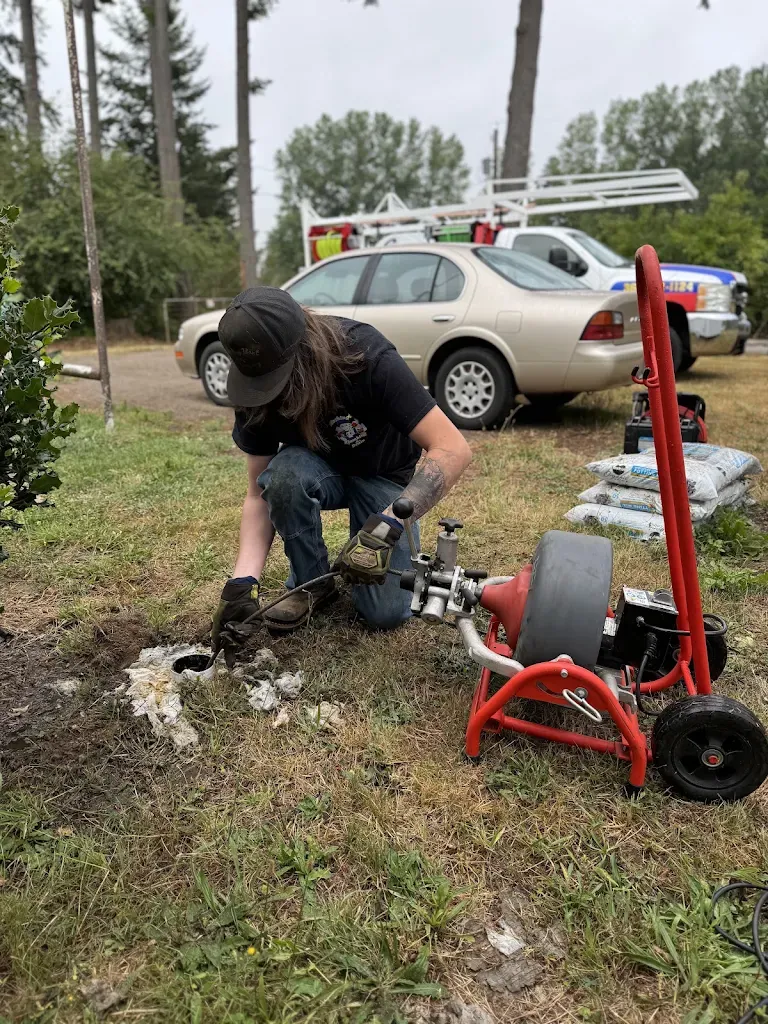
- Cable the main line from the cleanout with a sectional or drum machine and a root-cutting head sized to the pipe
- Hydro jet the line when grease, sludge or a heavy root mat is involved, using our own jetting truck
- Run the sewer camera after clearing to show you the cause and the condition of the pipe, with footage you can keep
- Install an exterior cleanout if the house does not have one so this never requires pulling a toilet again
- Quote sewer repair or replacement when the camera shows a broken pipe, and refer you to a septic company if the tank is the cause
Around Kitsap, Pierce and Mason counties
The first big storms of the rainy season bring a wave of these calls from the older neighborhoods of Bremerton, Port Orchard and Manchester, where sewer lines are clay or concrete from the 1950s and 60s and roots have had decades to work in. Homes on Kitsap County Sewer in South Kitsap and Manchester often have no cleanout at all. In the septic areas of Olalla, Burley and Mason County, Thanksgiving weekend is the classic moment a full tank announces itself, and we get a lot of those calls on a Friday evening.
Questions people ask
Why does flushing the toilet make my shower back up?
The shower drain is the lowest opening on the same main line. When the toilet sends a few gallons into a blocked line, the water has to go somewhere, and it comes up the shower.
Can you clear a main line the same day?
Nearly always. A whole-house backup is treated as an emergency, and we schedule evenings and weekends for them. Call (360) 812-1124.
Do I need a camera inspection after the line is cleared?
We recommend it. A main line does not block for no reason, and the camera shows whether this is roots to be cut every year or a broken pipe that needs repair. The decision is yours either way.
What if I am on septic?
We check the tank level first. If it is full, pumping comes before any drain work and we will tell you to call a pumper. If the tank is fine and the line to it is blocked, that is our job.
Who pays if the clog is in the street main?
The sewer utility maintains the public main. The side sewer from your house to the main is the homeowner's responsibility in most Washington jurisdictions, including here.