
What it usually looks like
- The pump motor hums continuously, even in dry weather
- The pump starts, runs a few seconds, stops, and starts again within a minute
- Water in the pit never drops below the pump intake
- The pump is hot to the touch or has tripped a breaker
- You hear water rushing back into the pit right after the pump shuts off
- The discharge pipe outside is barely trickling while the pump runs
Likely causes, most common first
Genuine high groundwater
During an atmospheric river, a crawlspace on clay soil can take on water faster than one pump can move it. If the pit is clearly filling from the soil and the pump is discharging a strong stream, the pump is simply at its limit. That is a capacity problem, not a defect.
A failed or missing check valve
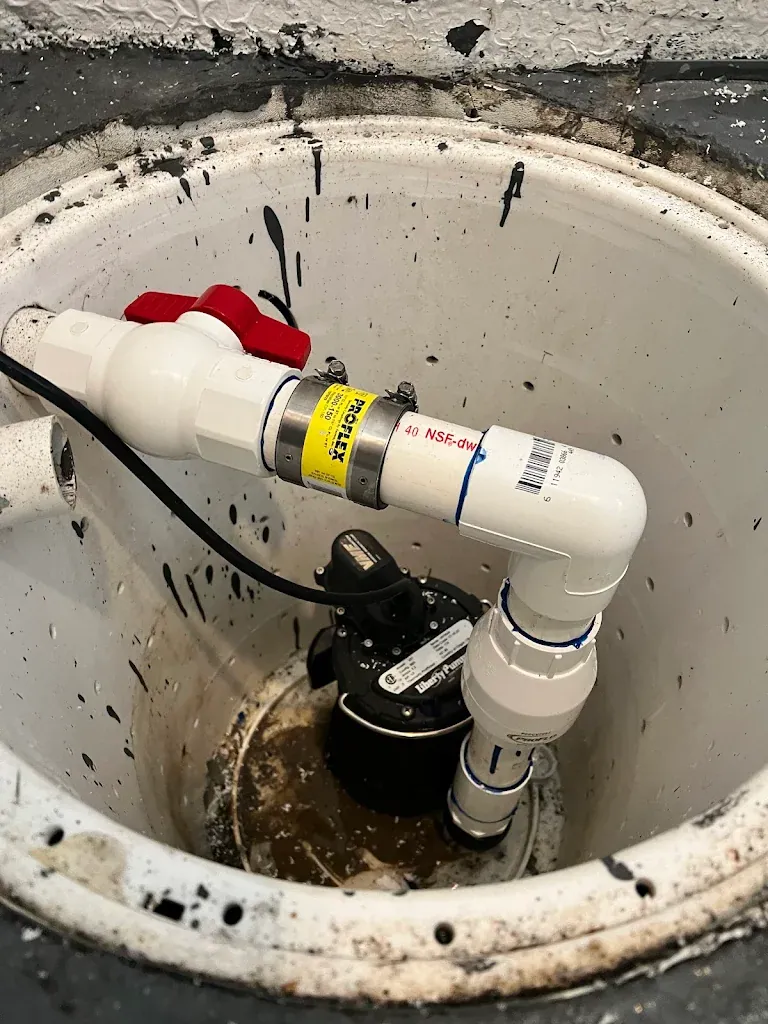
The check valve holds the column of water in the discharge pipe when the pump stops. Without it, that water falls back into the pit, raises the float and restarts the pump. This creates a tight short cycle and is one of the most common reasons a pump runs itself to death.
A stuck or misadjusted float
Tethered floats catch on the pit wall, the discharge pipe or a cord. Vertical floats bind on their rod when silt builds up. A float stuck up keeps the pump on with nothing to pump; stuck down means it never starts and the crawlspace floods.
Undersized pump or pit
A small pit fills fast and empties fast, so the pump starts and stops constantly. A pump that is too small for the head height, meaning the vertical lift plus the run to the discharge point, works hard and moves little.
Blocked or frozen discharge line
Discharge lines that run outside can clog with silt, get crushed by a vehicle, or freeze solid in a cold snap. The pump runs against a closed pipe, pulls high amps and gets hot. In the January 2024 freeze we found several pumps that had cooked themselves this way.
The discharge dumps right back at the foundation
If the line ends a few feet from the house, the water soaks into the same soil and drains back into the pit. The pump is recycling its own output.
Safe things to check yourself first
- Look in the pit with a flashlight. Is water actually entering from the sides or bottom, or is it mostly draining back from the discharge pipe after the pump stops?
- Lift the float by hand to see if it moves freely, and check that nothing is pinning it.
- Go outside and find where the discharge comes out. Confirm water is flowing strongly while the pump runs and that the end of the pipe is not buried, crushed or frozen.
- Watch the pit level after a cycle. If it rises quickly with a gurgle the moment the pump stops, the check valve is leaking.
- Unplug the pump for a minute if it is hot and running dry, and let it cool. Do not leave it unplugged during a storm.
- Measure how far the discharge end is from the house. Less than ten feet on flat ground usually means the water is coming back.
Stop and call if
- The pump is running but the pit is filling and the crawlspace is flooding
- The pump has tripped the breaker or smells hot or burnt
- You hear the motor but no water is moving, which means a blocked line or a failed impeller
- The pump is more than seven to ten years old and has started to short cycle
- Water is near the water heater, furnace or electrical in the crawlspace
How we diagnose and fix it
- Measure the inflow rate and the pit dimensions to see whether the pump is undersized or simply overwhelmed in a storm.
- Replace failed check valves with a quiet, full-port model installed at the correct height so the discharge does not fall back.
- Clean or replace the float switch, and set the on and off points so the pump runs a full cycle instead of a few seconds.
- Install a properly sized Liberty submersible pump with a cast iron body when the old pump is worn, undersized or a cheap pedestal unit.
- Reroute or extend the discharge line to daylight away from the foundation, with a freeze-resistant termination so it does not block in winter.
- Add a battery backup pump where outages are common, since a storm that fills your pit is often the same storm that knocks out power.
Around Kitsap, Pierce and Mason counties
Sump pumps work hardest here between November and March, when the water table under Port Orchard, Belfair and the Key Peninsula sits right at the surface and a two-day atmospheric river can deliver several inches of rain. Homes on the low ground around Burley Lagoon and the Union River flats often run a pump for days at a time, and that is normal if it is moving water. Power outages on Peninsula Light and Mason PUD during wind storms are the other half of the story, which is why we recommend battery backup on nearly every crawlspace pump we install.
Questions people ask
How long should a sump pump run per cycle?
Long enough to drop the pit a foot or so, usually ten to thirty seconds, then rest for several minutes. Cycles of a few seconds every minute wear the motor and the switch quickly.
Is it bad for a sump pump to run continuously during a storm?
Not if water is moving. Submersible pumps are cooled by the water around them and can run for hours. Running dry or against a blockage is what kills them.
How often should a sump pump be replaced?
Plan on replacement every seven to ten years for a quality pump that works every winter, sooner for a budget unit or a pump that cycles constantly. If yours has already failed once, do not wait for the second time.
Can I add a second pump?
Yes, and we often do. A second primary pump set slightly higher, or a battery backup pump in the same pit, gives you capacity for big storms and insurance against a single failure.
Why does my pump sound like it is gulping?
It is pulling air as the water level drops to the intake, which usually means the off point of the float is set too low or the pit is too shallow. We adjust it so the pump stops before it starts sucking air.