Short answer
Homes built around Puget Sound from the 1940s through the early 1970s commonly have cast iron drain lines, galvanized steel water lines, and sometimes Orangeburg fiber sewer pipe in the yard. Cast iron rusts from the inside and loses its bottom; galvanized closes up with corrosion and strangles water pressure; Orangeburg deforms and collapses. All three are at or past their expected life in the shipyard-era neighborhoods of Bremerton, Port Orchard and Tacoma. Knowing which you have, and how each fails, tells you whether you are looking at maintenance, a spot repair, or a repipe.
In this guide
Key takeaways
- Cast iron drains last 50 to 75 years and fail by corroding through from the inside, usually along the bottom of horizontal runs.
- Galvanized water lines close up with rust scale, causing low pressure and rusty water long before they leak.
- Orangeburg sewer pipe, a tar-and-fiber product from the 1940s to early 1970s, flattens and collapses and should be replaced on discovery.
- A magnet, a scratch test, and a look at the fittings identify most pipe in a crawlspace in minutes.
- Replacement is PVC or ABS for drains and PEX or copper for water; galvanized-to-PEX repipes are one of the most common jobs we do.
- Do not mix galvanized and copper without a dielectric fitting; the joint corrodes fast.
The era that built these neighborhoods
Bremerton's population exploded during the Second World War as the shipyard ramped up, and the housing that followed through the 1950s and 60s in East Bremerton, Manette, Port Orchard, Manchester, and the older districts of Tacoma was built with what was standard then: cast iron for the drains under the house, galvanized steel for the water lines, and whatever the local supplier carried for the sewer lateral in the yard, which in some developments was Orangeburg.
That housing is now sixty to eighty years old. Much of it is well built and well loved, and a lot of it still has the original pipe. If you own a home from that period and no one has told you the plumbing was replaced, assume it was not until you see it yourself.
Cast iron drains: how they age and how they fail
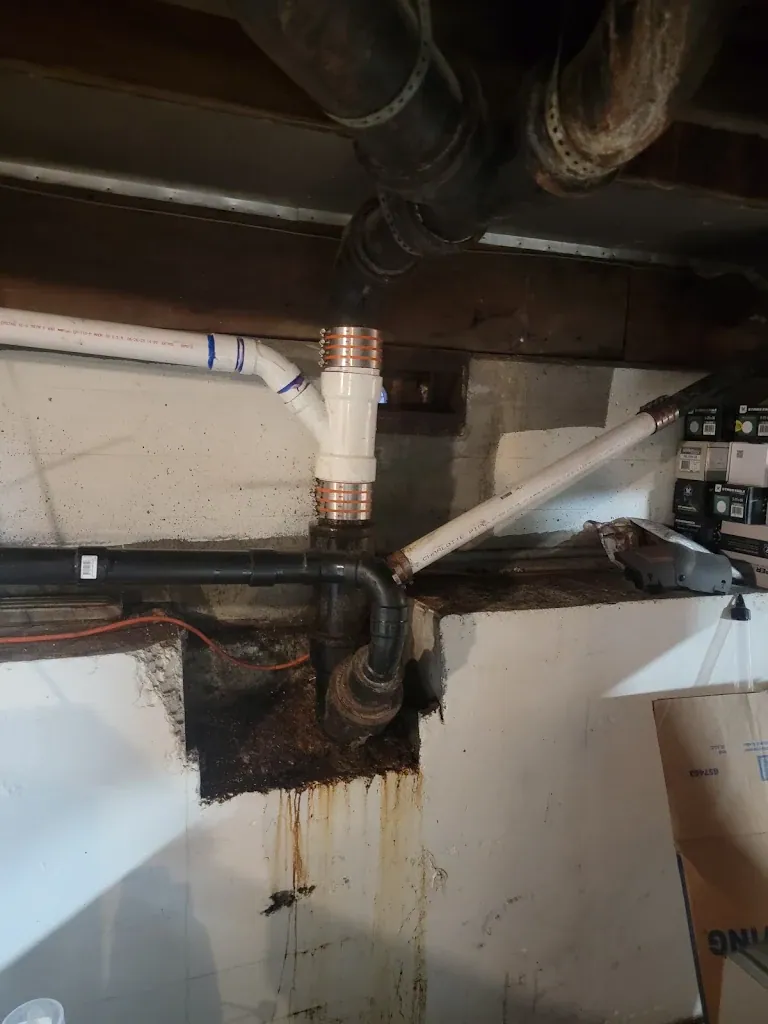
Cast iron is heavy, quiet, and nearly immune to roots when it stays in the crawlspace. Its enemy is its own interior. Sewer gas is mildly acidic, and over decades it eats the inside of the pipe, especially along the bottom of horizontal runs where waste sits. The wall thins, scale builds up in flakes called tuberculation, and eventually a channel rusts through along the bottom. From the outside the pipe looks fine. From the inside, on camera, it looks like a riverbed.
Symptoms arrive gradually. Drains slow because the rough interior catches paper and grease. Cleaning helps for a while, and each cleaning scrapes off scale and exposes fresh metal. Then one day there is a damp spot under the house, or a toilet flange that has rusted away from the pipe, or a sewer smell in the crawlspace that turns out to be a hairline split in a horizontal run.
We see cast iron that is still serviceable at seventy years, and cast iron that failed at forty in a wet crawlspace. A camera pass tells the difference. Scale that can be descaled and a sound wall means the pipe has life left; a bottom channel rusted through means it is time.
Galvanized water lines: pressure first, leaks later
Galvanized steel water pipe is steel with a zinc coating meant to stop rust. The zinc wears off from the inside over a few decades, and the steel underneath corrodes. Rust scale builds inward until a 3/4 inch pipe has a 1/4 inch opening. That is why the first complaint in a galvanized house is never a leak; it is a shower that loses pressure when the kitchen faucet opens, or hot water that takes forever because the hot side corrodes fastest.
Brown or rusty water after the house sits idle is the next sign, along with faucet aerators that clog with grit every few weeks. By the time pinhole leaks appear at threaded joints, usually in the crawlspace or where pipe passes through a wall, the system is at the end. Patching one joint on a galvanized line tends to disturb the next one.
A galvanized house also often has galvanized drain branches, 1-1/2 and 2 inch lines from sinks and tubs, which clog the same way the water lines close up. A kitchen line with a pencil-sized opening left in it is a common find.
Orangeburg: the pipe that was never meant to last
Orangeburg is the trade name for bituminized fiber pipe: wood pulp pressed with coal tar pitch into a pipe. It was cheap and light, and it was used for sewer laterals from roughly the 1940s into the early 1970s, including in developments around Kitsap and Pierce County. Its rated life was never long, and most of it has outlived that by decades.
It fails by losing its shape. Soil pressure flattens the round pipe into an oval, the top blisters and delaminates, and roots enter at the seams with ease. On camera it is unmistakable: a flattened, dark, fibrous tunnel with bubbles on the ceiling. A cable can tear through it, and hydro jetting can strip the inner layers, so once we see Orangeburg we stop cleaning and start talking about replacement.
There is no maintenance plan for Orangeburg. If your lateral is made of it, it is a replacement waiting for a date, and the only decision is whether you pick the date or a backup does.
How to identify what you have
Most of this is visible in a crawlspace, a utility room, or at the exposed pipe near the water heater. A flashlight and a few minutes answers more than you would expect.
- Cast iron drain: dark gray or black, heavy, with hub-and-spigot joints or no-hub couplings; a magnet sticks; rings dull when tapped
- Galvanized water pipe: dull gray to silver, threaded fittings, a magnet sticks; often with a white or rusty crust at joints
- Copper water pipe: reddish or green-tinged, soldered joints, no magnet attraction
- PEX: flexible plastic tubing, usually red, blue or white, with crimp or expansion fittings
- ABS drain: black plastic with glued joints; PVC drain: white plastic
- Orangeburg: only visible in the yard during excavation or on camera; looks like dark, fibrous, flattened pipe
- Clay or concrete sewer: short sections with bell joints, seen on camera as light-colored with visible joints every few feet
Replacement, piece by piece or all at once
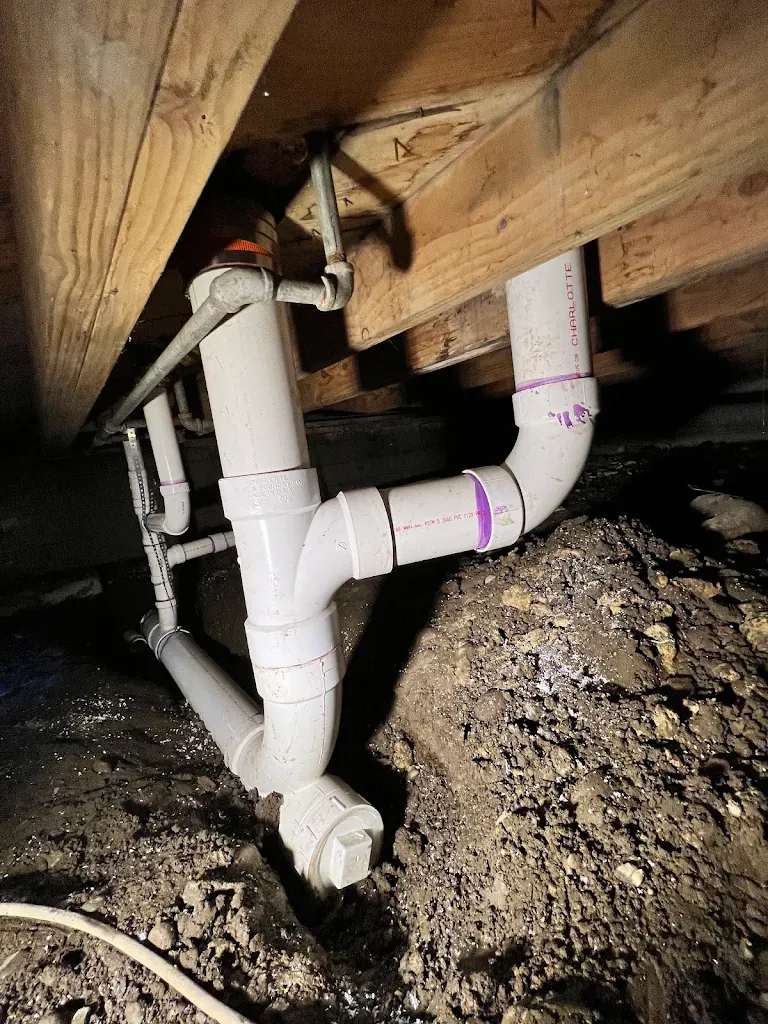
Cast iron under the house is replaced with ABS or PVC. In a crawlspace we cut out the old iron, hang new plastic on proper supports with the right slope, and tie it into the fixtures above and the sewer below. A full crawlspace drain repipe on a typical rambler is a few days of work. Where a cast iron stack runs inside a wall, we often leave the vertical and replace the horizontals, since verticals corrode far less.
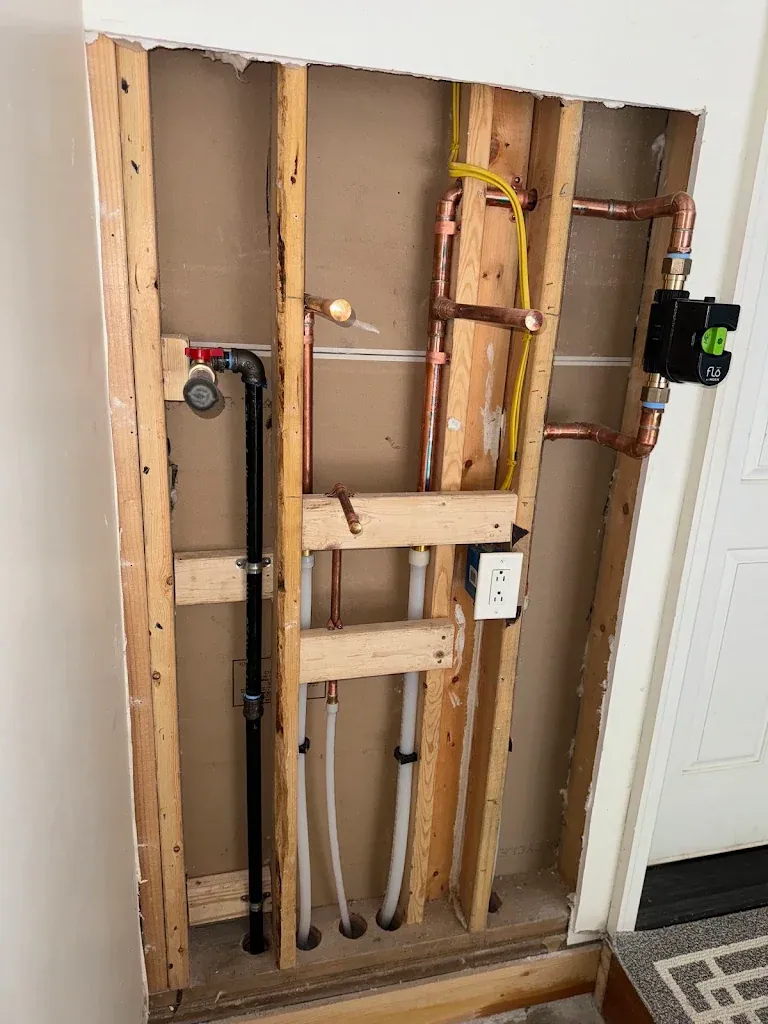
Galvanized water lines are replaced with PEX, or copper where a customer prefers it. A whole-house repipe runs new lines from the main shutoff to every fixture, abandons the old steel in place, and usually includes a new main shutoff valve and often a pressure reducing valve if the house never had one. Most of our galvanized-to-PEX repipes in Port Orchard and Bremerton ramblers take two to three days with water restored each evening.
Orangeburg and failed clay in the yard are replaced by excavation with new PVC and new cleanouts. We do not offer trenchless pipe bursting; we dig, which on most lots is a one- to two-day job and leaves you with a pipe you can camera from a cleanout any time.
Mistakes that make old pipe worse
Joining copper directly to galvanized steel sets up galvanic corrosion, and the galvanized side rots out at the joint in a few years. A dielectric union or a brass fitting between them stops it. We find a lot of DIY water heater swaps where this was missed.
Chemical drain cleaners on cast iron or galvanized drains accelerate corrosion, and on a pipe already thinned to a sliver they can finish it. Using a cable with too large a cutter in corroded cast iron can punch through the wall. And pouring a new patio or driveway over an Orangeburg lateral guarantees you will be cutting that concrete later.
The best thing you can do with old pipe is know its condition. A camera pass on the drains and a look at the exposed water lines, done once, lets you plan replacement on your schedule instead of during a flood in the crawlspace.
Frequently asked
How long does cast iron drain pipe last?
Commonly 50 to 75 years, with wide variation. Dry crawlspaces and vertical stacks last longest; horizontal runs in damp crawlspaces fail soonest. A camera inspection shows whether yours has life left.
Can cast iron be descaled instead of replaced?
Sometimes. If the pipe wall is intact and the problem is scale buildup, descaling with a chain or cable tool and a jetter can restore flow for years. If the bottom has rusted through, descaling just reveals the hole. We camera first and tell you which situation you have.
Is galvanized water pipe a health concern?
The main concerns are rust, sediment, and low pressure. Older galvanized pipe can also hold lead from earlier solder or service fittings, and the rust scale can trap it. If you have galvanized lines and concerns about lead, a water test is cheap and we can point you to a lab.
How do I know if my sewer lateral is Orangeburg?
Only a camera or an excavation tells for certain. Houses from the late 1940s through the early 1970s that have never had the lateral replaced are candidates. If a previous plumber mentioned a flattened or oval pipe, that is a strong hint.
Does replacing galvanized pipe fix low water pressure?
In most galvanized houses, yes, dramatically. The pressure at the meter was fine all along; the pipe was strangling it. If pressure is still low after a repipe, the issue is the service line or the supply, and we look there next.
Do you replace cast iron in a finished basement or under a slab?
Yes. Under-slab work means cutting and patching concrete, and finished spaces mean opening and closing walls or ceilings. We scope the work, give a flat-rate price that includes the access, and coordinate with your drywall or flooring contractor if you have one.
About the author. Gregory Lowe is the owner and lead plumber at Washington Plumbing & Drain, a veteran-owned company in Port Orchard serving Kitsap, Pierce and Mason counties. The guidance here comes from daily work in local homes, not from a content farm. Call (360) 812-1124 with questions.