
Short answer
A house needs a repipe when its supply pipes are failing as a system rather than at one spot: galvanized steel that has rusted shut and leaks at the threads, polybutylene that is splitting at fittings, or copper that is pinholing in more than one place. The signs are falling pressure, rusty water after the house sits, repeated leaks in different locations, and visible corrosion in the crawlspace. Most repipes in Kitsap, Pierce and Mason counties go to PEX, take a few days in an occupied home, and end the cycle of one repair after another.
In this guide
- Repipe means the supply system, not one repair
- Galvanized steel: the shipyard-era problem
- Polybutylene: replace it before it fails
- Copper: usually fine, sometimes not
- Reading the signs in your own house
- What a PEX repipe looks like in an occupied home
- Partial repipe, or the whole thing
- Things to do while the walls are open
Key takeaways
- Galvanized supply pipe in homes built before the early 1970s is at or past the end of its life. Low pressure and brown water are the symptoms.
- Polybutylene (gray plastic, 1978 to 1995) should be replaced regardless of symptoms; it fails without warning and some insurers refuse it.
- Copper is usually sound, but pinhole leaks in more than one location mean the water is attacking the pipe and the rest will follow.
- Two or three leaks in different places in a year is a system failing, and the third repair would have been a down payment on a repipe.
- A full PEX repipe in an occupied house is a few days of work with small, patchable drywall openings.
- Repiping is the right time to add a proper main shutoff, a PRV if pressure is high, and shutoffs at every fixture.
Repipe means the supply system, not one repair
A repipe replaces the water supply piping in a house: the line from the main shutoff through the walls and crawlspace to every fixture, plus the shutoffs and often the hose bibs. It does not usually mean the drains, though a crawlspace drain repipe is a separate project we also do, and the two are sometimes combined in older homes. The decision to repipe is a decision that the pipe material itself is done, not that one joint failed.
People arrive at that decision from two directions. One is a pattern of repairs: a leak under the kitchen, then one in the crawlspace, then a hose bib, each fixed, each followed by another. The other is a specific material that is known to fail: galvanized in a 1955 house near the shipyard, polybutylene in a 1988 house in Silverdale. Either way the question is the same. Is the pipe failing everywhere, slowly, or did one thing break?
Galvanized steel: the shipyard-era problem
Thousands of homes in Bremerton, Port Orchard, Manette, Navy Yard City and the older parts of Tacoma were built between the 1940s and early 1970s with galvanized steel supply pipe. Galvanized is steel pipe with a zinc coating that was supposed to prevent rust. The zinc wears off from the inside over decades, the steel rusts, and the rust builds up as scale that narrows the pipe. A three-quarter-inch galvanized main may have a quarter-inch opening after sixty years. Then the threads, which are the thinnest part of the pipe, rust through and leak.
The symptoms are reliable. Water pressure that has fallen over the years and is worst at the fixture farthest from the main. Hot water pressure lower than cold, because the hot side corrodes faster. Brown or rusty water first thing in the morning or after a vacation. Leaks at the elbows and tees, especially in the crawlspace. A pipe that crumbles when a plumber tries to work on it, which is why repairs on galvanized often turn into partial repipes whether anyone planned it or not.
Galvanized does not get better. A house with galvanized supply and these symptoms is a house that should be repiped, and the only real question is whether to do it now, on your schedule, or after the next leak.
Polybutylene: replace it before it fails
Polybutylene is a gray, flexible plastic pipe that was installed in a great many homes between the late 1970s and the mid-1990s, including tract homes in Silverdale, Port Orchard, Gig Harbor and across Pierce County. It was cheap and easy to run. It also reacts with chlorine in municipal water, becoming brittle from the inside, and the plastic or metal fittings crack. It fails without the warning signs galvanized gives: no pressure loss, no discoloration, just a split one day inside a wall.
Polybutylene was the subject of a large class-action settlement decades ago, and its reputation has reached the insurance industry. Some carriers will not write a new policy on a house with it, and some will not renew. For a buyer, that can mean a loan that will not close. For an owner, it is a liability waiting for a date.
Our advice on polybutylene is unconditional: replace it. The house does not need to show any symptom. If you are not sure what you have, look for gray plastic pipe, often with copper crimp rings or gray plastic fittings, at the water heater, under sinks and in the crawlspace. PB2110 is often printed on it.
Copper: usually fine, sometimes not
Copper supply pipe from the 1960s onward is the material most homeowners hope they have, and most of the time it is in good shape. Copper fails in two ways that matter. Pinhole leaks develop when the water is acidic or aggressive, which happens on some private wells in Mason County and Kitsap and in homes with certain older water treatment setups. Thin-wall type M copper is more vulnerable than type L. And copper joints fail where solder was done poorly or where the pipe was stressed by freezing.
One pinhole is a repair. Two or three in different parts of the house in a year or two means the water is eating the pipe everywhere, and the rest is coming. Green or blue-green staining at fixtures, a greenish tint in the water, and a metallic taste all point to copper dissolving. In that case the repipe should be paired with water treatment to correct the pH, or the new pipe will not matter.
Copper that froze and split in the 2022 or 2024 cold snaps is a different case. Replace the damaged runs, insulate, and keep the rest.
Reading the signs in your own house
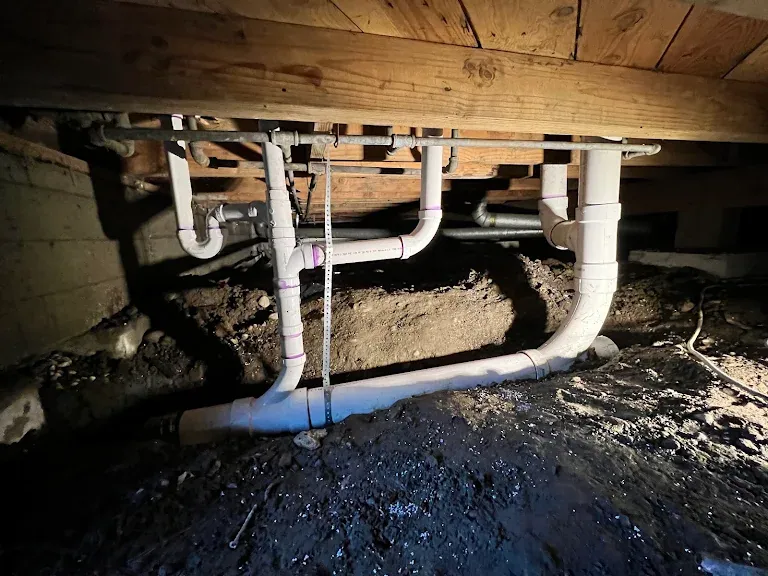
Walk the house and the crawlspace with a flashlight. Note the material at the main shutoff, at the water heater, under each sink and along the crawlspace runs. Houses that have been partially repiped are common: PEX at the kitchen and bath, galvanized in the crawlspace and to the hose bibs. The oldest material still carrying water is the one that decides.
Then consider the symptoms together. Any one of them can have another cause; several together point at the pipe.
- Pressure that has fallen over years, worst at the farthest fixture or on the hot side
- Rusty or discolored water after the house sits, clearing after a minute
- Two or more leaks in different locations within a year or two
- Visible corrosion, rust blooms or green crust on fittings in the crawlspace
- Pipe that crumbles, cracks or will not hold a thread when repaired
- Gray polybutylene anywhere in the system
- Insurance or a buyer's inspector flagging the pipe material
What a PEX repipe looks like in an occupied home
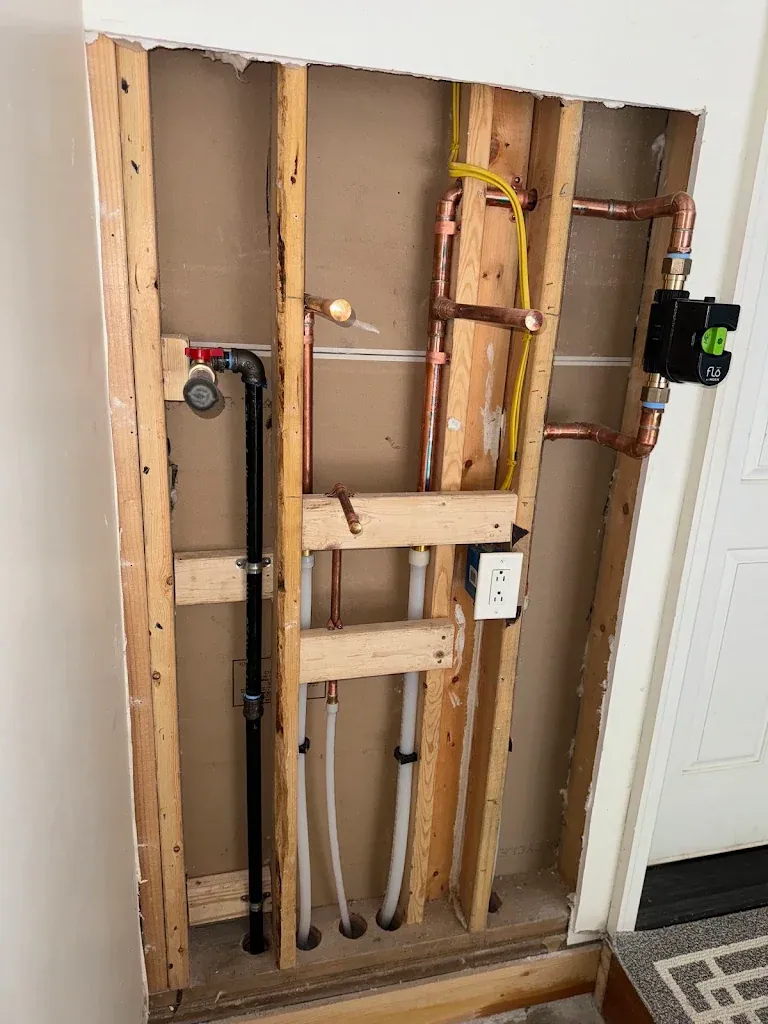
Nearly every repipe we do now is PEX, with copper used where it makes sense at the water heater and for exposed stub-outs. PEX is flexible, handles freezing better than metal, resists the corrosion that kills galvanized and copper, and can be run in long continuous lengths with fewer fittings. It is routed through the crawlspace and up through the same walls the old pipe used, with small openings cut in drywall where the old pipe cannot be followed.
The sequence is: map the existing system and plan the new one, often as a home-run or manifold layout with a shutoff for every fixture; run the new PEX while the old pipe is still live so the house has water each night; switch over in a few hours; pressure test; then abandon or remove the old pipe. Drywall openings are cut cleanly and patched, and painting is the homeowner's or a painter's to finish. A typical three-bedroom house is a few days of plumbing work, and we schedule it so the water is off for as short a stretch as possible.
A permit and inspection are required in Washington. We pull it. The inspector sees the new pipe before the walls are closed, which is a protection for you and the reason not to let anyone repipe a house without one.
Partial repipe, or the whole thing
Sometimes the right answer is less than everything. A house with copper upstairs and a galvanized crawlspace main can get a crawlspace repipe that replaces the failing material and leaves the sound copper alone. A house where only the hose bib runs and the garage line are galvanized can get those replaced. The test is whether the remaining pipe is the same material and age as what failed. If it is, a partial repipe is a down payment on the next leak.
We lay out both options with the price for each so the decision is yours. In most galvanized homes the difference between replacing the bad half and replacing all of it is smaller than people expect, because the mobilization, permit and crawlspace time are the same either way.
Things to do while the walls are open
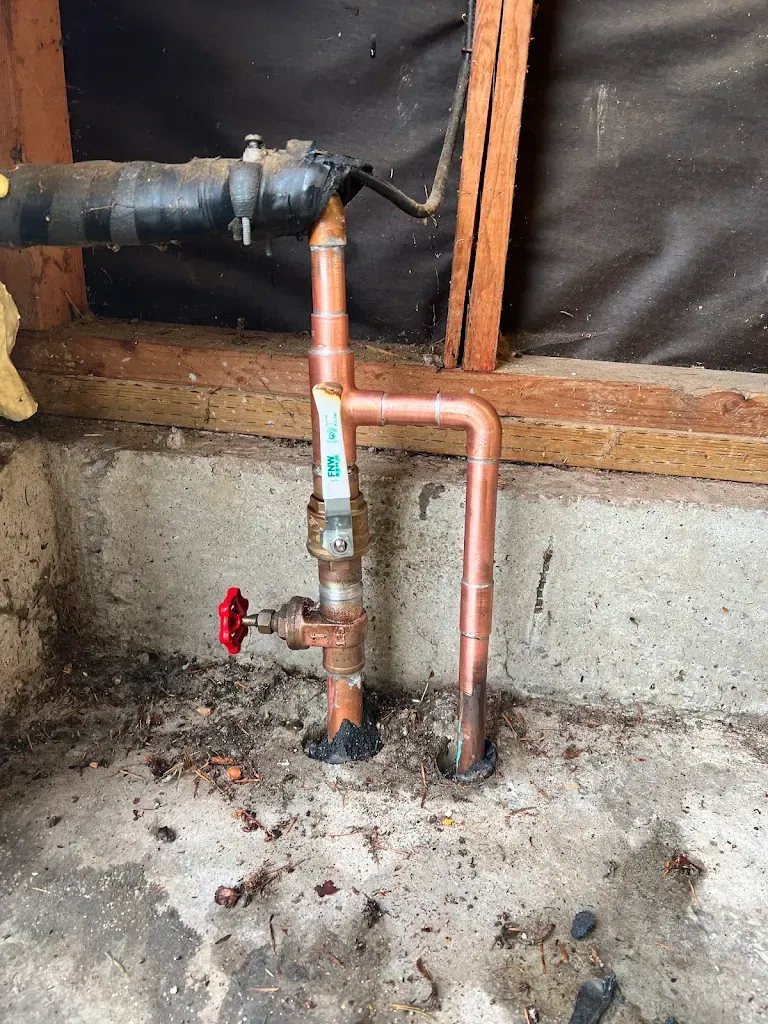
A repipe is the moment to fix everything that was wrong with the old system. Replace the main shutoff with a full-port ball valve in a spot you can reach. Add a pressure reducing valve if street pressure is high, which it is in low-lying parts of Port Orchard and Bremerton. Put a quarter-turn shutoff at every fixture. Replace plain sill cocks with frost-free hose bibs. Add a thermal expansion tank at the water heater if there is not one. Relocate the washing machine box if it has always been in the wrong place.
If the house is on a well, this is also the time to add a sediment filter or whole-house filtration ahead of the new pipe, so the new system is not subjected to the water that killed the old one. None of these are large additions on their own, and all of them are much cheaper to do while the plumber is already in the walls.
Frequently asked
How do I know if my house has galvanized pipe?
Look at the pipe at the water heater and under sinks. Galvanized is dull gray metal, threaded at the joints, and a magnet sticks to it. Copper is reddish-brown and non-magnetic. PEX is plastic, usually red, blue or white. Polybutylene is gray plastic.
How long does a repipe take?
A typical single-family home takes a few days of work. The water is usually off for only part of one day during the switchover. Larger homes and homes with finished basements or tight crawlspaces take longer.
Is PEX safe and durable?
Yes. PEX has been used in Washington homes for decades and is approved by the state plumbing code. It resists corrosion and freeze damage better than metal. Quality fittings and a proper pressure test are what matter.
Does a repipe fix low water pressure?
If the pressure loss was from scale inside galvanized pipe, yes, dramatically. If the cause is a failing PRV, a partly closed valve or low street pressure, the repipe will not fix it, which is why we check pressure at the main before quoting.
Will my insurance cover a repipe?
Generally not as a planned upgrade. Insurance covers sudden damage, not pipe replacement. But replacing polybutylene can keep a policy in force, and a repipe after repeated leaks can lower the risk of a claim being denied for a known condition.
Can you repipe the drains at the same time?
Yes. Older homes with cast iron or galvanized drain lines in the crawlspace often have both problems. Doing supply and drain together saves time under the house and gets the whole system onto modern materials in one project.
About the author. Gregory Lowe is the owner and lead plumber at Washington Plumbing & Drain, a veteran-owned company in Port Orchard serving Kitsap, Pierce and Mason counties. The guidance here comes from daily work in local homes, not from a content farm. Call (360) 812-1124 with questions.