Short answer
Western Washington water is soft to only slightly hard by any national measure. Bremerton's utility, for example, reports its well supply at roughly 3 to 6 grains per gallon and its surface supply under 2, and says a softener is generally not needed; most other Puget Sound utilities fall in a similar range. Scale still forms on tankless heat exchangers and electric elements over years, and some private wells run harder than city water, but the mineral problems that actually trouble local plumbing are iron, manganese and low pH, not hardness.
In this guide
Key takeaways
- Hardness is calcium and magnesium; it is measured in grains per gallon or milligrams per liter, and most Puget Sound water sits at the soft end of the scale.
- Bremerton publishes hardness of about 3.3 to 5.7 grains per gallon from its wells and 1.9 from the Union River; it says a softener is generally not needed.
- Even soft water deposits scale on a tankless heat exchanger over years, which is why descaling is still a maintenance item here.
- Private wells vary; a few around Kitsap and Mason County are moderately hard, and only a test tells you.
- The common local mineral complaints are iron and manganese stains, sulfur odor and acidic water, each with its own fix.
- Buy a softener for a measured problem, not because a salesman sells softeners.
What hardness is and how it is measured
Hard water is water carrying dissolved calcium and magnesium, picked up as rain percolates through limestone or mineral-rich rock. It is measured in grains per gallon or milligrams per liter of calcium carbonate. Roughly, water under 3.5 grains per gallon is soft, 3.5 to 7 is moderately hard, 7 to 10 is hard, and above that is very hard. In the Midwest and Southwest, 15 to 25 grains is normal and a softener is standard equipment.
Puget Sound's geology is glacial gravel, sand and till over volcanic bedrock, with very little limestone. Rain is abundant and does not sit in the ground long enough to load up with minerals. The result is water that is naturally low in hardness, whether it comes from the mountains through a city system or from the glacial aquifers under Kitsap and Mason County.
The local numbers
The City of Bremerton publishes its hardness directly. Its well supply measures 56 to 98 milligrams per liter as calcium carbonate, which is 3.3 to 5.7 grains per gallon, and its Union River surface supply measures 32 milligrams per liter, or 1.9 grains. The city says plainly that its water is not considered hard and that a water softener is generally not needed. Those figures put Bremerton in the soft to barely moderate range.
Other utilities around the Sound report in the same neighborhood. Every system is required to publish an annual water quality report, and hardness is on it; find yours on the utility's website or ask them. If you are on Port Orchard, West Sound, Silverdale, Poulsbo or Tacoma water, you will see small numbers. We have never recommended a softener for a customer on city water in our service area for hardness alone.
Wells are the exception that proves the rule. A well drawing from a particular gravel layer can be noticeably harder than the city average, and a few in Kitsap and Mason County test in the moderately hard range. That is still mild by national standards, but with a tankless water heater or a lot of glass shower doors it can matter.
What scale does, even in soft water
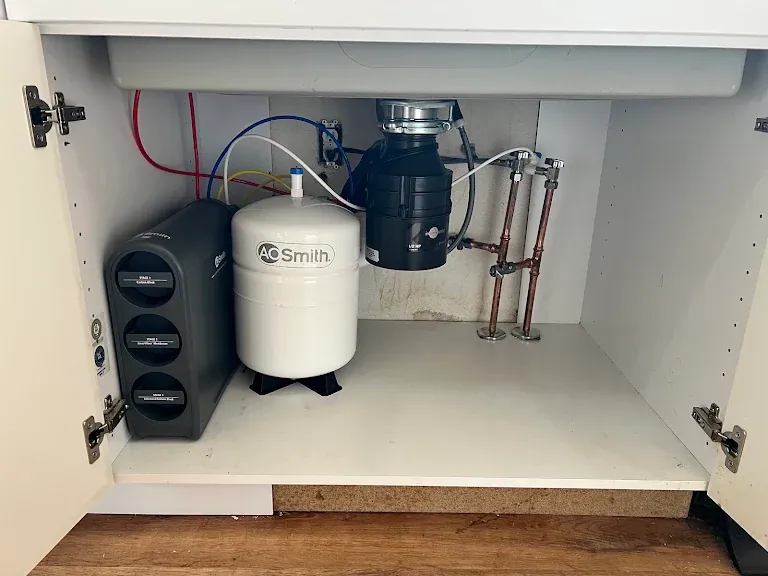
Hardness minerals come out of solution when water is heated. That is why the kettle gets crusty and why the inside of a water heater collects scale even in a region like ours. The amount is proportional to hardness and to how hot the water gets, so a 120-degree tank in Bremerton collects a fraction of what the same tank in Phoenix would. Over a decade, though, even that fraction adds up.
Tankless heaters feel it first. The heat exchanger is a narrow copper or stainless passage that runs very hot, and a thin layer of scale on it reduces efficiency and triggers error codes. Rinnai and the other manufacturers call for periodic descaling with a pump and a mild acid solution, and on local water that interval is longer than in hard-water regions but it is not never. We descale a lot of tankless units in Gig Harbor and Silverdale that are five to eight years old and have never been flushed.
Electric tank elements grow a crust that insulates them and makes them run hotter until they burn out. Gas tanks collect sediment on the bottom that pops and rumbles when the burner fires. Faucet aerators and showerheads clog with white deposits, more slowly here than elsewhere. None of this is a reason to soften the water; it is a reason to flush the water heater yearly and descale the tankless on schedule.
The minerals that actually cause trouble here
When a Kitsap or Mason County homeowner says they have hard water, nine times out of ten they are describing iron or manganese. Orange rings in the toilet, brown stains on the laundry, black slime in the tank, and a metallic taste are the signature of those two metals, which are common in the low-oxygen layers of local aquifers. A U.S. Geological Survey study of groundwater in the Bangor area of Kitsap County found manganese above the secondary drinking water standard in most sampled wells and iron above its standard in a good share. Neither is hardness, and a softener is not the fix.
Low pH is the other one. Some local wells produce slightly acidic water that dissolves copper pipe, leaving blue-green stains in sinks and tubs and eventually pinholes in the plumbing. The fix is a neutralizing filter, and ironically it adds a little hardness to the water on purpose. Rotten-egg odor from hydrogen sulfide rounds out the list, usually from sulfur bacteria in the well or the water heater.
The point is that a test, not a symptom, should drive treatment. Stains mean an iron filter. Blue-green means pH correction. White crust on the kettle means hardness, and only then does softening enter the conversation.
When a softener is the right call
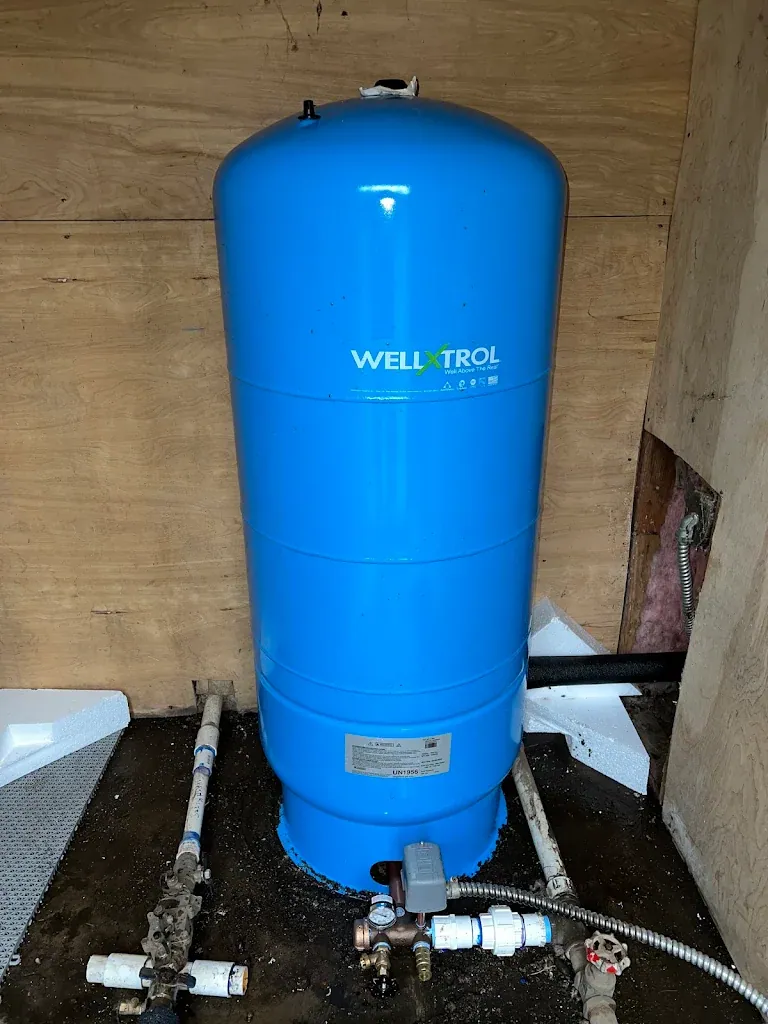
There are honest reasons to install a softener around Puget Sound, and we do install them. These are the situations where it makes sense.
- A well that tests in the moderately hard range or above, especially with a tankless water heater or a steam shower
- A household that prefers the feel of softened water for skin and hair, understanding that is a preference, not a repair
- A commercial setting such as a restaurant or laundry where even modest hardness costs money in equipment life
- A well with low levels of dissolved iron alongside some hardness, where a softener can address both, within its limits
When it is the wrong call
A softener sold to a city-water customer in Bremerton or Port Orchard for scale prevention is a solution looking for a problem. The water is already soft, the softener will add sodium and consume salt, and the customer will see no difference in the shower or on the glass. We have been called to houses where a softener was installed on water under three grains and the owner wondered why the salt bin was still full after a year; it was because the unit had almost nothing to do.
A softener sold to a well owner with heavy iron staining is worse. Softener resin fouls on iron at the levels common in local wells, and the staining continues while the softener slowly dies. The honest fix is an iron filter ahead of any softener, and often the softener is not needed at all once the iron is gone.
Reviews of our work mention more than once that we told someone their system was fine when another company had quoted a treatment system. That is not a sales trick in reverse; it is what a water test shows, and it is what we go by.
Keeping scale off your equipment without softening
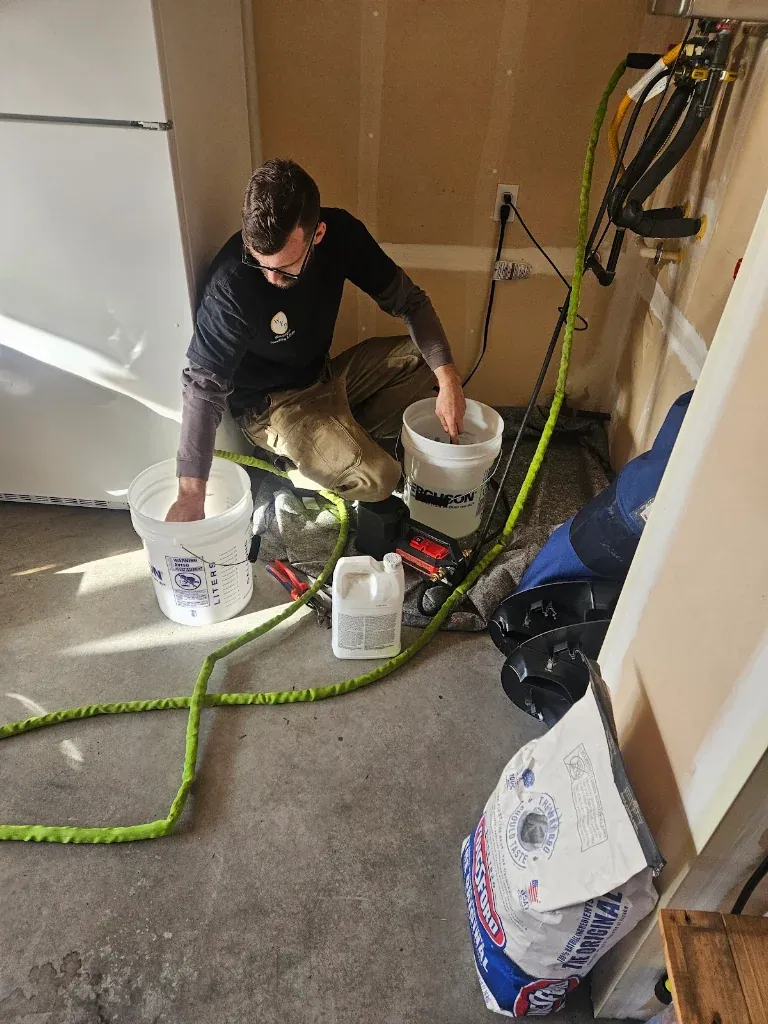
Flush a tank water heater once a year to clear sediment, and check the anode rod every few years. Have a tankless unit descaled on the manufacturer's interval, which on soft local water may stretch to two or three years, and install isolation valves on it if it has none so the service takes an hour instead of a morning. Set the water heater to 120 degrees unless you have a reason to run hotter; scale forms faster at higher temperatures.
Soak showerheads and aerators in vinegar when they slow. If a well tests on the harder side, a scale-inhibiting cartridge, which uses a template-assisted crystallization media rather than salt, is a low-maintenance alternative to a softener for protecting a tankless heater. And if you are unsure what your water is doing, a lab test settles it in a week and costs less than one softener service call.
Frequently asked
Is Puget Sound tap water hard or soft?
Soft to slightly hard. Bremerton reports roughly 2 to 6 grains per gallon depending on the source and says a softener is generally not needed, and most other local utilities are in a similar range. Check your own utility's annual water quality report for the exact number.
Do I need a water softener for a tankless water heater in Kitsap County?
On city water, no; periodic descaling is enough. On a well, test the hardness. If it is moderately hard or higher, a softener or a scale-inhibiting cartridge ahead of the tankless unit protects the heat exchanger.
Why do I get white spots on my dishes and glass if the water is soft?
Even a few grains of hardness leave spots as water evaporates, and dishwasher detergent and rinse aid choices matter more than softening at these levels. Try a rinse aid and a hotter final rinse before considering equipment.
What causes the orange stains in my toilet if it is not hard water?
Dissolved iron, which is common in Kitsap and Mason County wells. Black or brown stains point to manganese. An iron and manganese filter sized from a water test removes both; a softener usually cannot.
Can hard water damage my pipes?
At the levels found here, hardness does not meaningfully damage pipe. The water problem that does damage pipe locally is low pH on copper plumbing, which causes blue-green stains and pinholes and is fixed with a neutralizing filter.
How do I find out how hard my well water is?
Send a sample to a certified lab for a basic panel that includes hardness, iron, manganese, pH and bacteria. Test strips give a rough idea; the lab gives numbers you can size equipment from.
About the author. Gregory Lowe is the owner and lead plumber at Washington Plumbing & Drain, a veteran-owned company in Port Orchard serving Kitsap, Pierce and Mason counties. The guidance here comes from daily work in local homes, not from a content farm. Call (360) 812-1124 with questions.