
What it usually looks like
- Gray or dirty water appears around a floor drain after a shower, laundry load or toilet flush
- The drain gurgles before water comes up
- A sewage odor hangs around the garage, basement or laundry room
- The water recedes slowly on its own, then returns the next time you use water
- Other low fixtures, such as a basement shower or utility sink, back up at the same time
- It happens mostly during heavy rain or after several days of storms
Likely causes, most common first
A blocked main drain line
Everything in the house funnels into one line on the way out. Roots from cedar and fir, years of grease, scale inside old cast iron, or a wipe caught on a rough joint will choke it. When that line cannot carry the flow, water backs up to the lowest fixture, which is the floor drain.
Full or failing septic tank
On septic, the main line ends in a tank. If the tank is overdue for pumping, the outlet baffle has collapsed, or the drainfield is saturated by a wet winter, water has nowhere to go and the house backs up. Cabling the line will not help if the tank is the problem.
Failed effluent, ejector or grinder pump
Many homes on waterfront lots and in low areas pump sewage uphill to the street or to a drainfield. When that pump fails or its float sticks, the basin fills and the lowest drain in the house is the overflow point. An alarm should sound first, but alarms get unplugged or ignored.
Municipal sewer surcharge during storms
In parts of Bremerton, Tacoma and older Port Orchard neighborhoods, storm water finds its way into the sanitary sewer. During an atmospheric river the public main runs full, and homes at the bottom of the hill get pushed back on. A backwater valve is the defense.
A dry or clogged trap on the floor drain itself
If water is only pooling at the drain when you hose the garage, the floor drain's own trap may be packed with silt. That is a local clog, not a main line backup, and it is a much smaller fix.
Groundwater coming in, not sewage going out
Clear, cold water rising from a floor drain during a storm with no sewage smell can be a high water table pushing up through a drain that connects to a footing drain or sump, rather than the sewer at all.
Safe things to check yourself first
- Stop running water. No laundry, no showers, no dishwasher until the line is cleared. Every gallon you send down comes back up.
- Smell and look at the water. Gray soapy water means laundry or shower; brown with solids means sewage; clear and cold during rain means groundwater.
- Find your sewer cleanout outside and remove the cap carefully. If water is standing in it, the blockage is downstream of the house, toward the street or septic tank.
- If you are on septic, check the pump chamber lid for a flashing light or sounding alarm, and look at the tank riser for standing water at the top.
- Check whether the problem only happens during heavy rain, which points to the public sewer or a saturated drainfield rather than a clog.
- Keep people and pets out of the water, and wear gloves and boots if you must mop it up.
Stop and call if
- Sewage, not just gray water, is coming up and it is spreading
- Multiple fixtures on the lowest level are backing up at once
- A pump alarm is sounding or the pump is humming without moving water
- The backup is reaching finished flooring, drywall or stored belongings
- Water is rising in the exterior cleanout and you are on a public sewer
How we diagnose and fix it
- Confirm where the blockage sits by checking the cleanout and the nearest fixtures, and by asking whether you are on sewer or septic.
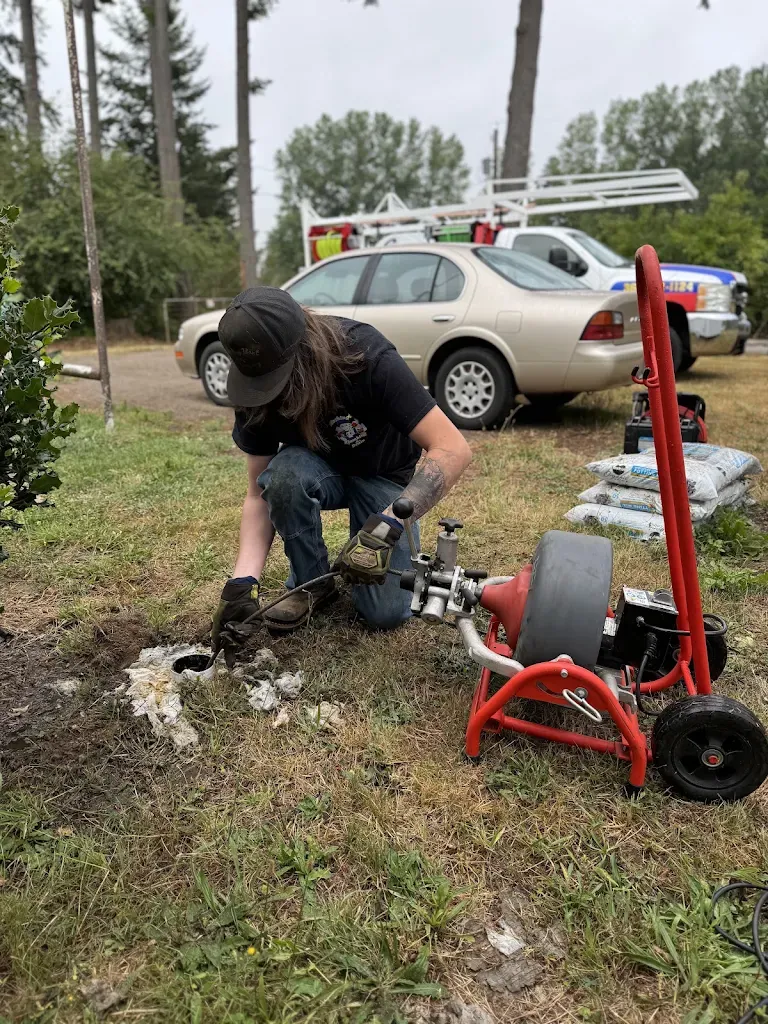
- Clear the main line with a sectional machine from the cleanout, or from a roof vent or pulled toilet if the house has no cleanout.
- Run a camera through the cleared line to find the cause, whether roots, a belly, a broken section or an offset joint, and show you the footage.
- Hydro jet lines that are packed with grease or sludge, since a cable alone will leave a tunnel that closes again.
- Diagnose and replace failed effluent, ejector and grinder pumps and floats in the pump chamber. We do not pump septic tanks, and we will tell you when the tank itself needs a septic company.
- Install an exterior cleanout or a backwater valve where the layout calls for it, so the next event is easier to handle or does not happen at all.
Around Kitsap, Pierce and Mason counties
Floor drain backups in our area follow the rain. From October through April the ground across Kitsap and Mason County is saturated, drainfields sit in standing water, and roots are actively hunting for a cracked joint. Homes below the road on Sinclair Inlet, in Manchester and along the Hood Canal side of Belfair often pump their sewage uphill, so a pump failure shows up as a floor drain first. If your house backs up every winter and is fine all summer, that pattern is itself a diagnosis.
Questions people ask
Is water from a floor drain dangerous?
Treat it as contaminated even if it looks like gray water, because the floor drain shares a line with the toilets. Keep kids and pets away, disinfect hard surfaces afterward, and throw out porous materials that soaked it up.
Can I just pour drain cleaner in the floor drain?
No. The clog is usually dozens of feet away in the main line, and chemicals will sit in the floor drain trap where they burn whoever opens it next. A cable or jetter reaches the actual blockage.
How do I know if it is my septic tank or a clog?
If the tank has not been pumped in several years, or there is standing water at the tank lid or over the drainfield, suspect the tank. If the cleanout between the house and tank is full, suspect a clog in the line. We check both and refer you to a septic company if pumping is the fix.
Why does it only back up when it rains hard?
Either rainwater is infiltrating your sewer line through cracks and roots, the public main is surcharging, or your drainfield is flooded. A camera inspection during or right after a storm tells us which.
What is a backwater valve?
A one-way flap installed in your sewer line that lets waste flow out but closes if the public sewer pushes back. It is the right fix for homes at the bottom of a hill on municipal sewer that back up during storms.