What it usually looks like
- A sound like popcorn or marbles rattling from the tank while it heats
- A deep rumble or boiling noise that starts a few minutes after the burner fires
- Knocking or banging that happens only during the heating cycle, not when water is running
- Hot water takes longer to recover than it used to
- A gas heater's burner runs longer and the flue feels hotter than normal
- Rust-colored or gritty water when you first open a hot tap
Likely causes, most common first
Sediment buildup on the bottom of the tank
Minerals, sand and rust settle to the bottom of every tank over time. On a gas heater the burner is right under that layer, so the steel gets much hotter than the water above and the water trapped in the sediment boils. Each steam bubble pops free with a snap. The thicker the layer, the louder the show. Well water with sand or iron builds this layer faster than district water.
Scale on electric heating elements
On an electric tank, minerals bake onto the lower element. Water boils against the crusted surface and makes a sizzling or crackling noise. The element runs hotter inside its crust, which is why scaled elements burn out early.
A failing or loose dip tube
The cold inlet dip tube directs incoming water to the bottom of the tank. When it cracks or breaks off, cold water dumps in at the top and the tank can make a sloshing or knocking sound as hot and cold mix. You usually also notice lukewarm showers.
Thermal expansion in the pipes, not the tank
A ticking or knocking that seems to come from the heater can be copper lines expanding and rubbing against framing as hot water moves through them. If the noise follows the pipe runs rather than staying at the tank, that is what you are hearing.
Condensation dripping onto the burner
Right after a large hot water draw, a gas tank refilled with cold water sweats on the outside. Drips landing on the burner sizzle and pop. This stops once the tank warms and is harmless, though a heater that does it constantly may be undersized for the household.
Water hammer at the heater
A single loud bang when a washing machine or dishwasher valve snaps shut is a pressure shock traveling back to the tank. That is a supply-side problem solved with arrestors or a pressure regulator, not a water heater repair.
Safe things to check yourself first
- Note when the noise happens: only while heating points to sediment, only when fixtures shut off points to water hammer
- Open a hot tap and watch the first few seconds for grit or discoloration
- Put a hand on the hot water line a few feet from the tank; if the noise seems to travel along the pipe, it is expansion, not the tank
- Check the data plate for the manufacture date; sediment noise on a tank past ten years changes the conversation
- If the heater has a hose-thread drain valve and you are comfortable with it, drain a bucket's worth and see how cloudy it is
Stop and call if
- Popping is accompanied by water on the floor or rust streaks on the tank
- The relief valve on the side is discharging hot water
- A gas heater shows soot around the burner door or the flame burns yellow instead of blue
- The noise is a single violent bang with pipes shaking in the walls
How we diagnose and fix it
- Listen to the heater through a heating cycle and confirm where the sound originates
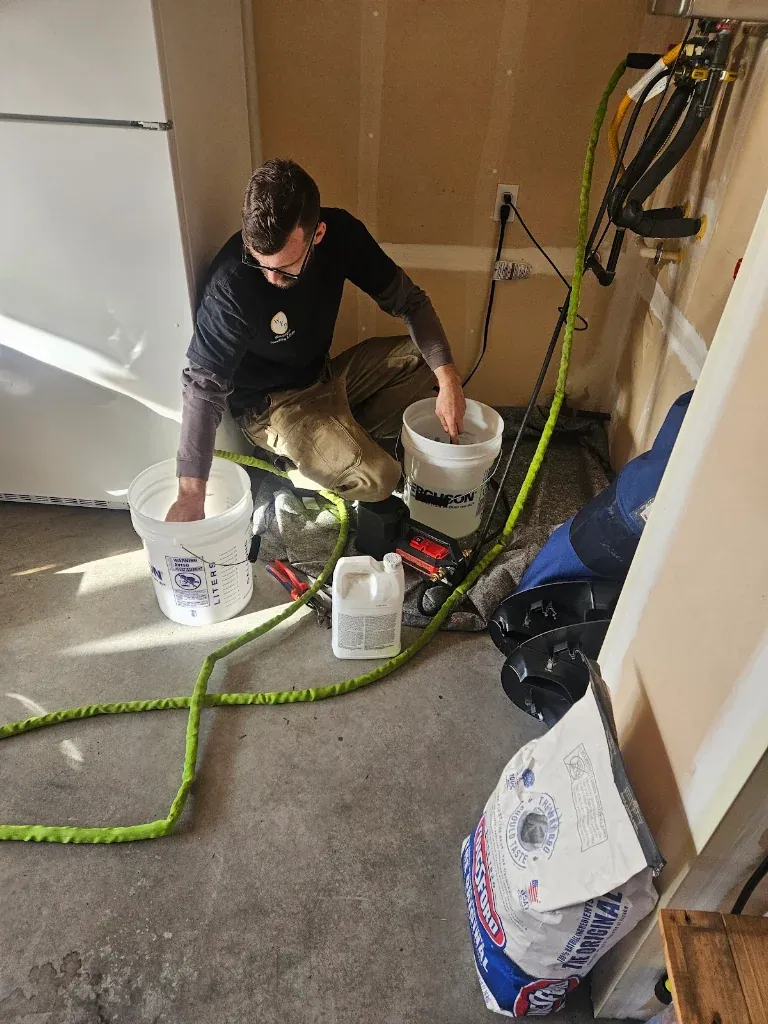
- Drain and flush the tank from the drain valve, stirring the sediment with short bursts of cold water until it runs clear
- On electric heaters, pull and inspect the elements, descale or replace them, and check the thermostats
- Inspect the anode rod while the tank is down and replace it if it is spent, which slows future sediment and rust
- Test pressure and install arrestors or a regulator when the sound is actually water hammer
- Tell you plainly when a tank is too far gone for flushing to matter and quote a replacement, including tankless if that suits the home
Around Kitsap, Pierce and Mason counties
Private wells across South Kitsap, the Key Peninsula and most of Mason County deliver sand, iron and manganese that settle in a tank far faster than Bremerton or Port Orchard district water does. We regularly flush heaters in Olalla, Belfair and Seabeck that have an inch or more of sediment after only a few years. A sediment prefilter ahead of the heater, or an iron filter for the whole house, makes a real difference in how long the next tank lasts.
Questions people ask
Is a popping water heater dangerous?
Not immediately. The relief valve protects against a true overpressure. The real cost is efficiency and tank life: sediment insulates the bottom from the water, so the burner overheats the steel and the glass lining cracks sooner.
Will flushing the tank stop the noise?
Usually, if the sediment is loose. If the layer has hardened into a crust, which happens on tanks that were never flushed, draining may not move it and the noise comes back quickly.
How often should a water heater be flushed around here?
Once a year on district water, and twice a year is not excessive on well water with visible sediment. It takes under an hour and we often pair it with an anode inspection.
My tankless heater is making noise too. Same cause?
Close. Scale on the heat exchanger makes a tankless unit rattle or whine as water flashes through narrow passages. Descaling with a pump and solution clears it.
Does the noise mean I need a new water heater?
Not on its own. A noisy five-year-old tank gets flushed. A noisy fourteen-year-old tank with rust at the base is telling you the same thing in two ways, and we would rather you replace it on your schedule than on an emergency one.