
Short answer
A tank water heater in Western Washington typically lasts eight to twelve years, sometimes fifteen if the anode rod was replaced along the way; a tankless unit lasts around twenty years with annual descaling. The heater is done when the tank itself leaks, when rusty hot water comes from a tank with a fresh anode, or when a repair would cost a large share of a replacement on a unit past ten years. Rumbling, a weeping relief valve, a pilot that will not stay lit, and slow recovery are warning signs that a decision is coming, not always that it has arrived.
In this guide
Key takeaways
- Find the manufacture date in the serial number, not the install sticker; the two can differ by a year or more.
- The anode rod is the single biggest factor in tank life. Check it around year four or five, replace it when it is mostly gone.
- A leak from the tank body, not a fitting or the relief valve, means the heater is finished. Nothing repairs a rusted-through tank.
- Soft Puget Sound water is kind to heaters; iron-bearing well water, a garage that froze in January 2024, and years of high pressure are not.
- Rumbling, popping, slow recovery and rusty hot water are signs the tank is aging; they are reasons to plan, not always reasons to replace today.
- Tankless heaters rarely fail suddenly. They scale up, throw error codes and lose capacity, and most of that is reversible with service.
What actually wears out
A tank water heater is a steel tank with a thin glass coating sprayed on the inside. The glass has pinholes and cracks from the day it is made, and it develops more every time the tank heats and cools. Water reaches the steel through those gaps and starts rusting it. The thing that stops the rust is the anode rod, a magnesium or aluminum stick hanging inside the tank that corrodes in place of the steel. As long as there is anode left, the tank is protected. When the anode is gone, the tank has a few years left at most.
Everything else on a tank is replaceable: thermostats, elements, gas valves, thermocouples, the relief valve, the drain valve, the dip tube. Those parts fail and get swapped. The tank is the one part that cannot be fixed, and the tank is what determines the heater's life.
A tankless heater has no tank to rust. Its heat exchanger, copper or stainless, is the wear part, and what wears it is scale and thermal stress. Fans, igniters, flow sensors and control boards fail and get replaced. The exchanger, kept clean, lasts a long time.
How to find out how old your water heater is
Look at the rating plate on the side of the tank, near the gas valve or the element covers. The serial number encodes the manufacture date, and each brand does it differently. Bradford White uses a two-letter prefix where the first letter is the year and the second is the month, on a repeating cycle. A. O. Smith and its sister brands mostly use a format where the first four digits are the year and week. Rheem and Ruud put the month and year in the first four digits. Rinnai and other tankless brands print a date or a year code on the plate as well.
If you cannot decode it, text us a photo of the plate and we will tell you. People are often surprised; a heater that was installed in a 2014 remodel may have been built in 2012, and a home seller's claim that it is only a few years old does not always survive the serial number.
If the plate is unreadable, the style of the unit tells you something. Tanks with a sealed combustion chamber and a sight glass at the bottom date from the early 2000s onward. Tanks that are visibly fatter for their capacity usually date from the 2015 efficiency changes or later.
Typical lifespans in our area
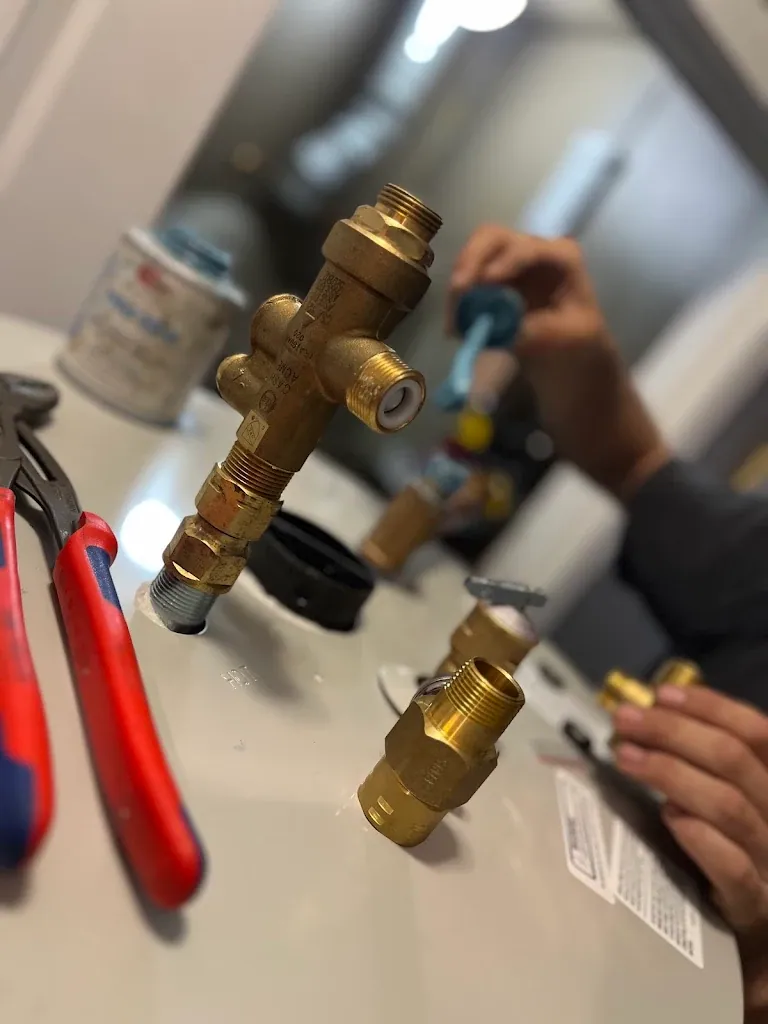
Gas and electric tanks in homes on Kitsap PUD, West Sound, Bremerton, Silverdale or Gig Harbor water, which is soft and low in minerals, commonly reach ten to twelve years, and we see fifteen-year-old units still working in houses where someone changed the anode once. Electric tanks tend to last slightly longer than gas because they do not go through the same burner heat cycling at the bottom of the tank.
Heaters on untreated well water are a different story. Iron and manganese build sludge on the bottom of the tank, coat electric elements, and in some wells feed bacteria that eat the anode in a couple of years. Eight years is good on a rough well. A sediment filter and, where the test calls for it, an iron filter or softener ahead of the heater move the number back toward normal.
Garage heaters took a beating in the December 2022 and January 2024 freezes. A tank that froze partly and thawed often stays in service, but the stress on the glass lining shortens what is left. If your garage heater went through those weeks without insulation or heat, assume it is older than its serial number says.
Tankless units from Rinnai and the other main brands are built for around twenty years. The ones that fall short are the ones that never got descaled, especially on well water.
Signs the tank is aging
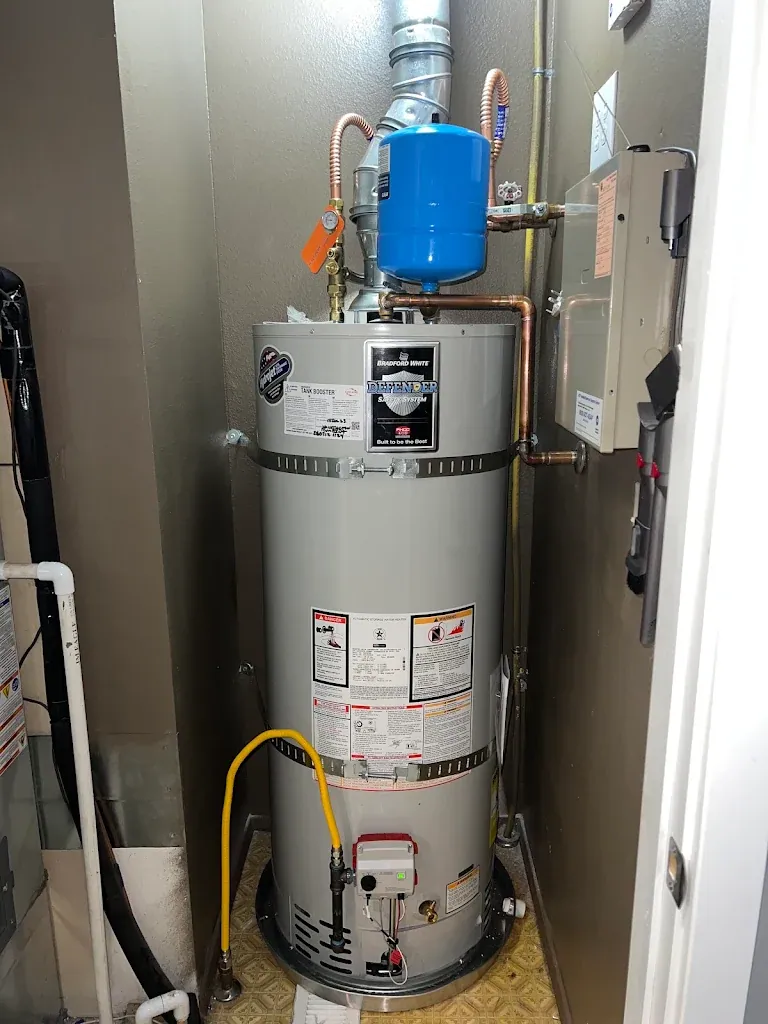
Rumbling, popping or kettle sounds when the burner runs come from water trapped under a layer of sediment on the bottom of the tank, flashing to steam. It means the tank has not been flushed in a while and the bottom is cooking. Flushing helps if the sediment is loose; if it has baked into a crust, the tank is being overheated from below every cycle and its life is shorter than it should be.
Slow recovery, lukewarm water that used to be hot, and hot water that runs out sooner than it did point to a broken dip tube, a failed lower element, a sediment layer eating into capacity, or a thermostat on its way out. Most of those are repairs on a younger tank. On a tank past ten, they are a reason to price the replacement before paying for the repair.
Rusty or discolored hot water, when the cold is clear, is the tank telling you the anode is gone and the steel is corroding. A new anode can sometimes arrest it if caught early. If the water stays rusty after an anode change, the tank is finishing. A rotten-egg smell in hot water only, common on wells, is usually a reaction with the anode rather than a sign of failure, and a different type of anode fixes it.
- Rumbling or popping during heating
- Hot water running out sooner than it used to
- Rusty hot water with clear cold water
- Water around the base that comes and goes
- Relief valve dripping or discharging
- Pilot that will not stay lit on a gas unit
Signs it is finished
Water on the floor is the one that ends the conversation, but only if it is coming from the tank body. We get a lot of calls where the leak turns out to be a fitting on top, a drain valve, the relief valve discharge, or condensation dripping off a cold tank in a damp crawlspace. All of those are repairs. A tank that is wet at the seam, dripping from the bottom of the jacket, or leaving a rust stain down the side is leaking through the steel, and it does not get better.
A tank that has rusted through usually starts with a drip and finishes with a failure. The timeline is unpredictable; we have seen tanks weep for months and tanks let go the week after the first drip. If you see water from the body, close the cold inlet valve, turn off the gas or breaker, and call. Keep the tank from being heated while it is draining through a hole; dry-firing elements or a burner under an emptying tank adds a second problem.
The other way a heater is done is economics. A gas valve, a control board, or a heat exchanger on a unit near the end of its expected life can cost a large share of a new heater. We will tell you which side of that line a repair falls on. Our repair-or-replace guide lays out how we think about it.
Making a tank last longer
Three things, in order of payoff. Replace the anode rod before it is gone, which on our water usually means a look around year four or five and a replacement when it is down to a thin wire. Flush a few gallons from the drain valve once a year to keep sediment from building up and cooking the bottom. Keep the pressure reasonable; a house running at 90 psi with no expansion tank hammers the tank every heating cycle, and that is a common hidden reason tanks fail early in newer Silverdale and Gig Harbor homes with a pressure reducing valve and no expansion tank.
Beyond that, treat bad well water before it reaches the heater, keep a garage heater from freezing, and set the thermostat around 120 degrees unless you have a reason not to. Hotter water accelerates corrosion and scale and raises the scald risk at every tap.
Tankless: a different kind of aging
A tankless heater tells you it is unhappy with error codes and reduced capacity long before it fails. Scale on the heat exchanger shows up as a code for low flow or high exchanger temperature, as a drop in the flow it can heat, and as temperature fluctuation in the shower. A descaling flush resolves most of that if it is done before the scale hardens. A unit that has gone many years without a flush can reach the point where the exchanger is too restricted to clean, and then the exchanger, which is most of the unit's cost, is the repair.
Fans, igniters and flow sensors wear over the years and are reasonable repairs on a unit under fifteen. A control board on a unit over fifteen is a judgment call. If a Rinnai in a Port Orchard home has been descaled yearly and its parts are available, keeping it at eighteen or twenty years is often the right move.
Planning the replacement instead of being surprised
The homeowners who have the easiest time are the ones who replace a heater on their own schedule. If your tank is past ten and showing any of the aging signs, get a quote now so the number is in hand, and decide whether this is the moment to switch fuel, go tankless, or add a heat pump unit. If the heater sits above finished space or in a spot where a leak would do real damage, a leak pan with a drain or a Flo by Moen shutoff that closes when it sees a burst is cheap insurance for the remaining years.
When the time comes, we install Bradford White and A. O. Smith tanks and Rinnai tankless units, pull the permit, strap it, pipe the relief valve correctly, and add an expansion tank where the house needs one. The new heater's life starts with its anode intact, and we will remind you when it is time to look at it.
Frequently asked
How long does a water heater last in Washington?
Tank heaters in Western Washington commonly last eight to twelve years, and up to fifteen with an anode replacement, because our municipal water is soft. Tankless units last around twenty years with yearly descaling. Untreated well water and garage freezes shorten both.
How do I tell how old my water heater is?
Decode the serial number on the rating plate; each brand encodes the year and month or week differently. Send us a photo of the plate and we will read it for you. The install date on a sticker is often a year or more after the manufacture date.
Should I replace a water heater that is not leaking?
Not just because of its age. If it is past ten and showing signs like rumbling, rusty hot water or slow recovery, get a quote and plan. If it sits above finished space, a leak will be expensive, and replacing on your schedule is cheaper than replacing after a flood.
Can a leaking water heater be repaired?
If the leak is at a fitting, the drain valve, the relief valve or an element gasket, yes. If the tank body is leaking, no. Close the cold inlet, shut off gas or power, and call. We will tell you which kind of leak it is.
What is the anode rod and does it really matter?
A metal rod inside the tank that corrodes so the steel does not. It is the main reason tanks last as long as they do. Once it is consumed, the tank starts rusting from the inside. Replacing it once around the midpoint of the heater's life can add years.
Does a tankless water heater ever just die?
Rarely. It loses capacity and throws error codes as scale builds, and most of that is reversible with a descaling service. A heat exchanger that has been left to scale for a decade is the usual end-of-life failure.
About the author. Gregory Lowe is the owner and lead plumber at Washington Plumbing & Drain, a veteran-owned company in Port Orchard serving Kitsap, Pierce and Mason counties. The guidance here comes from daily work in local homes, not from a content farm. Call (360) 812-1124 with questions.