What it usually looks like
- A steady drip or a puddle at the end of the relief valve discharge pipe
- The valve discharges a burst of water every time the heater finishes heating
- A hissing or spitting sound from the side of the tank
- Mineral crust around the valve outlet or the pipe end
- Hot water at the taps is noticeably hotter than it used to be
- The drip started after a new water heater, PRV or water meter was installed
Likely causes, most common first
Thermal expansion in a closed system
When water heats it expands. In an open system that extra volume pushes back into the street main. If your house has a pressure reducing valve, a backflow preventer or a meter with a check valve, it cannot, and pressure inside the house climbs every time the heater fires. The relief valve opens to let it out. An expansion tank gives that water somewhere to go. This is the number one cause we find.
High incoming water pressure
Some neighborhoods see street pressure near or above 100 psi, especially at night. With a thermal spike on top, the tank pressure passes the valve's 150 psi setting. A gauge on a hose bib reveals it.
The relief valve is worn out
The spring and seat inside the valve wear after years of hot water and mineral deposits. A valve that was tested once and never reseated, or one with scale on the seat, will weep at normal pressure. Valves are inexpensive and should be replaced rather than fiddled with.
Thermostat or element overheating the tank
A stuck thermostat on an electric heater or a failed gas control can push the tank toward boiling. The valve opens on temperature, which is the job it was built for. If the water at the taps is scalding and the valve is discharging, turn the heater off.
Sediment and stacking in the tank
Heavy sediment at the bottom of a tank, common on well water with iron and hardness, insulates the burner from the water and causes temperature spikes near the bottom. Short, frequent draws can also stack hotter water at the top. Both can trip a sensitive valve.
Undersized or waterlogged expansion tank
Homes that already have an expansion tank sometimes still drip because the tank's bladder failed or it was never charged to match house pressure. A waterlogged expansion tank does nothing.
Safe things to check yourself first
- Put a hose-thread pressure gauge on an outside faucet or the water heater drain and read it, once with the heater idle and once right after it finishes heating. A jump of 20 psi or more during heating is thermal expansion.
- Check whether the house has a pressure reducing valve, usually a bell-shaped brass valve near the main shutoff, or a backflow device at the meter. Either one makes the system closed.
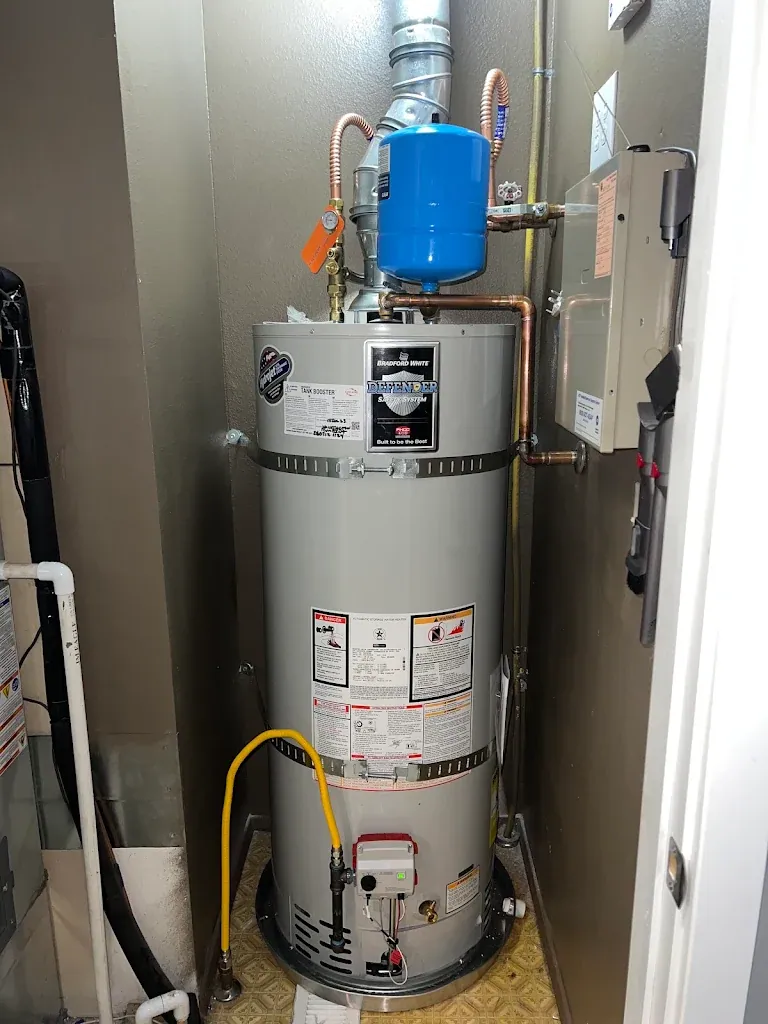
- Look for an expansion tank, a small cylinder on the cold line above the heater. If there is one, tap it: a tank full of water sounds solid and has failed.
- Turn the thermostat down if the hot water seems hotter than usual and see whether the drip stops.
- Confirm the drip is coming from the relief valve and not from a fitting above it running down the pipe.
- Note when the drip happens. Only after heating points to expansion; constant points to pressure or a worn valve.
Stop and call if
- The valve is discharging hot water continuously or in large volumes
- Water at the taps is scalding or you hear boiling or rumbling from the tank
- Someone has capped, plugged or wired the relief valve shut
- The discharge pipe is missing, pointed upward or routed where hot water could hit someone
- The tank itself is leaking in addition to the valve
How we diagnose and fix it
- Measure static and post-heating pressure to separate thermal expansion from high street pressure from a worn valve.
- Install a correctly sized thermal expansion tank on the cold inlet, charged to match house pressure, and replace waterlogged ones.
- Replace a worn relief valve with a new one of the proper rating, and run the discharge line to an approved termination near the floor.
- Install or reset a pressure reducing valve when incoming pressure is high, and add a gauge so you can watch it.
- Test thermostats, elements and gas controls, and replace any that are overheating the tank.
- Flush sediment from the tank and advise on a mixing valve if you want a hotter tank for capacity without scalding at the taps.
Around Kitsap, Pierce and Mason counties
Relief valve drips became a daily call around here after the utilities started requiring backflow protection at meters and more homes got pressure reducing valves, which closed systems that used to breathe back into the main. We see it in Port Orchard, Bremerton and Gig Harbor on city water and in Silverdale's newer subdivisions where PRVs are standard. Expansion tanks have been code for new water heater installs for years, but plenty of heaters swapped by handymen or big-box installers went in without one. On well homes the usual version is a tank crusted with iron sediment that is overheating at the bottom.
Questions people ask
Can I just replace the relief valve to stop the drip?
If the valve is worn, yes. But if the cause is thermal expansion or high pressure, the new valve will drip too, because it is doing its job. We test pressure before replacing anything so you do not pay for a part that does not fix it.
Is a dripping T&P valve dangerous?
The drip itself is not. What is dangerous is the reason behind it, and the worst thing anyone can do is plug the valve to stop the mess. A water heater with a blocked relief valve and a runaway thermostat can rupture violently. Leave it open and fix the cause.
How much pressure is too much for a water heater?
Most homes should sit between 50 and 70 psi. Above 80 psi the code says you need a pressure reducing valve, and the relief valve opens at 150. Thermal expansion can add 30 to 50 psi on top of static pressure in a closed system, which is how a house at 90 psi reaches the valve setting.
Where should the relief valve discharge pipe go?
Down, to within about six inches of the floor or to an approved drain, in rigid pipe sized to the valve outlet, with no threads on the end and no valve in the line. An upturned, capped or undersized discharge is a common defect we find on inspections.
Does a tankless water heater have this problem?
Tankless units have a relief valve too, but thermal expansion is much smaller because there is no stored volume. A dripping relief valve on a tankless usually means high pressure or a bad valve rather than expansion.