
Short answer
In the first ten minutes of a plumbing emergency, stop the water at the nearest valve or the main, kill power to anything electrical that is wet, and move what you can out of the water's path. For a sewer backup, stop using every drain in the house. For a gas smell, leave and call the gas utility from outside. Then call a plumber, take photos for insurance, and start getting water up off the floor.
In this guide
- Minute one: stop the water
- Minute two: deal with electricity and heat
- If it is a sewer backup instead of a leak
- If you smell gas
- Minutes three through five: contain and move
- Minutes five through eight: make the calls
- Minutes eight through ten: document everything
- What is actually an emergency and what can wait until morning
Key takeaways
- Water first, then electricity, then the phone. Stopping the flow matters more than anything else you can do.
- If the closest fixture valve does not stop it, go to the main. If the main does not stop it, go to the meter.
- A sewer backup is not a water problem; it is a drain problem. Shutting off the water does nothing. Stop flushing and running fixtures instead.
- A gas smell means get out and call Cascade Natural Gas, Puget Sound Energy or your propane supplier from the driveway. Do not flip switches on the way.
- Photograph everything before cleanup. Insurance adjusters want to see the failed part and the water, and we document the cause for you.
- Wet drywall and insulation do not dry on their own. Call a restoration company early; we do not do restoration, but we will tell you if you need one.
Minute one: stop the water
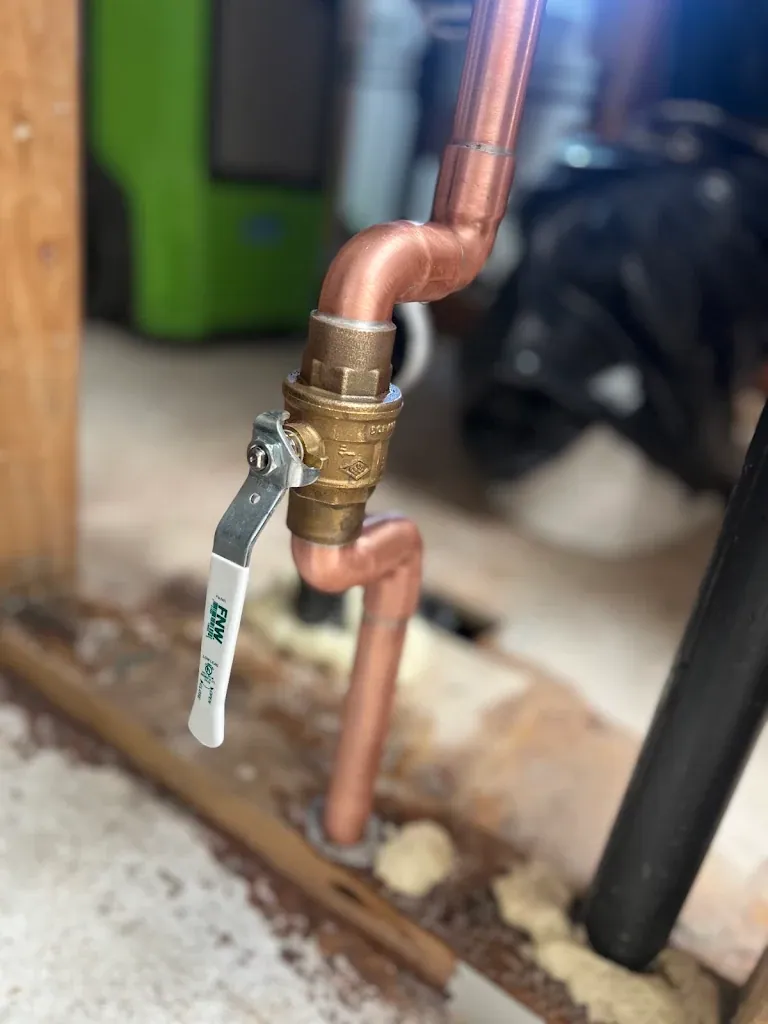
Whatever is happening, the first move is the same. Find the closest valve that controls the problem and close it. A toilet overflowing has a stop on the wall behind it. A supply line spraying under a sink has stops in the cabinet. A washing machine hose that let go has valves in the laundry box. Turn clockwise or quarter-turn the lever, and watch whether the flow actually stops.
If the leak is coming through a ceiling, out of a wall, or up from the crawlspace and you cannot tell what feeds it, skip the search and go to the main shutoff. If you do not know where that is, our guide on shutting off the water to your house covers every common location in local homes, including the meter box at the street and the breaker for a well pump. Read it today, not during the flood.
Once the valve is closed, open a faucet below the leak to drain pressure out of the pipes. The spray turns to a drip within a minute.
Minute two: deal with electricity and heat
Water on the floor near outlets, a wet electrical panel, or water dripping onto a light fixture means power off before you walk through it. Flip the breaker for that room, or the main breaker if you are not sure which one. Do not stand in water and reach for a switch.
If the failure is the water heater, turn off its cold inlet valve and its power. A gas heater goes to pilot or off at the gas control; an electric heater gets its breaker flipped. A tank that is leaking from the bottom is finished, and heating an emptying tank can burn out elements or crack the tank further. A tankless unit leaking from inside the cabinet should be shut down at the gas valve and the power.
Crawlspace floods around here sometimes reach furnace ducts or the furnace itself. If water is anywhere near the furnace or a heat pump air handler, turn it off at the thermostat and the breaker until someone looks at it.
If it is a sewer backup instead of a leak
Water coming up out of a tub drain, a floor drain, or the lowest toilet when nobody is using it is a different emergency. Closing the water main will not help. The main drain or sewer line is blocked, and every gallon anyone sends down any drain in the house will come back up at that lowest point. Tell everyone in the house to stop using water entirely: no flushing, no showers, no dishwasher, no laundry.
If you have an exterior cleanout and the backup is bad, you can carefully loosen the cap and let the line relieve into the yard instead of into the house. That is unpleasant but it is far better than sewage across a finished basement. Wear gloves, stand to the side, and do not fully remove the cap until the pressure has eased. If you do not know where your cleanout is or whether you have one, there is a separate guide for that.
On a septic system, a backup in the house with a full tank or a failed pump means the same thing: stop sending water. If there is a pump chamber with an alarm going off, the pump has likely failed or lost power, and we service effluent pumps. If the tank itself is full, that is a pumping company, and we will tell you which call to make first.
If you smell gas
A rotten-egg or sulfur smell near a water heater, stove or furnace is gas. Do not turn lights on or off, do not use the garage door opener, and do not start looking for the leak. Open a door on your way out, get everyone and pets outside, and call the gas company from the driveway or a neighbor's house. Cascade Natural Gas serves parts of Kitsap County. Puget Sound Energy handles gas in Pierce County. Mason County homes and plenty of rural Kitsap homes are on propane, and the supplier's number is on the tank.
The utility or propane company will shut off and make safe. After that, call us. Repairs to the gas piping inside the house, including lines to water heaters and ranges, are plumbing work in Washington, and we do them. The utility handles the meter and everything on the street side of it.
A faint sulfur smell only in the hot water, not in the air near the appliance, is a different thing entirely. That is usually a reaction between well water and the anode rod in the heater, and it is covered under our problem pages rather than an emergency.
Minutes three through five: contain and move
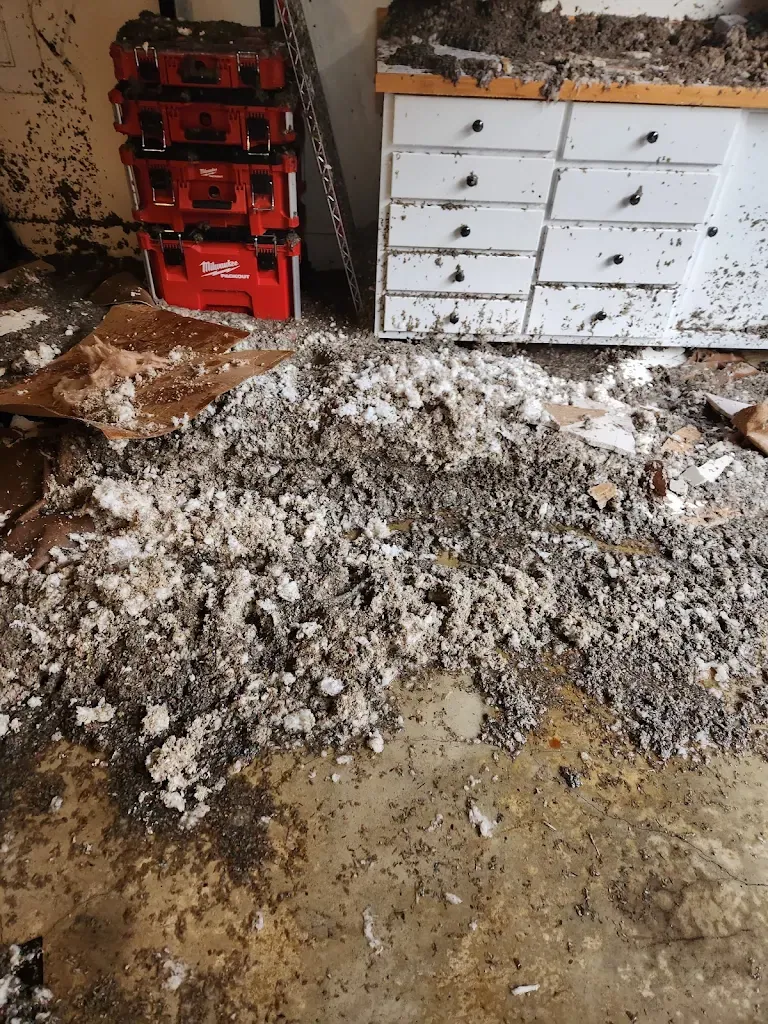
With the water stopped, start limiting the damage. Pull rugs up, move furniture out of the wet area, and set boxes or anything on the floor up on something dry. Towels and a wet-dry shop vac make a real difference in the first half hour; after that, water has soaked into subfloor and the bottom of drywall and the towels are not doing much.
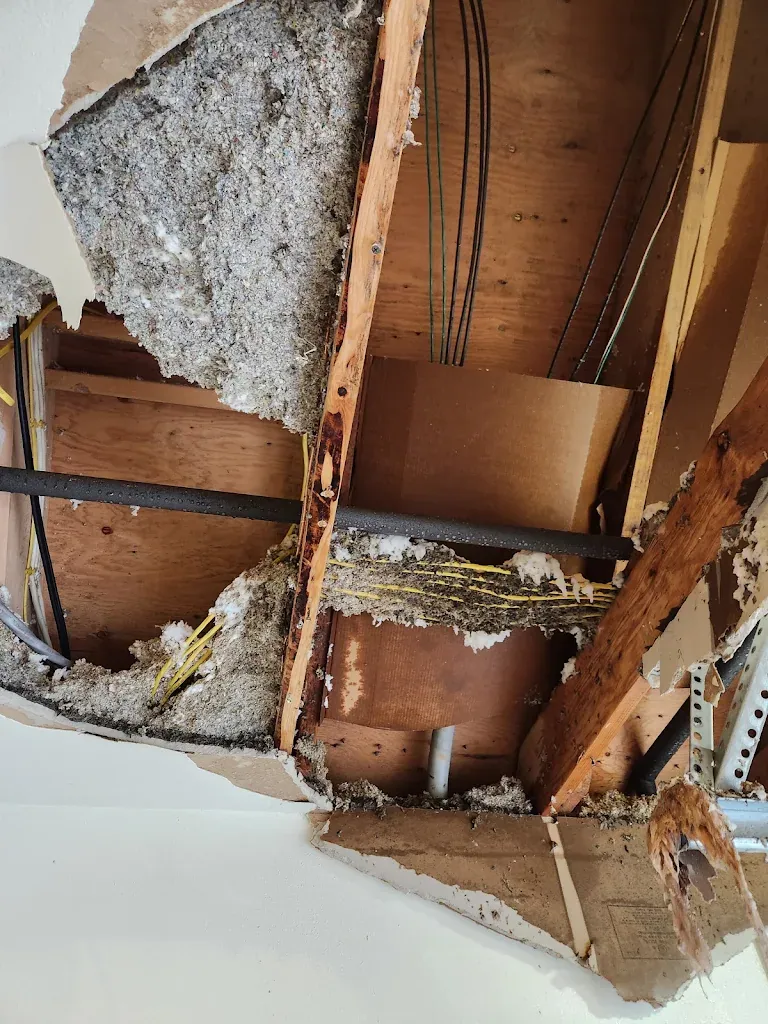
For a ceiling that is bulging with water, put a bucket underneath and poke a small hole in the low point with a screwdriver to let it drain in a controlled stream. A ceiling that lets go on its own brings down a lot more drywall and a lot more water at once.
If the water is from a sewer backup, treat everything it touched as contaminated. Keep kids and pets out of the area, and do not run a household vacuum through it. That is a job for a restoration company with the right equipment.
Minutes five through eight: make the calls
Call a plumber. Our line, (360) 812-1124, is answered during business hours by Corinne and after hours by whoever is on call, and we tell you plainly what the arrival window looks like. Have a few things ready: where the water is coming from if you know, whether it is stopped, whether you have a well or city water, and whether you are on septic or sewer. That tells us which truck and which tools to bring.
Second call, if there is standing water in finished space or a crawlspace: a water damage restoration company. We get asked about this on almost every flood call. We fix the pipe; we do not dry buildings, pull drywall or run dehumidifiers for a week. The restoration people do, and the sooner they start, the less of the house they have to tear out. Mold shows up fast in a wet Puget Sound crawlspace.
Third call, if there is real damage: your insurance company. Most homeowner policies cover sudden water damage from a burst pipe or failed appliance. Most do not cover slow leaks that went unnoticed for months, and most have specific rules about sewer backup coverage. Starting the claim early helps.
Minutes eight through ten: document everything
Before you throw out a single wet thing, take photos. Photograph the failed part in place, the water on the floor, the wet ceiling, the ruined rug. Take a short video walking through the affected area. Note the time you discovered it and the time the water was shut off. Adjusters ask for all of this, and memory gets fuzzy by the time the claim is processed.
When we arrive we document the cause of the failure and keep the failed part if you want it for the claim. We have written up plenty of these for Kitsap and Pierce homeowners, and reviews from folks we have helped through insurance claims are part of why we get the call. If the failure traces back to another contractor's work, we say so plainly and put it in writing.
What is actually an emergency and what can wait until morning
Not every plumbing problem needs a plumber at midnight. Here is how we think about it when the phone rings after hours. If water is running and cannot be stopped, that is an emergency. If sewage is backing up into living space, that is an emergency. If a gas appliance is leaking, that is an emergency once the utility has made it safe. A water heater leaking from the tank is urgent but, once the inlet valve is closed, it is a morning call; you lose hot water for a night and nothing else.
A dripping faucet, a running toilet with the stop valve closed, a single slow drain, or a disposal that quit are all next-day work. Closing the right valve turns most emergencies into inconveniences, which is the whole point of the first ten minutes. We work evenings and Saturdays and answer after-hours emergency calls, and we would rather come out at seven in the morning with the right parts than at midnight without them.
- Call now: water you cannot stop, sewage in the house, a leaking gas line after the utility has shut it off, no water at all on a well in freezing weather
- Call first thing: water heater leaking with the inlet closed, a frozen pipe that has not burst, a single toilet or drain out of service when the house has another
- Schedule it: drips, slow drains, running toilets, low pressure, noises
Frequently asked
How fast can a plumber get to me in Port Orchard or Bremerton?
It depends on the day and what else is happening, so we will not promise a time we cannot keep. We give four-hour arrival windows and the plumber texts when en route. Emergencies with running water or sewage go to the front of the line. Evening and weekend calls are answered, and after-hours emergency calls get a real person.
Should I try to fix a burst pipe myself?
Stop the water and leave the repair to us. A push-fit coupling from the hardware store can hold a clean cut in copper or PEX temporarily, but frozen and burst pipe usually has more than one split, and the one you cannot see is the one that floods the crawlspace next week.
Water is coming up in my shower when I flush the toilet. Is that an emergency?
Yes, in the sense that it will get worse with every flush. Your main drain or sewer line is blocked. Stop using water in the house and call. We clear it from the cleanout, and if there is no cleanout we find another way in and talk about adding one.
Do you handle water damage cleanup?
No. We repair the plumbing and document the cause. Drying, drywall removal and mold work are done by restoration companies, and we will point you to one if you need it. Calling them early saves a lot of the house.
My water heater is leaking. Do I need to call tonight?
Close the cold inlet valve on top of the tank and turn off the gas or breaker. Once that is done the leak stops getting worse and you can call in the morning. If the valve will not close or you cannot find it, call tonight.
What should I tell the plumber on the phone?
Where the water is coming from, whether it is stopped, whether you are on a well or utility water, and whether you have septic or sewer. If you can text a photo of the leak or the valve, even better. It helps us bring the right parts the first time.
About the author. Gregory Lowe is the owner and lead plumber at Washington Plumbing & Drain, a veteran-owned company in Port Orchard serving Kitsap, Pierce and Mason counties. The guidance here comes from daily work in local homes, not from a content farm. Call (360) 812-1124 with questions.