Short answer
A tankless water heater pushes all of its water through narrow passages in a heat exchanger, and the minerals left behind as that water is heated build a layer of scale that insulates the metal, restricts flow and overheats the exchanger. Descaling means circulating a mild acid, usually food-grade white vinegar or a commercial citric solution, through the unit with a small pump for about an hour, then rinsing. Around Puget Sound, where municipal water is soft but wells often are not, once a year is the right interval for most homes and every six months for untreated well water; manufacturers like Rinnai tie warranty coverage to it.
In this guide
Key takeaways
- Scale is the main thing that kills a tankless. The heat exchanger is most of the unit's cost, and scale is what wears it out.
- Soft city water around Kitsap still leaves scale, just slowly. Well water with hardness or iron leaves it fast.
- Error codes for low flow or high exchanger temperature, fluctuating shower temperature and reduced flow are the signs a flush is overdue.
- Descaling needs isolation valves on the unit; if yours were installed without them, adding them is the first step.
- The annual visit also covers the inlet screen, the condensate line and neutralizer, the vent, the gas pressure and the air filter on units that have one.
- A tankless maintained yearly should run around twenty years. One that is never flushed often needs an exchanger by year ten.
What is happening inside the heat exchanger
A tank heater warms forty gallons slowly and lets minerals drop to the bottom as sediment where they do little harm for years. A tankless heats water on the fly as it passes through a coil of copper or stainless tubing wrapped around a burner. The water goes from the forties to 120 degrees in a few seconds, and dissolved calcium and magnesium come out of solution right there on the hot metal, where they stick.
Each pass leaves a trace. Over a year of showers and dishwasher cycles the trace becomes a film, then a crust. The crust does two things. It insulates the tube, so the burner has to run hotter and longer to push the same heat through, and the metal under the scale gets hotter than it was designed to be. And it narrows the tube, so less water can pass, and the unit's flow sensor and temperature sensors start seeing conditions outside their limits.
A tank with sediment is less efficient. A tankless with scale is on its way to an exchanger failure, and the exchanger is the heart of the unit.
But our water is soft, right?
Mostly, yes. Municipal supplies around Port Orchard, Bremerton, Silverdale, Gig Harbor and Tacoma test on the soft side, which is why scale is not the daily problem here that it is in the Southwest. Soft does not mean mineral-free, though, and a tankless concentrates whatever is there onto a few square feet of hot metal. A Rinnai in a Gig Harbor home on city water will still show a measurable layer after a year or two, and a surprising number of the units we service for error codes are on city water and have simply never been flushed.
Wells are the other half of our service area. Private wells in Mason County, Seabeck, Olalla, the Key Peninsula and north Kitsap vary widely, and many carry hardness, iron and manganese that scale a tankless quickly. Iron also fouls the inlet screen and leaves a reddish deposit that vinegar alone does not fully move. On untreated well water we recommend descaling every six months, and we recommend treatment ahead of the heater, which stretches that interval and protects everything else in the house too.
Signs your tankless is overdue
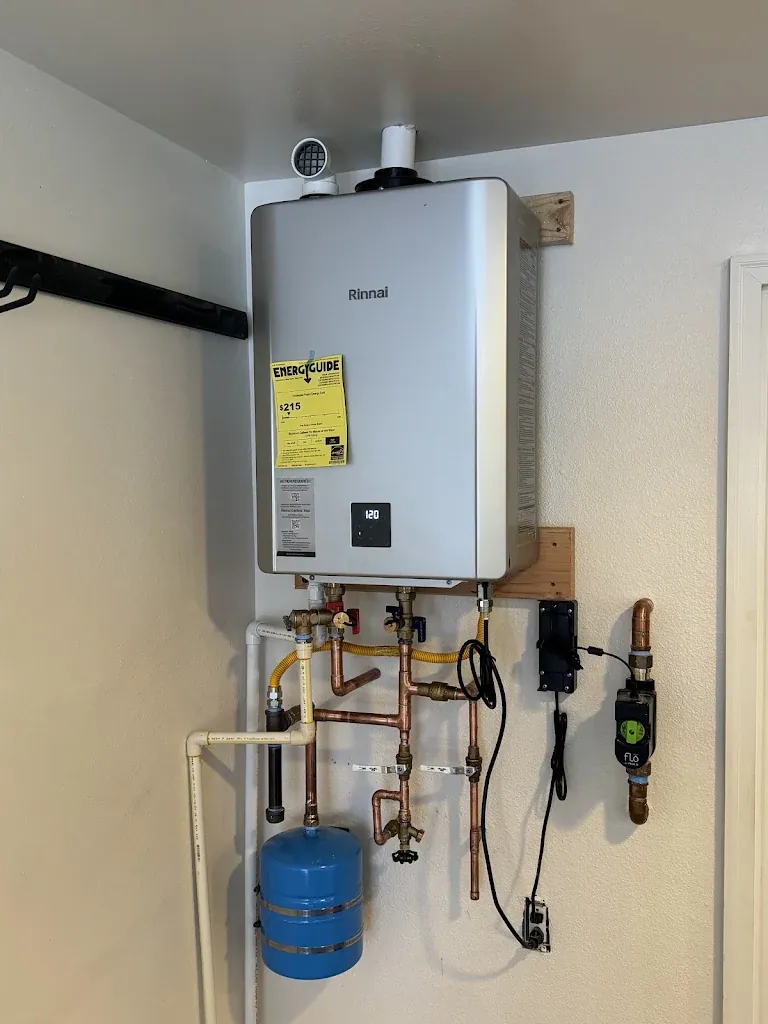
The unit will tell you. Rinnai and the other brands show error codes on the controller or a flashing light pattern when the exchanger runs hot or when flow drops below what the burner needs; the specific numbers vary by brand and model, and the manual lists them. Before it gets to a code, you will notice temperature that wanders in the shower, water that takes longer to get hot, less flow at the far fixtures, and the unit cycling on and off during a long draw.
Noise is another sign. A tankless that ticks, pops or rumbles while running is often boiling water in a scaled section of the exchanger, which is the same sound a sedimented tank makes for the same reason. If it has been more than a year, or you have no idea when it was last done, it is due.
- Error code for exchanger overheat or low flow
- Shower temperature drifting hot and cold
- Reduced hot water flow, especially at distant fixtures
- Longer wait for hot water than there used to be
- Ticking, popping or kettle sounds while running
- No service record for more than twelve months
How a descaling service is done
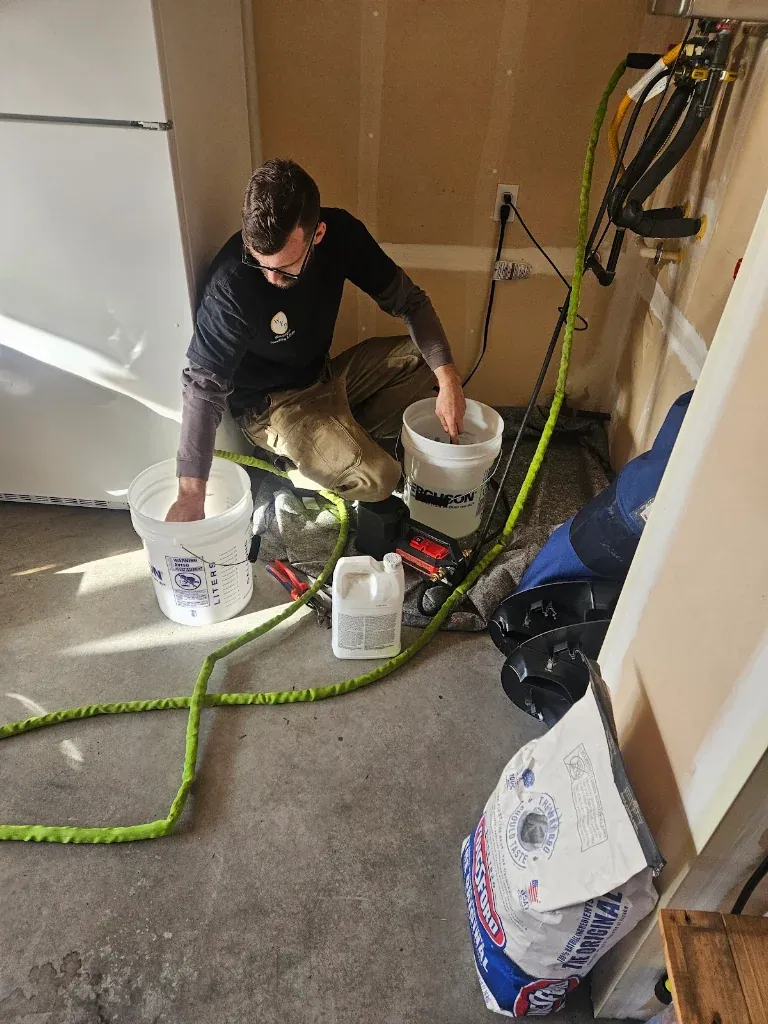
The unit needs a pair of isolation valves on the hot and cold connections, each with a service port. Most units installed by plumbers have them; some that went in during a remodel or by a handyman do not, and adding them is the first job. With the valves in place, we shut off the gas or power, close the isolation valves to take the unit off the house, and connect hoses from the service ports to a bucket with a small submersible pump.
We circulate a descaling solution through the exchanger for about forty-five minutes to an hour. White vinegar works and is safe for the materials; commercial citric-based descalers are faster. The solution runs in the cold port, through the exchanger, and out the hot port back to the bucket, and you can often see the scale coming out as the solution clouds. After the loop, we drain it, flush with fresh water for several minutes until it runs clear, reconnect the unit, bleed air, and fire it to confirm the temperature rise and flow are back to spec.
On well water with iron, the flush may take longer or need a second round, and we clean the inlet filter screen separately because iron particles collect there first.
The rest of the annual visit
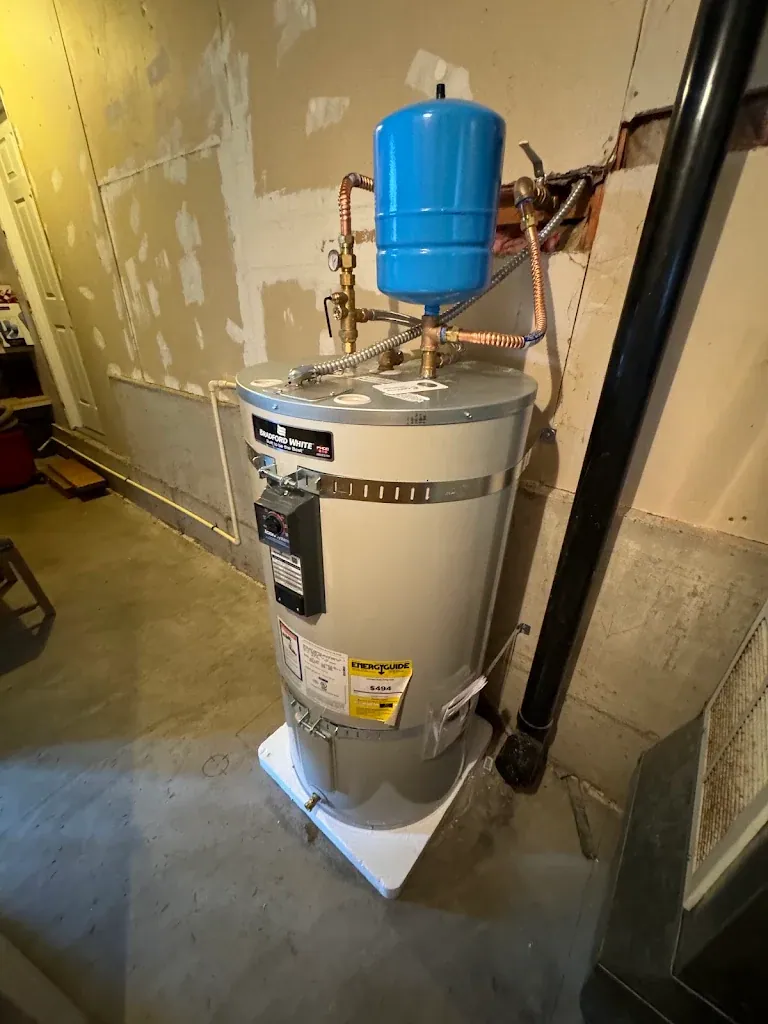
Descaling is the big item, but a yearly service covers more. The cold water inlet screen comes out and gets cleaned; it catches sand and sediment and a clogged one mimics a scaled exchanger. On condensing units, the condensate drain line is checked for flow and the neutralizer cartridge, which keeps acidic condensate from eating a drain, is checked and refilled or replaced. The intake air filter, on units that have one, is cleaned. The venting is inspected for sagging, disconnected joints and bird or wasp nests at the termination.
We check gas pressure under load, since a tankless that is starved for gas on a cold morning throws codes that look like scale and is not fixed by a flush. On propane units we confirm the regulator is holding. The controller settings get a look, including the setpoint and any recirculation schedule. Finally we run the unit at a high draw and confirm the outlet temperature holds steady, which is the real test of a clean exchanger.
Can you do it yourself?
If your unit has isolation valves and you own a small pump, a bucket, two washing-machine hoses and a few gallons of vinegar, the flush itself is within reach of a handy homeowner, and the manufacturer's manual describes it. Plenty of our customers do the vinegar loop themselves in between our visits, and we are glad to show you the procedure once.
What a homeowner flush does not include is the gas pressure check, the vent inspection, the condensate neutralizer and the judgment about whether a code is scale or something else. If you do your own flush and the symptoms do not clear, that is the point to call. And if the unit has no isolation valves, do not try to improvise connections on the main plumbing; have the valves installed first.
Warranty, lifespan and the math
Rinnai and most other manufacturers require periodic maintenance, including descaling, as a condition of heat exchanger warranty coverage, and they ask for records if a claim is made. A flush record once a year is cheap insurance on the most expensive part of the unit. A tankless that is maintained should reach twenty years. The units we replace at ten or twelve are overwhelmingly the ones that were never serviced, and by the time the exchanger is scaled solid the repair costs enough that a new unit makes more sense.
Put another way: one modest service call a year, or an exchanger or a whole heater a decade early. The yearly visit is the better deal in every case we have seen, and it also keeps the unit delivering the flow and temperature you bought it for.
Preventing scale in the first place
On city water, yearly descaling is usually all the prevention a tankless needs. On a well, treatment ahead of the heater changes everything. A sediment filter stops sand and grit from reaching the inlet screen. An iron filter or a softener, chosen based on an actual water test, removes what forms the scale before it gets to the exchanger. We install Cascadian and Halo filtration systems and will test the water first so the treatment matches the problem rather than guessing.
A simple inline scale inhibitor cartridge ahead of the heater helps on moderately hard water and is inexpensive. Lower setpoints help a little as well; water heated to 140 scales faster than water heated to 120, and 120 is where most homes should sit anyway. And if your unit has a recirculation loop, remember that the loop runs water through the exchanger many more times a day than the taps do, so a recirculating tankless benefits even more from a regular flush.
Frequently asked
How often should a tankless water heater be descaled?
Once a year on municipal water in Kitsap, Pierce and Mason counties. Every six months on untreated well water, or yearly once treatment is in place. Units with recirculation loops are on the yearly schedule at minimum.
What happens if I never flush my tankless?
Scale builds on the heat exchanger until the unit loses flow, throws error codes and eventually overheats the exchanger. By the time it is solid, the exchanger is often not cleanable and replacing it costs enough that a new heater is the better buy. Unflushed units commonly fail around year ten; maintained ones run twenty.
Can I descale a tankless water heater myself?
If it has isolation valves with service ports, yes, with a small pump, a bucket, two hoses and white vinegar, following the manual. We are happy to show you once. The gas, vent and condensate checks are the parts of a full service that a vinegar loop does not cover.
My tankless does not have isolation valves. What now?
They need to be added before any descaling can be done. It is a quick plumbing job and we do it as part of the first service visit. After that, every future flush is simple.
Does descaling void the warranty?
The opposite. Manufacturers require periodic descaling and may ask for service records before honoring a heat exchanger claim. Keep the invoices.
What does a tankless error code mean?
It depends on the brand and the code. Codes for exchanger overheat or insufficient flow are usually scale or a clogged inlet screen. Codes for ignition failure or flame loss point to gas supply or venting. We read the code, check the likely cause, and tell you whether it is a flush or something else.
Will a water softener or filter stop scale?
It will slow it dramatically. A softener removes the hardness minerals that form scale; an iron filter removes iron deposits. On well water these are worth having ahead of a tankless. On soft city water they are rarely needed for the heater alone.
About the author. Gregory Lowe is the owner and lead plumber at Washington Plumbing & Drain, a veteran-owned company in Port Orchard serving Kitsap, Pierce and Mason counties. The guidance here comes from daily work in local homes, not from a content farm. Call (360) 812-1124 with questions.