
Short answer
A heat pump water heater is an electric tank with a small refrigeration unit on top that pulls heat out of the surrounding air and moves it into the water, using a fraction of the electricity a standard element uses. In Western Washington's mild, electric-heavy housing stock they can cut water heating costs substantially, but they need room, air, and a place for condensate to go. Washington's residential energy code no longer requires one in new construction; it awards credits for them instead, and replacement heaters in existing homes are not forced to be heat pumps.
In this guide
- How a heat pump water heater actually makes hot water
- Where it fits in a Kitsap or Pierce County house
- The condensate question nobody mentions in the showroom
- What Washington's energy code says, and what it does not
- Running costs, noise, and recovery
- When we tell people not to buy one
- What a careful installation includes
- Maintenance that keeps it efficient
Key takeaways
- A heat pump water heater moves heat instead of making it, so it uses far less electricity than a resistance tank for the same hot water.
- It needs roughly a thousand cubic feet of air around it, or ducting, and it cools and dehumidifies the room it lives in. Garages and large utility rooms work; small closets usually do not.
- The unit produces condensate that must drain somewhere. Many installs around Kitsap need a condensate pump or a new drain line.
- Washington's 2021 residential energy code, as amended in 2024, uses an energy-credit system rather than a flat heat pump mandate, and replacement water heaters in existing homes are not required to be heat pumps.
- Recovery is slower in heat pump mode. Large families or soaking-tub households should size up or expect the unit to use its backup elements at times.
- Rebates from local electric utilities come and go; check the current offer before buying rather than assuming one exists.
How a heat pump water heater actually makes hot water
Picture a window air conditioner turned around. Instead of pumping heat out of a room, the compressor on top of the tank pulls heat out of the air in your garage or utility room and pushes it into the water through a coil wrapped around or inside the tank. The air that comes out of the unit is cooler and drier than the air that went in.
Because the electricity runs a compressor and a fan rather than a glowing element, the unit delivers two to three units of heat for every unit of electricity it consumes. A standard electric tank can only ever deliver one to one. That is the entire argument for the technology, and in a region where most homes outside the gas corridors heat water with electricity, it is a strong argument.
Every heat pump water heater we install also has conventional elements inside. They are there for recovery when the house is pulling hot water faster than the compressor can keep up, and for cold snaps when the air is too chilly to pull heat from efficiently. The control panel lets you choose how aggressive the unit is about using them.
Where it fits in a Kitsap or Pierce County house
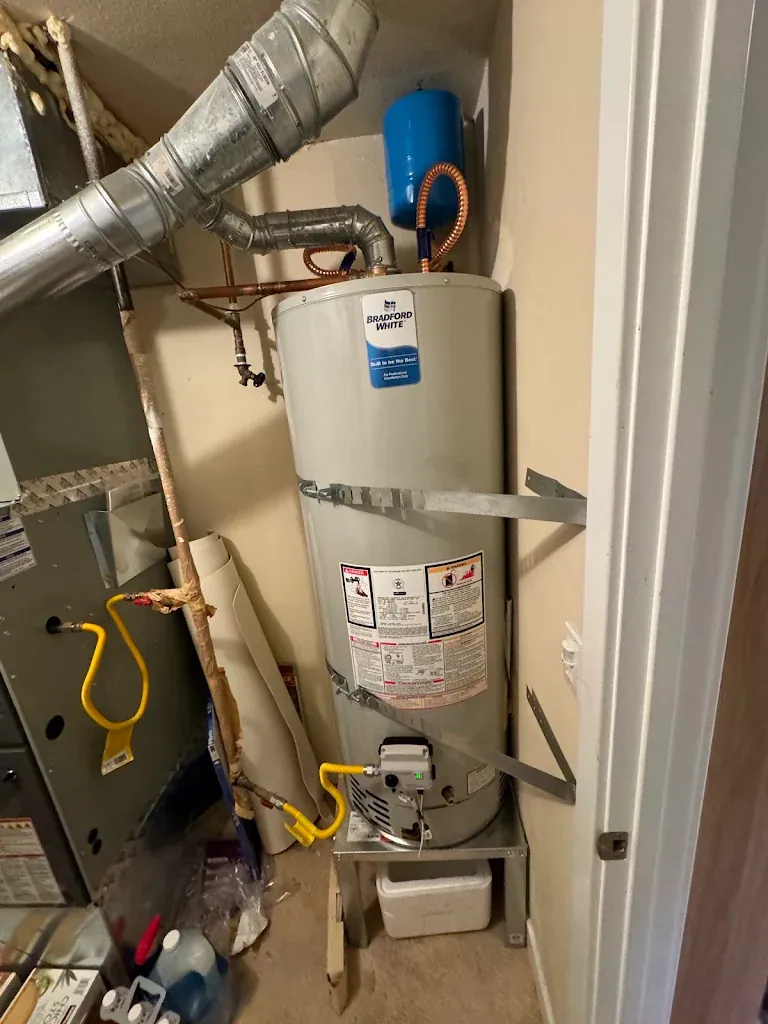
The unit needs air to work with. Manufacturers generally call for something on the order of 700 to 1,000 cubic feet of space, which is a two-car garage, a daylight basement, or a sizable utility room. Installed in a tight closet with the door shut, it will chill its own air, lose efficiency, and fall back on the elements. We have seen that exact scenario in newer Silverdale and Gig Harbor North tract homes where the builder put the tank in an interior closet.
When the closet is unavoidable, ducting kits let the unit draw air from an adjacent room or the attic and exhaust it elsewhere. That adds cost and planning, so we look at the floor plan before quoting. A louvered door is sometimes enough on its own; sometimes it is not.
Garages are the most common home for these in our area. Western Washington garages rarely drop below the mid-30s for long, and the unit still works down to around that range before leaning on backup heat. A garage install also gets the cool, dry exhaust air out of the living space, which is a nice side effect in a damp climate.
The condensate question nobody mentions in the showroom
Pulling heat out of air also pulls moisture out of it, and that water has to leave the unit. A heat pump water heater can produce a surprising amount of condensate during the October-to-April rainy season when garage air is saturated. There is a drain fitting on the side, and it needs a gravity line to a floor drain, a laundry standpipe, or outdoors, or a small condensate pump to lift it to one.
This is the detail that separates a clean install from a puddle. We route condensate lines with proper slope, install a pump with an overflow safety switch where gravity will not cooperate, and set the whole thing in a drain pan with its own line, same as we would for any tank in a finished space. If your current tank sits on a bare slab with no drain nearby, plan on a pump.
What Washington's energy code says, and what it does not
There was a stretch where it looked like Washington would require heat pump water heaters in nearly all new homes. The 2021 Washington State Energy Code as first adopted leaned that way, then the State Building Code Council reworked it after a federal appeals court decision about appliance energy rules. The revised residential code took effect March 15, 2024, and it uses an energy-credit scoring system instead of a flat mandate. Builders need a set number of credits based on home size, and a heat pump water heater earns credits toward that total while a conventional system earns fewer or none.
Two practical points come out of that. First, if you are building a new house, shop, or ADU in Kitsap, Pierce or Mason County, a heat pump water heater is one of the easier ways for the builder to hit the credit target, which is why we rough them in on a lot of new construction now. Second, the code does not require a replacement water heater in an existing home to be a heat pump. If your 2009 Bradford White electric tank dies in a closet with no room for one, a like-for-like electric tank is still a legal, sensible choice.
The code also has a rule about water heaters in new construction being installed in conditioned space, with exceptions for high-efficiency units, tankless heaters and gas tanks, and that rule does not apply to replacements. Permit requirements vary by jurisdiction; we pull the permit as part of the job either way.
Running costs, noise, and recovery
On electric rates like Puget Sound Energy's or Peninsula Light's, the savings over a resistance tank are real and show up every month. How large they are depends on how much hot water your household uses and how often the unit has to use its backup elements. A two-person household in a garage install will see the best ratio; a six-person household with teenagers taking long showers will see the compressor run more and the elements kick in more often.
Noise is a fair concern. The compressor and fan sound like a quiet dehumidifier running. In a garage you will never notice it; through a thin wall into a bedroom you might.
Recovery in heat pump-only mode is slow, on the order of hours to reheat a full tank. Most owners run a hybrid setting that lets the elements help during heavy draws. If you have a large soaking tub or a household that showers back to back every morning, a larger tank, 65 or 80 gallons instead of 50, keeps the compressor doing most of the work.
When we tell people not to buy one
We sell and install these, and we also talk people out of them when the house is wrong for it. A heat pump water heater in a sealed interior closet with no drain is a bad install waiting to happen, and we would rather set a quality electric tank and move on. A cabin in Mason County that sits unheated all winter is a poor candidate as well, since cold air makes the unit work hard for little return.
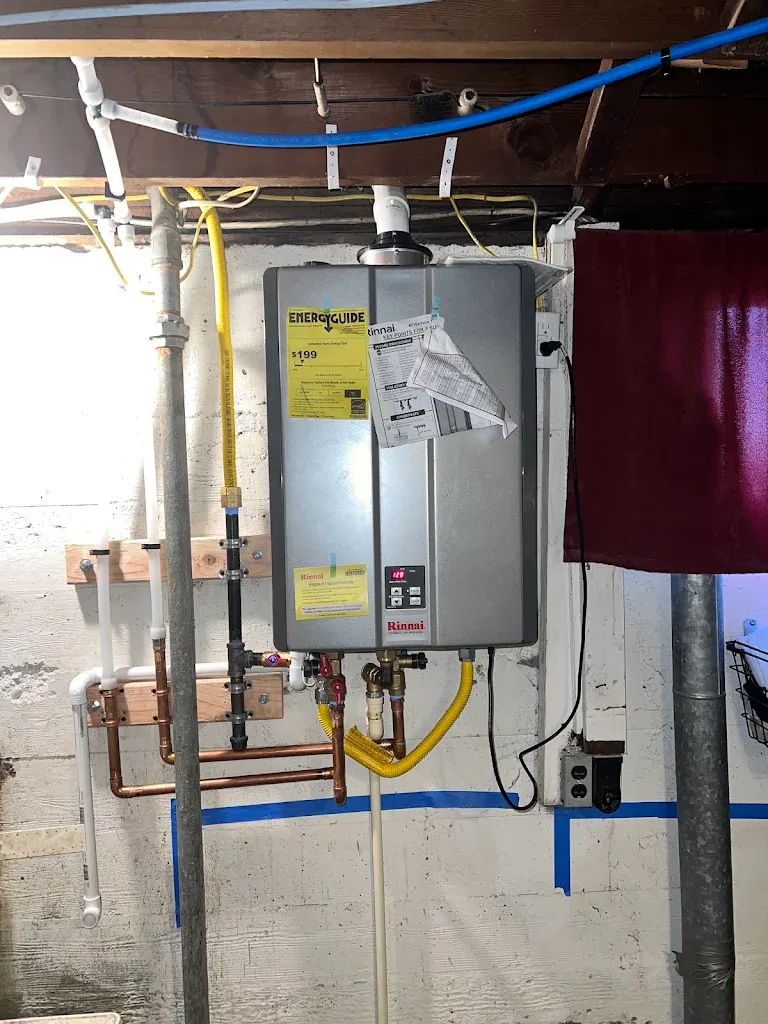
Homes with natural gas from Cascade Natural Gas or Puget Sound Energy have a different math problem. A gas tank or a Rinnai tankless on gas already heats water cheaply, and replacing it with a heat pump unit means running a new 240-volt circuit and giving up gas recovery speed. That can still make sense for someone electrifying the whole house, but it is a project, not a swap.
The sweet spot is clear: an all-electric house with a garage or large utility room, an existing 240-volt circuit at the tank, a drain within reach, and a family that is not draining the tank twice a day. Most of South Kitsap, Bremerton, and the Key Peninsula fits that description.
What a careful installation includes
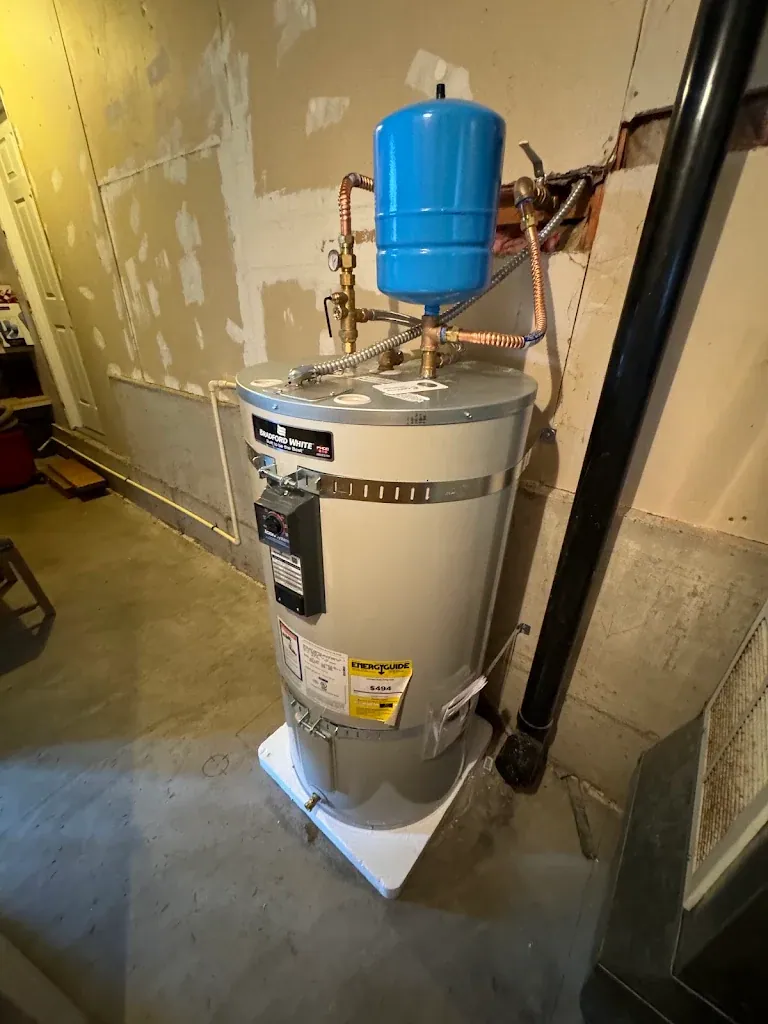
A heat pump water heater is taller than the tank it replaces, often by a foot or more, and the top needs clearance for air to move. We measure before ordering. The water connections, expansion tank, seismic strapping and drain pan follow the same rules as any tank. Then come the parts specific to this appliance.
- Confirm the room volume or specify a ducting kit before the unit is ordered
- Verify the circuit; most units use a standard 30-amp 240-volt feed, but some newer 120-volt plug-in models change that
- Install a condensate drain with slope, or a condensate pump with a safety switch
- Set the unit in a pan with its own drain line when it sits over finished space
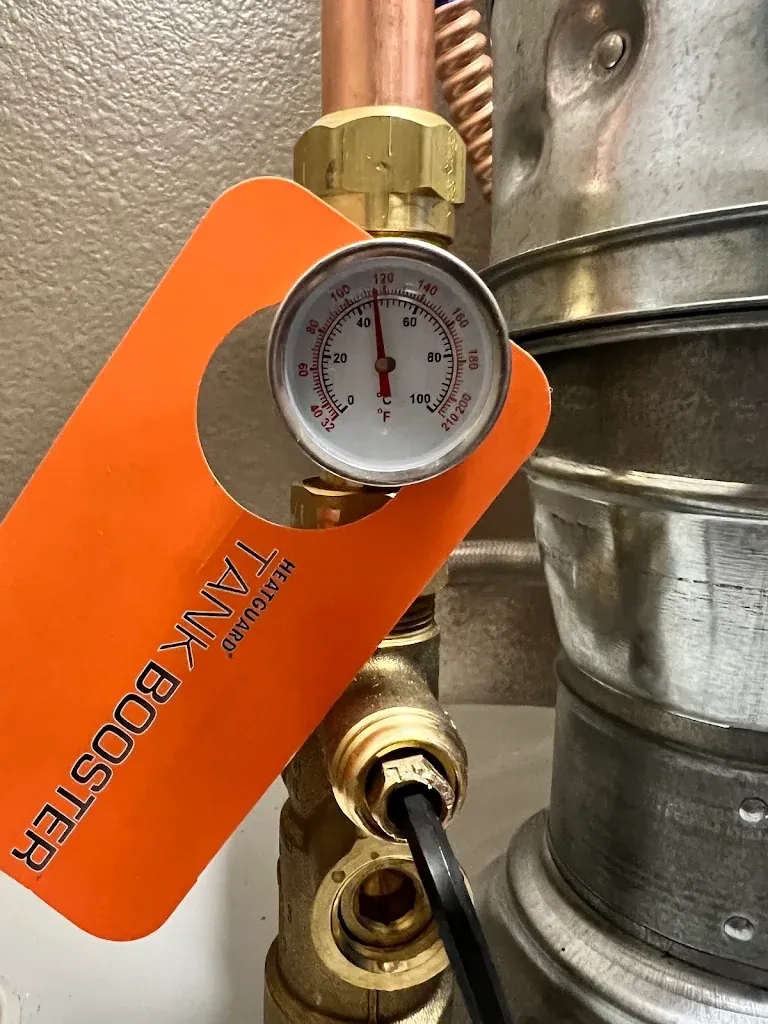
- Add a thermal expansion tank where the home has a backflow preventer or pressure reducing valve
- Commission the controls: set mode, temperature, and vacation settings with the homeowner present
Maintenance that keeps it efficient
The air filter on top is the item people forget. It is a washable screen that catches garage dust and lint, and a clogged filter chokes airflow and drives the unit onto its elements. Rinse it every few months, more often if the garage is a workshop.
The tank itself still has an anode rod and still collects sediment. Our water around Puget Sound is soft enough that scale is a minor issue, but sediment from older galvanized service lines or from well water does settle. An annual flush and a periodic anode check keep the tank side of the appliance healthy. The condensate line deserves a look each fall before the humid season, since algae can slow it down.
Treat it like a refrigerator that happens to be full of hot water: give it air, keep its filter clean, and do not box it in.
Frequently asked
Does Washington require heat pump water heaters now?
Not as a flat rule. The residential energy code that took effect in March 2024 uses an energy-credit system; a heat pump water heater earns credits that help a new home meet its target, but it is not mandated, and replacement water heaters in existing homes are not required to be heat pumps.
Will a heat pump water heater work in my garage during a freeze?
Through normal Western Washington winters, yes. The compressor loses efficiency as the air gets colder and the backup elements take over during the coldest stretches, such as the December 2022 and January 2024 freezes. Hot water keeps coming; you just pay more for it those few days.
Can I put one in the same closet where my old tank is?
Only if the closet is large or can be ducted. These units need a lot of air to breathe. We look at the space during the free estimate and tell you plainly whether it will work, needs a duct kit, or should stay a conventional tank.
How much hot water does a 50-gallon heat pump unit deliver compared to a regular 50-gallon tank?
The same first draw, since it is the same size tank. The difference is recovery: in heat pump-only mode it reheats more slowly. In hybrid mode the elements help and recovery is close to a standard tank. Big households usually go to a 65- or 80-gallon unit so the compressor can handle most of the load.
Is there a rebate for installing one in Kitsap or Pierce County?
Utility rebates for heat pump water heaters have been offered by electric providers in our area at various times, and federal tax credits have applied to qualifying units. Programs change, so check the current offer from your electric utility before you decide, and we will give you the model and efficiency information the paperwork asks for.
Do you install Rinnai tankless instead if I decide against a heat pump?
Yes. For homes with gas, a Rinnai tankless is often the better fit. For all-electric homes without room for a heat pump unit, a Bradford White or A. O. Smith electric tank is the dependable choice. We will lay out all three and let you pick.
About the author. Gregory Lowe is the owner and lead plumber at Washington Plumbing & Drain, a veteran-owned company in Port Orchard serving Kitsap, Pierce and Mason counties. The guidance here comes from daily work in local homes, not from a content farm. Call (360) 812-1124 with questions.