What it usually looks like
- An inch or more of dirty water sits in the tub after the cycle ends
- Water spurts out of the chrome air gap on the counter when the dishwasher drains
- The kitchen sink fills or gurgles while the dishwasher is running
- The dishwasher was just installed, or a new disposal was just put in, and it has never drained right
- A sour smell from the dishwasher between uses
- You hear the drain pump run but the water level does not drop
Likely causes, most common first
The disposal knockout plug is still in place
A new garbage disposal ships with a plastic plug inside the dishwasher inlet. If the installer did not punch it out, the hose connects to a sealed port and the dishwasher cannot drain at all. If the dishwasher stopped draining the same day a disposal was replaced, this is almost certainly it.
Clogged or kinked drain hose
The hose runs from the dishwasher to the disposal or sink tailpiece. Food sludge and grease build up at the connection, and a hose shoved into the cabinet can kink behind the machine. A hose with no high loop under the counter also lets sink water flow back into the dishwasher.
Blocked air gap
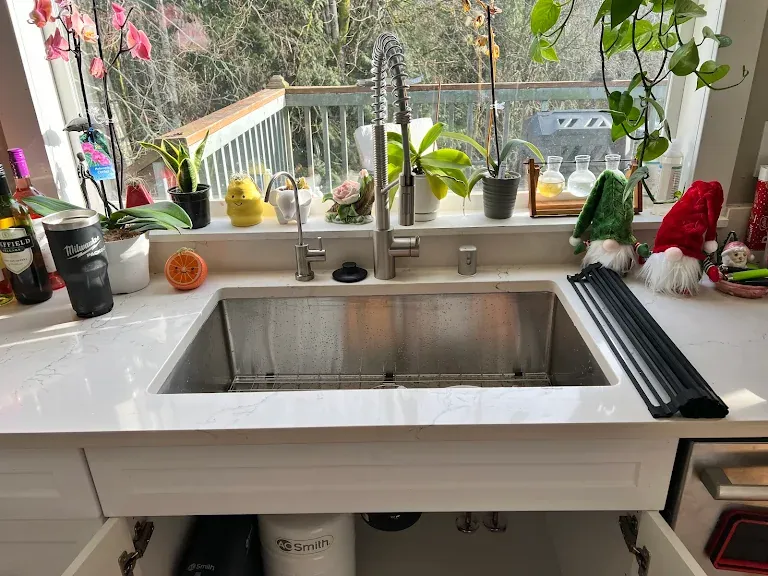
Washington requires an air gap on dishwasher drains, which is the small chrome cylinder on the sink deck. Debris collects inside it. When it blocks, the dishwasher pushes water out the top of the air gap instead of into the drain. Pull the cap and clean it.
A slow or clogged kitchen sink drain
The dishwasher drains into the same trap and branch line as the sink. If that line is partly packed with grease, the sink may seem fine while the dishwasher's fast discharge overwhelms it. The sink gurgling during the drain cycle is the clue.
Dirty dishwasher filter or failed drain pump
Most modern dishwashers have a removable filter in the floor of the tub that catches food. When it is packed, the pump cannot move water. A pump that hums without moving water, or does not run at all, has a jammed impeller or a failed motor. Those are appliance repairs.
Check valve or drain solenoid stuck
Some machines use a small flapper or solenoid in the drain path. If it sticks closed, nothing leaves the tub. Not a plumbing fault, but we can tell you that is what you are dealing with.
Safe things to check yourself first
- Run the kitchen sink for a minute. If the sink is slow or gurgles, the drain line is the problem, not the dishwasher.
- Pull the cap off the air gap and clean out any gunk with a bottle brush or by running water through it.
- Open the cabinet under the sink and follow the drain hose. Straighten any kinks and confirm it rises in a high loop before dropping to the disposal or tailpiece.
- If a disposal was recently installed, disconnect the dishwasher hose from the disposal with the power off and look into the inlet for the plastic knockout plug.
- Remove the filter in the bottom of the dishwasher tub, rinse it, and clear any debris around the drain impeller cover.
- Run a short cycle and listen for the drain pump. A hum with no water movement suggests a jammed pump.
Stop and call if
- Water is leaking under the dishwasher or out of the cabinet floor
- The sink backs up when the dishwasher drains, which means a clog in the branch or main line
- Water from the dishwasher is coming out of the air gap and onto the counter every cycle after cleaning it
- The dishwasher is draining into the disposal and the disposal is leaking at the connection
- You smell sewage at the sink along with the drain problem
How we diagnose and fix it
- Isolate the problem by testing the sink drain, the air gap and the hose path before touching the appliance, so you are not paying an appliance tech for a plumbing clog or the reverse.
- Punch out the disposal knockout, replace a crushed or sludge-packed drain hose, and secure a proper high loop or air gap connection.
- Cable the kitchen branch line from the trap arm or a cleanout when grease is the issue, and run water to prove it carries full flow.
- Rebuild a tailpiece or trap that has corroded or was assembled without a dishwasher branch, which we see in older kitchens where a dishwasher was added later.
- Replace a leaking or seized disposal when it is the one blocking the dishwasher drain.
- Tell you plainly when the fault is the dishwasher's pump, filter or control and refer you to an appliance repair service rather than charging to guess.
Around Kitsap, Pierce and Mason counties
Dishwasher drain calls in our area come in two flavors. The first is the newer homes in Gig Harbor North, Silverdale and Puyallup where a disposal swap or a kitchen remodel left the knockout in or the hose without a high loop. The second is the 1960s and 70s kitchens in Bremerton and Port Orchard where a dishwasher was added decades after the house was built and the drain tie-in was improvised. Those older galvanized kitchen lines are also the ones that fill with grease and back the dishwasher up every winter when cold pipes make the grease set harder.
Questions people ask
Is a dishwasher that won't drain a plumber problem or an appliance problem?
Either, which is why we test the plumbing first. Roughly, if the sink drains well, the air gap is clear and the hose is good, it is the appliance. If the sink gurgles or is slow, or anything spits from the air gap, it is the plumbing.
Do I really need an air gap?
In Washington, yes, unless the local inspector accepts a high loop. The air gap prevents sink or sewer water from siphoning back into the dishwasher. It also happens to be a convenient place for a clog to show itself.
Why does my dishwasher only fail to drain sometimes?
Partial clogs behave that way. A heavy cycle with lots of food debris, or a sink drain that is nearly full of grease, will back up on some loads and not others. It will get steadily worse until it is cleared.
Can I put drain cleaner through the dishwasher?
Absolutely not. It damages the pump seals and hoses, and it does not reach the actual clog in the branch line. A cable does.
Should the dishwasher drain through the disposal?
It can, and most do. The disposal must be run regularly so food does not sit at the inlet. If you are on septic and rarely use the disposal, draining to a tailpiece with a branch fitting is a cleaner setup.