
What it usually looks like
- A steady hum or buzz when the switch is on, with no grinding sound
- The disposal ran briefly, made a clunk and stopped
- The hum stops after a few seconds and the reset button on the bottom has popped out
- Water stands in the sink above the disposal
- A burning smell from under the sink after trying the switch
- You can feel a vibration but the plate inside is not moving
Likely causes, most common first
A hard object wedged in the grind chamber
Fruit pits, bones, a bottle cap, a bit of glass, a screw from the dish rack or a twist tie are the usual suspects. They lodge between the spinning plate and the stationary grind ring and lock the plate solid. The motor hums because it is powered but cannot move. This is by far the most common cause and usually a five-minute fix.
Fibrous or starchy waste packed in the chamber
Celery strings, corn husks, onion skins, potato peels and coffee grounds mat together and wrap around the impellers. The plate can turn a little but binds under load. These jams tend to come back unless the habit changes.
The motor overheated and tripped the overload
When the plate cannot move, the motor pulls high current and heats up. A thermal overload on the bottom of the unit trips and pops out the reset button. The hum may stop entirely at that point. It is protecting the motor, and it needs the jam cleared before it is reset.
Seized motor bearings
Disposals that have leaked from the bottom for a while get water in the motor, and the bearings rust. The plate will not turn even with the wrench and no object in the chamber. That is the end of the unit. Most disposals last eight to twelve years; ones that are used hard or run without water go sooner.
Rust and corrosion locking the plate
A disposal that sits unused for months, like in a vacation cabin, can rust the impellers to the ring. Sometimes it frees up with the wrench and runs fine. Sometimes the plate is pitted through and the unit is done.
A failed start capacitor or winding
Less common, but a disposal with a bad capacitor will hum and never start even with nothing inside. The plate spins freely by hand. This is a replace-the-unit situation on most residential models.
Safe things to check yourself first
- Turn the switch off and, if you can, unplug the disposal under the sink or flip its breaker. Do not leave it humming.
- Find the quarter-inch hex wrench that came with the disposal, or use an Allen key, and insert it into the socket on the bottom center of the unit. Work it back and forth until the plate turns freely a full rotation.
- Shine a flashlight into the chamber and use tongs or pliers, never fingers, to remove whatever was jammed.
- Press the red reset button on the bottom until it clicks. If it does not stay in, wait fifteen minutes for the motor to cool and try again.
- Run cold water, restore power and switch it on. If it spins, let it run a minute with water to clear the chamber.
- If there is no hex socket, a wooden broom handle pushed against the impeller from above, with the power off, can free the plate on some models.
Stop and call if
- The plate will not turn with the wrench even after the chamber is empty
- Water is dripping from the bottom of the unit, which means the seal has failed and the motor is wet
- The reset button will not stay in, or the breaker trips when the disposal is switched on
- There is a burning or electrical smell from under the sink
- The sink is backing up through the disposal and into the dishwasher
How we diagnose and fix it
- Clear the jam and inspect the grind ring and impellers for damage, then test the motor under load to confirm it is sound.
- Check the mounting assembly, the drain and the dishwasher connection for leaks, since a long jam and a hot motor often stress those parts.
- Replace the unit with a properly sized InSinkErator or equivalent when the motor is seized or leaking, with a new flange, putty and discharge tube so the install is clean.
- Correct wiring issues such as a worn cord, a reversed plug or a switch that is failing, which sometimes masquerade as a dead disposal.
- Clear the kitchen drain line downstream if the disposal was pushing against a clog, which is a frequent companion problem.
- Walk you through what the unit can and cannot handle, because the habit that caused this jam will cause the next one.
Around Kitsap, Pierce and Mason counties
Disposal jams spike around Thanksgiving and Christmas, which is when a full kitchen in Gig Harbor or Silverdale sends a week of peels, bones and grease down a unit that normally sees scraps. A large share of our disposal replacements are on septic homes in South Kitsap and Mason County, where the disposal has been quietly adding solids to the tank for years. If you are on septic, use it sparingly or not at all; your tank will need pumping more often if you grind everything.
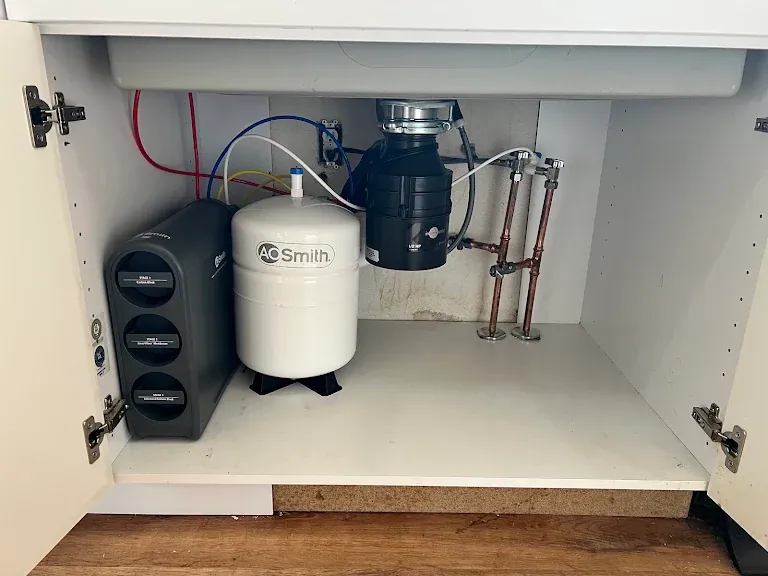
Questions people ask
Can I pour anything down the disposal to free the jam?
No. Chemical drain cleaners do nothing for a mechanical jam and leave caustic liquid in the chamber for whoever reaches in next. Ice cubes and rock salt help clean a working disposal but will not free a stuck plate.
Why does my disposal jam every few weeks?
Usually it is what goes in: fibrous vegetables, eggshells, coffee grounds or grease. Occasionally the grind ring is worn and lets items wedge more easily. If the habits are fine and it keeps jamming, the unit is wearing out.
Is it worth repairing a garbage disposal?
Jams, resets and leaks at the mounting flange or discharge tube are worth fixing. A seized motor, a leak from the bottom of the body or a cracked housing are not. New units are a modest expense and install quickly.
Should I run hot or cold water with the disposal?
Cold. It keeps fats solid so they grind and flush rather than melting and coating the drain line downstream. Run it before, during and for a bit after grinding.
The disposal spins now but the sink still drains slowly. Why?
The jam probably sat on top of an already slow drain. Grease and food packed into the trap arm or the kitchen branch line need cabling, which we can do on the same visit.