Short answer
Snaking (cabling) bores a path through a blockage with a spinning steel cable and cutter; hydro jetting scours the entire inside of the pipe with high-pressure water. A snake is the right first move for an object, a hair clog, or a one-time root intrusion. Jetting is the right move for grease-lined kitchen and restaurant lines, scaled cast iron, sludge-filled low-slope runs, and any drain that has been cabled repeatedly. Neither one fixes a broken pipe, which is why the camera matters.
In this guide
Key takeaways
- A cable removes the clog in front of it; a jetter cleans the pipe wall. Those are different jobs.
- Snaking wins for single-fixture clogs, objects, and anything in a small-diameter branch line.
- Jetting wins for grease, scale, sludge, and repeat clogs, and it is the standard for commercial kitchen and storm drain lines.
- Jetting is not safe for every pipe. Collapsed, severely corroded, or Orangeburg lines need a camera look before any high-pressure water goes in.
- A drain cleaned three times in a year is telling you about the pipe, not the clog. Camera it.
- Both methods are quoted flat-rate before the work starts, and we tell you which one we are bringing and why.
What a drain snake really does inside the pipe
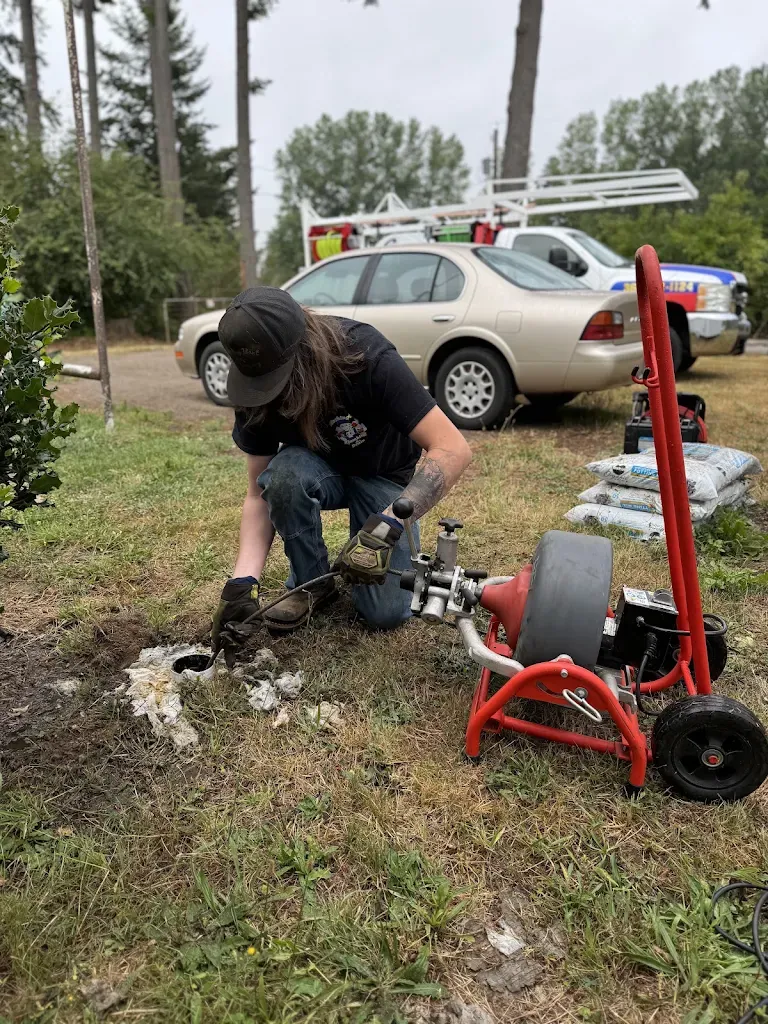
A sectional or drum machine spins a steel cable with a cutting head on the end. As it feeds into the drain, the head chews into whatever is blocking the line and either breaks it up or pulls it back out. For hair, a toy, a wad of wipes, or a single root mass, this is exactly the right tool. It is fast, it is cheap, and it works through small openings like a sink trap arm or a tub overflow.
What a cable cannot do is clean the circumference of the pipe. Think of pushing a knitting needle through a stick of butter: there is a hole now, but the butter is still there. In a 2-inch kitchen line coated with a decade of cooled grease, the cable opens a channel through the center and the sink drains, and the coating remains on the wall, ready to catch the next load of bacon fat.
On older cast iron, the cable is also skating over a landscape of rust scale and tuberculation. It knocks some loose, which can actually make the next clog worse as that debris settles in a low spot downstream. That is not a reason to avoid cabling; it is a reason to know what the pipe is made of before deciding how to clean it.
What hydro jetting does differently
Our jetting truck carries a large water tank and a pump that sends water down a flexible hose at pressures that would strip paint. The nozzle on the end has rear-facing jets that pull the hose up the pipe and forward jets that break up the blockage. As the hose is drawn back, the rear jets scour the pipe wall full-circle and flush everything downstream to the sewer or the septic tank.
The result is a pipe restored to close to its original inside diameter. Grease, soap scum, mineral scale, silt, and root hair come off the wall rather than being tunneled through. For lines that clog on a schedule, that difference is the whole ballgame. A kitchen line that needed cabling every spring often goes years after a proper jetting.
Different nozzles handle different problems. A penetrating nozzle opens a hard blockage; a rotating nozzle polishes the wall; a root-cutting head chops through intrusions a cable would just wrap around. Matching the nozzle to the pipe and the problem is the skill part of the job.
A quick decision guide
We make this call on nearly every drain job, and the logic is not complicated once you know the pipe. Here is roughly how it goes at the kitchen table.
- One fixture slow, everything else fine: snake it. Hair, soap, or an object in a branch line.
- Toilet clogged, nothing else affected: closet auger, or pull the toilet if an object is stuck.
- Kitchen sink backs up every few months: jet it. Grease on the wall is the cause, and a cable only pokes through it.
- Multiple fixtures backing up, or sewage at the lowest drain: cable the main first, then camera it before deciding on jetting.
- Restaurant, commercial kitchen, or floor sink line: jet, on a schedule. Cables cannot keep up with commercial grease.
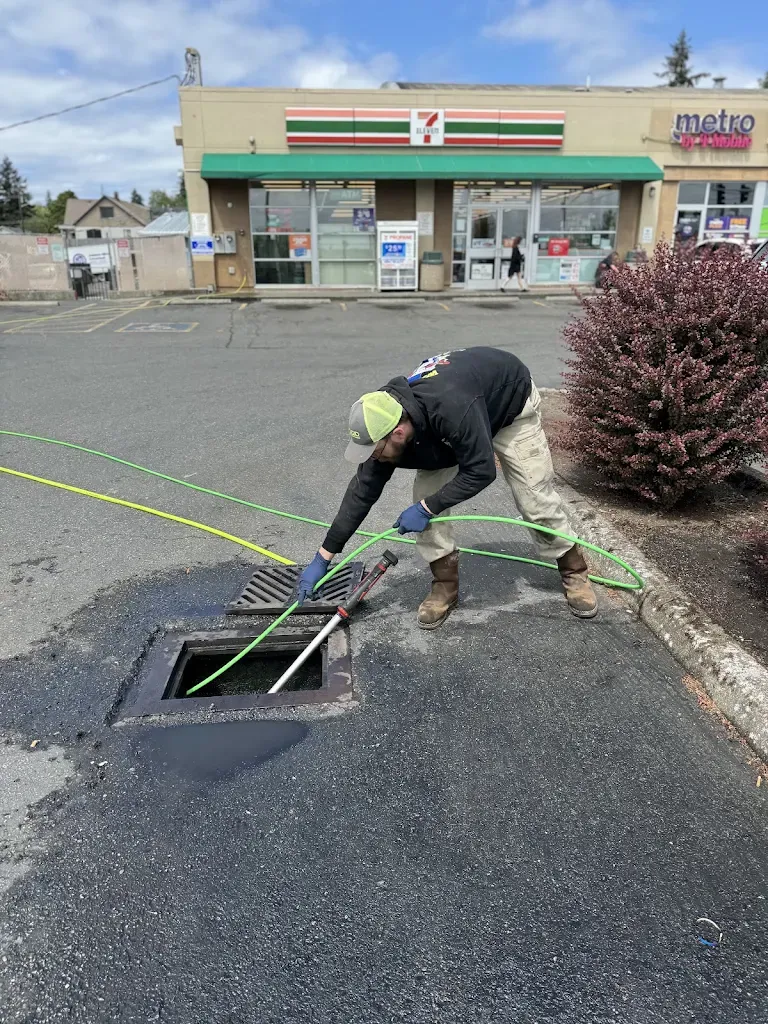
- Storm drains, catch basins, or parking lot lines full of silt and leaves: jet. Cables have nothing to grab.
- Roots found on camera in a sound pipe: jet with a root nozzle to clear more completely, then plan on recurring maintenance or a repair.
- Pipe shows cracks, offsets, bellies, or crumbling on camera: neither tool is the answer. That is a repair conversation.
Why Puget Sound homes see so many grease and scale lines
Housing around the Bremerton shipyard, downtown Port Orchard, and old Tacoma was largely built from the late 1940s through the 1970s, and much of it still carries original cast iron and galvanized drain lines. Half a century of rust on the inside of those pipes creates a rough surface that grease grabs onto. A smooth new PVC line sheds grease for years; a scaled cast iron line builds a lining in months.
Add the flat lots along Sinclair Inlet and the long, low-slope drain runs in waterfront homes on Hood Canal, and you get pipes that never move waste at full velocity. Solids settle, sludge accumulates, and a cable just stirs it. Jetting is how we actually move that material out of the line.
Septic homes in Mason County and rural Kitsap add a wrinkle: everything we flush out of the line ends up in the tank. Before jetting a septic home's main we ask when the tank was last pumped, because a tank already near capacity should not receive a pipe's worth of sludge. If the tank is the problem, a septic pumper is the call, not us.
When jetting is the wrong tool
High-pressure water in a pipe that is already failing can make the failure worse. Orangeburg pipe, which is essentially tar-impregnated wood fiber and shows up in some 1950s and 60s lateral lines around here, can deform under jetting. Cast iron so corroded that the bottom of the pipe is gone will not get better from a wash. A line with a major offset or a collapsed section needs excavation, not cleaning.
This is why our standard practice on a main line is camera first when there is any doubt. We cable to open the line so the camera can travel, look at the pipe, and then recommend jetting only when the pipe can take it. A plumber who jets blind on an unknown line is gambling with your sewer.
Jetting is also simply more than a small clog deserves. A tub that drains slowly because of hair does not need a truck, a tank of water, and an hour of setup. We bring the small cable, clear it, and keep your bill modest.
Chemical cleaners do not belong in this comparison
People sometimes ask whether a bottle of drain cleaner is a reasonable third option. It is not. Caustic and acid products rarely dissolve a real blockage. What they reliably do is sit in a trap as a pool of chemical, pit galvanized steel, soften the glue in older PVC joints, and burn the next person who opens the pipe. We have opened plenty of traps full of someone's weekend experiment.
Enzyme and bacterial maintenance products are a different category. They will not clear a clog, but used monthly in a kitchen line they slow the grease buildup that leads to the next one. That is an honest supporting role, and we suggest them after a jetting to extend the interval.
What to expect from each service call
A cabling visit is quick. We identify the cleanout or access point, run the machine until the full diameter is open rather than stopping when water starts moving, then run the fixture at full flow for several minutes to prove it. On a main line we offer the camera afterward so you can see what caused the clog.
A jetting visit involves the flatbed truck, hose runs from the truck to your cleanout, and water on site. Access matters: a cleanout in the yard is ideal, and if your older home has none we will talk about installing one, since it makes every future cleaning faster and cheaper. We camera before and after on main lines whenever the pipe condition is in question, and we show you both views.
Both services carry the same promise. The price is set before the machine comes off the truck, you approve it on your phone, and if the camera turns up a broken pipe the cleaning charge stands and the repair is a separate written estimate you can sit with.
Frequently asked
Is hydro jetting safe for old pipes?
It depends on the pipe. Sound cast iron, clay, ABS and PVC handle jetting well. Severely corroded cast iron, Orangeburg, and anything with visible cracks or collapse should not be jetted. We run a camera first on any line where the material or condition is unknown.
Why did my drain clog again three weeks after it was snaked?
Because the cable opened a channel through the clog without removing the buildup on the pipe wall. Grease and scale close that channel back up. A line that re-clogs quickly after cabling is the textbook case for jetting, and sometimes for a camera look at the pipe itself.
Can you jet a septic system's drain line?
Yes, the house drain to the tank can be jetted, and we do it regularly in Mason County and rural Kitsap. The debris goes to the tank, so we ask about pumping history first. We do not pump septic tanks; a licensed septic pumper handles that.
Does jetting damage PVC or ABS?
Not when done at the right pressure with the right nozzle. Modern plastic drain pipe is routinely jetted in commercial buildings for decades. Damage happens when someone uses a pressure or nozzle meant for a large sewer main inside a small residential line.
Will a snake remove tree roots?
A root-cutting head on a cable will cut roots back and get the line flowing, and that is often the right first step. Roots regrow from what the cutter leaves, so for ongoing control we either jet with a root nozzle or recommend repairing the joint the roots are entering through.
How often should a commercial kitchen line be jetted?
Most restaurant lines in our area do best on a quarterly or semiannual schedule, depending on volume and how well the grease interceptor is maintained. Waiting for a backup during Friday dinner service costs far more than scheduled cleaning.
About the author. Gregory Lowe is the owner and lead plumber at Washington Plumbing & Drain, a veteran-owned company in Port Orchard serving Kitsap, Pierce and Mason counties. The guidance here comes from daily work in local homes, not from a content farm. Call (360) 812-1124 with questions.